AI tools for small businesses: choosing a workflow that saves time
Compare AI subscriptions against a narrow, measurable task before buying. List repeated tasks such as summarising meeting notes
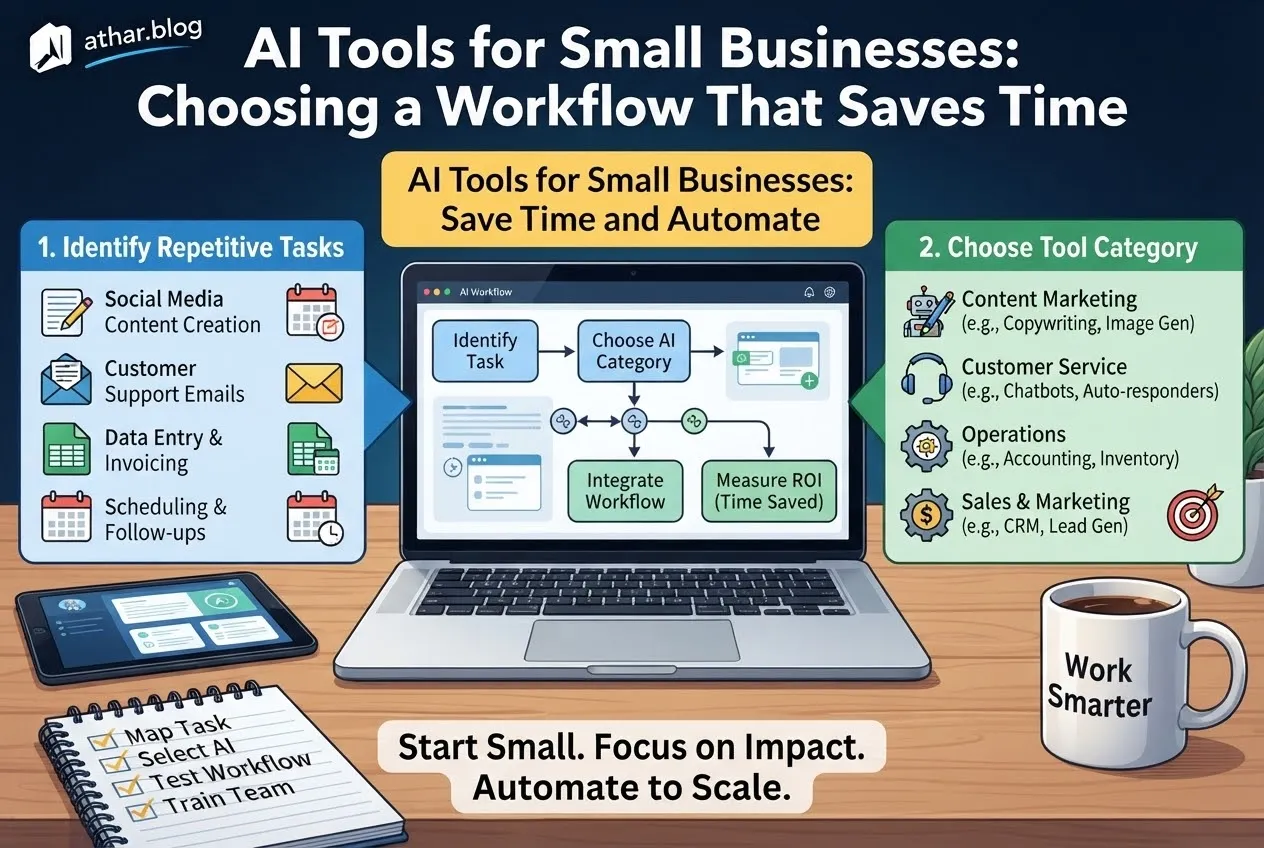
Navigating the landscape of artificial intelligence tools for small businesses can feel overwhelming. Instead of focusing on impressive technological jargon, a more effective approach begins with a clear decision. The process of selecting an AI workflow that genuinely saves time becomes much more manageable when you precisely identify what needs improvement, assess your available resources, and establish clear metrics for success. Rather than making impulse purchases, compare AI subscriptions against a specific, measurable task. The goal isn't to mimic someone else's successful routine, but to make a deliberate choice tailored to your unique operational constraints and business needs.
Defining Your Core Objective
Before exploring any AI solution, articulate the desired outcome in a single, unambiguous sentence. Distinguish between a quantifiable result and a vague aspiration. For instance, "reducing customer support response time by 20%" is a measurable objective, unlike "improving customer satisfaction," which is a broad goal. Tasks like automating report generation, summarizing complex documents, responding to common customer inquiries, or ensuring consistent data entry are distinct jobs, each requiring a different AI application.
Identifying Current Strengths and Weaknesses
Begin by recognizing what aspects of your current operations are already performing well. This prevents discarding effective processes without due cause. Before implementing any changes, meticulously document your existing workflow for the target task. Record the time consumed, the financial cost involved, and any points of friction or inefficiency. This provides a crucial baseline for comparison, allowing you to accurately evaluate the impact of any new AI integration. For example, if your current process for drafting social media posts takes two hours per week, this is your baseline. Any AI tool must demonstrably reduce this time while maintaining or improving quality.
Crafting a Strategic Implementation Plan
Compile a list of recurring tasks that consume significant time or resources within your business. Examples include synthesizing meeting minutes, developing content outlines, categorizing incoming support tickets, or generating routine financial reports. For each task, estimate or track the time it currently takes to complete manually, without any software assistance.
When faced with multiple AI tool options that appear promising, evaluate them systematically using consistent criteria. Consider:
- Cost: Subscription fees, potential integration costs, and hidden expenses.
- Effort to set up: How long will it take to onboard the tool and train staff?
- Reliability: Is the tool stable and consistent in its performance?
- Reversibility: How easy would it be to discontinue use and revert to previous methods if the tool proves unsuitable?
- Affected personnel: Who will use the tool, and what training or adjustments will they need?
A structured comparison, often in a simple spreadsheet, can prevent costly errors that arise from premature commitment. Start with the smallest viable implementation. If it yields positive results, expand and refine it. If it doesn't meet expectations, you can pivot quickly without having invested excessive time or capital.
Practical Application Scenarios
Consider these real-world examples:
- For a local bakery owner: "Can an AI-powered content generator produce a usable first draft of our weekly email newsletter for new pastry specials?"
- Baseline: Manually drafting the newsletter takes 90 minutes.
- AI Test: Use an AI tool to generate an initial draft based on bullet points of new items.
- Evaluation: Does the draft save at least 30 minutes of writing time while providing a coherent structure that only requires minor edits for prices and opening hours?
- For an independent consultant: "Can an AI transcription service accurately summarize client meeting recordings, highlighting action items?"
- Baseline: Manually reviewing and summarizing a 60-minute meeting takes 45 minutes.
- AI Test: Upload a recording to an AI transcription and summarization tool.
- Evaluation: Does the AI summary capture key decisions and action items with 90% accuracy, reducing manual review time to under 15 minutes?
These examples illustrate starting with a tangible business constraint and an observable outcome, rather than relying on generic promises. Adjust the scope and specific details to align with your unique operational context. If a decision impacts other team members or stakeholders, actively involve them in the evaluation process. Ask them what criteria would make the change genuinely beneficial from their perspective, avoiding assumptions about their needs.
Critical Safeguards and Ethical Considerations
Implementing AI tools requires vigilance. Never input sensitive information such as customer records, confidential contract details, or system passwords into any unapproved or untrusted tool. While AI-generated text can often sound authoritative, it is prone to "hallucinations," presenting fabricated information as fact. Always exercise critical judgment. Be particularly wary of advice or sales pitches that omit crucial details like actual costs, operational context, or potential uncertainties.
Maintaining an Audit Trail
Documenting what goes wrong is as crucial as recording successes. A missed target or an unsuccessful pilot project provides valuable data, not a reason to abandon all innovation. This information refines your understanding and guides future decisions. If the AI application involves critical areas such as financial transactions, health data, legal compliance, or personally identifiable information, always verify local regulations and seek qualified professional guidance when necessary.
Implementing a Structured Pilot Program
To ensure a practical evaluation, initiate a two-week pilot program. This should involve:
- One dedicated individual: A single business owner or designated team member responsible for testing.
- One specific task: The clearly defined, measurable task identified earlier.
- A written checklist for factual review: This ensures consistent validation of AI output.
Pilot Program Steps:
- Preparation (Day 1):
- Define the baseline: Document current time/cost/effort for the chosen task.
- Select the AI tool: Choose one tool based on your comparison criteria.
- Set up tool: Create an account, integrate as needed.
- Create factual review checklist: List specific points to verify in the AI output.
- Establish a realistic review date (e.g., 14 days from now).
- Execution (Days 2-13):
- Regularly use the AI tool for the designated task.
- Apply the factual review checklist to every AI-generated output.
- Keep detailed notes on performance, time saved, errors, and areas for improvement.
- Review (Day 14):
- Compare the results of the pilot against your initial baseline.
- Assess whether the AI tool effectively solved the original problem you identified.
- Gather qualitative feedback from the individual involved.
- Make an informed decision:
- Continue: Expand usage to other tasks or individuals.
- Revise: Adjust parameters, try a different approach with the same tool.
- Stop: Discontinue use of the tool if it did not meet objectives.
Sustainable progress often stems from consistent, modest actions rather than grand, one-off decisions. Meticulously maintain notes and observations throughout this process. This practice ensures that your subsequent choices are informed by your own empirical evidence, rather than relying on generalized success stories that may not apply to your specific context.

10 Best Free AI Tools for Content Creators in 2026
A practical, honest guide to free AI tools, with realistic options, safety checks, common mistakes, and a clear starting plan.

أدوات الذكاء الاصطناعي لصنّاع المحتوى العرب: دليل عملي ومسؤول
كيف يستفيد صانع المحتوى العربي من أدوات الذكاء الاصطناعي في البحث والتنظيم والتدقيق دون أن يفقد أصالته أو ثقة جمهوره.
كيف تتصدر نتائج بحث جوجل في وقت قياسي؟ دليل السيو العملي للمواقع الجديدة في 2026
دليل السيو العملي لعام 2026: كيف تتصدر نتائج بحث جوجل بموقعك الجديد وتجلب آلاف الزيارات المجانية في وقت قياسي وبأمان.