Cart abandonment: practical ways to reduce checkout friction
Find where customers lose confidence before adding more reminders. Test checkout on mobile, show shipping costs early, offer clear payment options
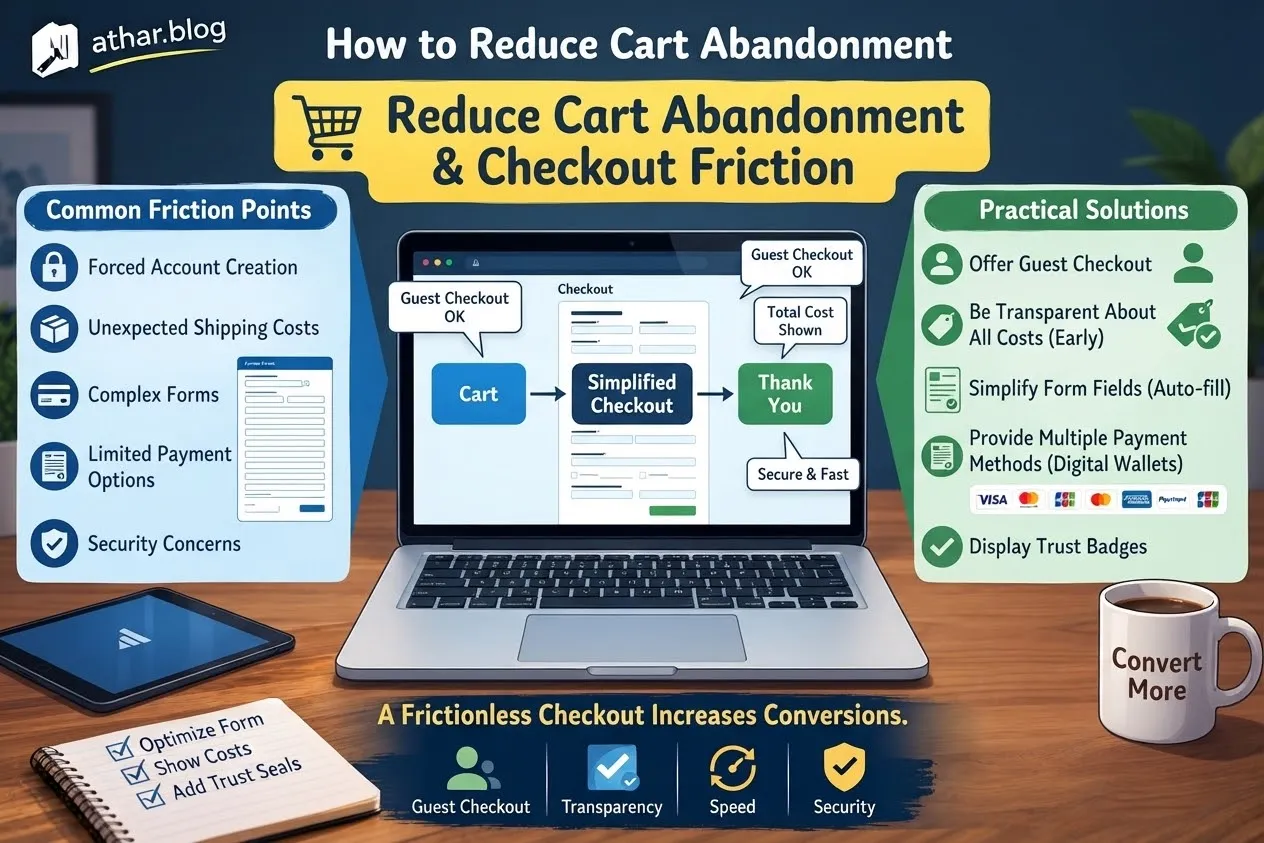
Effectively addressing cart abandonment begins not with a broad theoretical overview, but with a precise understanding of the specific issues at hand. This practical guide on reducing checkout friction becomes much more manageable once you clearly identify what needs improvement, what resources are available, and how success will be measured. The initial focus should be on pinpointing where customers lose confidence or encounter obstacles, rather than immediately implementing generic "fixes." The ultimate goal is not to replicate someone else's successful routine, but to make deliberate choices that genuinely align with your unique business constraints and customer journey.
Defining Your Objective with Precision
Before embarking on any changes, articulate the desired outcome in a single, clear sentence. This step helps distinguish a measurable objective from a general aspiration. For instance, "reducing checkout time by 15% for mobile users" is a measurable outcome, whereas "making checkout faster" is vague. Are you aiming to save customers time, prevent specific errors, clarify common questions, or foster a consistent purchasing habit? Each of these represents a distinct job to be done.
Simultaneously, it's crucial to identify elements of your current process that are already functioning well. Documenting these ensures you don't inadvertently dismantle successful components without valid reason. Prior to altering anything, thoroughly record your existing checkout process, noting the current time involved, associated costs, and any points of friction or observed abandonment rates. This diligent assessment provides a fair and objective baseline against which all future changes can be compared, allowing for data-driven decisions.
Crafting a Practical Implementation Strategy
When confronting the challenge of cart abandonment, a systematic and iterative approach yields the best results. Instead of overhauling everything at once, focus on specific, high-impact areas.
Key Areas for Initial Focus
Consider these actionable steps as a starting point for reducing friction:
- Mobile Optimization: Conduct thorough testing of your entire checkout flow on various mobile devices and operating systems. Observe for responsiveness, ease of navigation, form field input, and overall loading speed. Many users abandon carts due to poor mobile experiences.
- Early Shipping Cost Disclosure: One of the most common reasons for abandonment is unexpected shipping costs appearing late in the checkout process. Display estimated shipping costs on product pages or early in the cart view, perhaps with a clear link to a detailed shipping policy.
- Transparent Payment Options: Clearly present all accepted payment methods upfront. If you offer installment plans, digital wallets, or specific credit card options, make these visible before customers initiate the payment step.
- Minimal Mandatory Fields: Review your checkout forms critically. Every mandatory field adds friction. Ask only for information absolutely essential for order fulfillment and legal compliance. Can some fields be pre-filled or inferred?
- Guest Checkout Option: Forcing account creation is a significant barrier for first-time or occasional buyers. Always offer a guest checkout option, perhaps with a gentle prompt to create an account after purchase completion.
When multiple solutions or features appear appealing, evaluate them using consistent criteria. For example, compare options based on:
- Cost: What are the financial implications for development, licensing, or ongoing maintenance?
- Effort to Set Up: How much time and resources will be required for implementation?
- Reliability: How stable and proven is the proposed solution? Does it have a good track record?
- Reversibility: Can the change be easily undone if it doesn't yield the desired results? This minimizes risk.
- People Affected: Who within your organization will be involved in or impacted by this change (e.g., developers, customer service, marketing)?
A structured, written comparison often serves as an invaluable tool, preventing costly mistakes that arise from committing to a solution before fully grasping its trade-offs. Always begin with the smallest, most useful version of a change. This "minimum viable change" philosophy allows for quick testing. If it proves beneficial, you can iterate and expand; if not, you can pivot without having invested excessive time and resources.
Illustrative Examples of Friction Reduction
Consider a common scenario: a prospective buyer places several items in their cart, only to encounter surprisingly high delivery fees exclusively at the final payment step. This sudden revelation often leads to immediate abandonment. A proactive solution involves displaying an estimated shipping cost directly on the product detail page, perhaps based on a default location or an input field for the customer's postcode. This simple adjustment makes the final price much more predictable and transparent, preventing last-minute sticker shock.
- Example 1: Dynamic Shipping Estimate
- Problem: High abandonment due to unexpected shipping costs.
- Solution: Integrate a shipping calculator or flat-rate indication on product pages.
- Practical Step: Implement a small widget that estimates shipping based on geo-location or allows manual zip code entry.
- Example 2: Simplified Address Entry
- Problem: Long, complex address forms lead to errors and frustration.
- Solution: Utilize address auto-fill and validation services.
- Practical Step: Employ an API that suggests addresses as the user types, reducing manual entry and validating formats.
- Example 3: Visual Progress Indicator
- Problem: Shoppers feel lost or unsure how many steps remain in checkout.
- Solution: Implement a clear, multi-step progress bar.
- Practical Step: Design a visual queue (e.g., "Cart > Shipping > Payment > Review") that updates with each completed stage.
This approach starts with a verifiable problem and an observable outcome, rather than making broad, unsubstantiated promises. The scale and specific details must be adapted to your unique operational context. If a decision impacts other stakeholders, engage them early. Ask them what would make the change genuinely valuable from their perspective, avoiding assumptions about their needs.
Critical Analysis and What to Monitor
It's vital to apply a discerning eye to solutions marketed as universal fixes. A flashy discount pop-up, for example, will not compensate for a dysfunctional payment gateway or a broken form submission. Avoid manipulative tactics, such as aggressive countdown timers or artificially limited stock alerts, which often erode customer trust rather than building it. Be particularly skeptical of advice that omits crucial details like implementation costs, specific contextual requirements, or inherent uncertainties.
When evaluating outcomes, meticulously record both successes and failures. A missed target is not a sign of defeat, but valuable information that informs subsequent adjustments. Understanding why something didn't work is often as important as knowing what did.
When to Seek External Expertise
For certain domains, professional guidance is indispensable:
- Financial Transactions: If implementing new payment systems or handling sensitive financial data.
- Health-Related Products: When dealing with regulatory compliance for health claims or medical devices.
- Legal Obligations: For ensuring compliance with data protection (e.g., GDPR, CCPA), consumer rights, or international trade laws.
Always verify relevant rules locally and consult qualified professionals (e.g., lawyers, financial advisors, compliance officers) in these critical areas. This diligence protects both your business and your customers.
Your Next Steps for Continuous Improvement
To gain a firsthand understanding of your customer's journey, actively complete a test order yourself. Critically, perform this test on a slow mobile connection, simulating a less-than-ideal user environment. Meticulously document every confusing step, every point of friction, and any unclear instructions before proposing design changes. This empathetic approach uncovers practical pain points that might be missed in an ideal test scenario.
Following any implementation, set a realistic review date. On this date, rigorously compare the new results against your previously established baseline. Ask yourself: "Did this change effectively solve the original problem?" Based on your evidence, decide whether to continue with the current implementation, revise it with new adjustments, or discontinue it if it proved ineffective. Sustainable progress frequently stems from modest, carefully repeated actions rather than dramatic, one-off overhauls. Maintain detailed notes and logs throughout this process. This self-generated evidence will be far more valuable for informing your future decisions than relying solely on generic success stories from unrelated businesses.
Resources for Further Reading

العمل الحر من العالم العربي: دليل البداية خطوة بخطوة
دليل عملي للبدء في العمل الحر: اختيار المهارة، بناء معرض أعمال، التسعير، استلام المدفوعات وتجنب الاحتيال.

أفضل بدائل جوجل أدسنس للمواقع والمدونات العربية في 2026: شبكات إعلانية تقبل المواقع الجديدة
دليل أفضل شبكات بدائل جوجل أدسنس للمواقع والمدونات العربية في 2026. شبكات تقبل المواقع الجديدة بدون شروط تعجيزية وتدفع بانتظام عبر بايبال والعملات الرقمية.
Small Business Marketing Without a Big Budget
Proven low-cost strategies for local shops and freelancers to attract customers and build loyalty.