Ecommerce returns policy that builds customer trust
Make terms understandable before purchase. State eligibility, deadlines, item condition, return shipping responsibilities, refund timing and how to contact
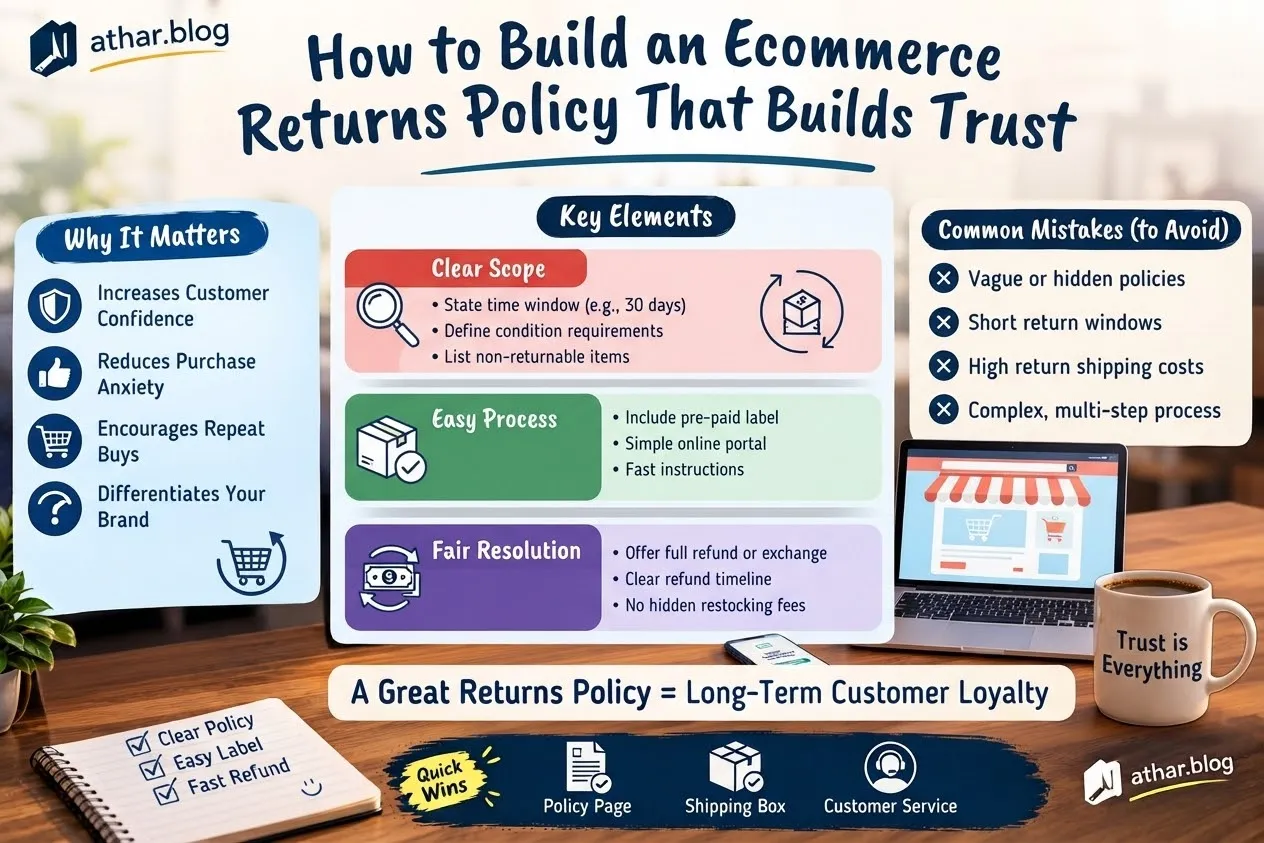
Crafting an e-commerce returns policy that genuinely fosters customer trust is not about adopting impressive, generic terms, but rather about making deliberate, strategic decisions. The most effective approach begins by clearly identifying what specific aspects of your current process require modification, assessing the resources you have at your disposal, and establishing measurable metrics to gauge the success of your changes. It is crucial to present these terms in an easily understandable manner before a customer makes a purchase. The objective here is not to replicate another business's strategy, but to construct a thoughtful policy that aligns with your unique operational constraints and customer base.
Define Your Core Objectives
Before embarking on any policy revision, articulate the desired outcome in a single, concise sentence. This outcome should be a measurable result, distinctly separated from vague aspirations. For instance, "reducing customer inquiries about returns by 20%," "decreasing return processing time by 15%," or "improving our customer satisfaction score regarding returns by 10 points" are all concrete, actionable goals. These differ significantly from general statements like "saving time" or "improving customer experience," which lack specific targets.
Identifying Existing Strengths
Take stock of what is currently performing well within your returns process. Documenting these successful elements ensures you don't inadvertently discard valuable practices during your overhaul. Equally important is to meticulously record your present process, noting the time, cost, and any friction points involved. This documentation provides a vital baseline against which you can objectively compare future improvements. Without this benchmark, it becomes challenging to determine if your changes have genuinely led to progress.
Constructing a Practical Framework
A robust returns policy must clearly delineate several key components for your customers. These include:
- Eligibility Criteria: What items are eligible for return? Are there any product categories excluded (e.g., personalized items, digital goods)?
- Return Window: How many days do customers have from the delivery date to initiate a return?
- Item Condition: What is the required condition of the returned item (e.g., unused, unworn, in original packaging with tags)?
- Return Shipping: Who is responsible for return shipping costs? Do you provide prepaid labels, or is the customer expected to arrange and pay for shipping?
- Refund Processing: How long will it take to process a refund once the item is received? What payment method will be used for the refund?
- Customer Support: How can customers contact your team for assistance with returns?
Beyond these practical aspects, it is imperative to verify your policy against all relevant local consumer protection laws and regulations. These legal obligations can vary significantly by region and dictate minimum return periods, refund rights, and other crucial details.
When faced with multiple attractive policy options, evaluate them using consistent criteria. Consider:
- Cost: What are the direct and indirect financial implications of each option?
- Effort to Set Up: How much time and resources will be required to implement this policy?
- Reliability: How consistently can this policy be executed without errors or exceptions?
- Reversibility: How easy would it be to revert to a previous policy or change course if this option proves ineffective?
- People Affected: Who within your organization and customer base will be impacted by this change, and how?
A simple side-by-side comparison matrix can often prevent costly mistakes that arise from committing to a strategy without fully understanding its trade-offs. Begin with the most minimal, functional version of your policy. If it yields positive results, gradually enhance it. If it doesn't, you can pivot quickly without having invested excessive time and resources.
Example: Enhancing Clarity for Apparel Sales
Consider an online clothing retailer. A practical approach might involve:
- Integrating a detailed size guide directly on each product page, often with body measurements or comparative sizing information.
- Prominently displaying the return window (e.g., "30-day free returns") immediately adjacent to the "Add to Cart" button.
- Including a concise, step-by-step return process within the order confirmation email and packing slip.
This example illustrates starting with a specific constraint (customers needing sizing info) and aiming for an observable outcome (fewer size-related returns). The goal isn't universal success, but a measurable improvement. Always tailor the scope and detail of your policy to your specific business model and customer base. If a change impacts internal teams, consult them on what would make the new process genuinely useful for them, rather than making assumptions.
Practical Steps for Implementation
Here are some actionable steps to take when revamping your policy:
- Draft clearly and concisely: Use plain language, avoiding jargon or legalistic phrasing.
- Visibility: Ensure the policy is easily accessible from your homepage, footer, and product pages.
- FAQs: Create a dedicated FAQ section addressing common return-related queries.
- Internal Training: Educate your customer service team thoroughly on all aspects of the new policy.
Pitfalls to Avoid
Be vigilant against policy elements that introduce ambiguity. Vague exceptions or undefined clauses are fertile ground for customer disputes and frustration. A generous promise that your operational capabilities cannot consistently fulfill will damage your credibility far more severely than a clear, legally compliant, and realistic policy.
Be particularly cautious of advice that overlooks critical factors such as actual implementation costs, the specific context of your business, or inherent uncertainties. When something goes wrong, meticulously document it, just as you would document successes. A missed target is not a reason to abandon an entire initiative; rather, it is valuable information that should inform your next steps. For matters involving financial transactions, health, legal obligations, or sensitive customer data, always verify local regulations and seek qualified professional counsel when necessary.
Refining and Iterating Your Policy
After implementing your new policy, the work isn't over. Continuous refinement is key to long-term success.
Conducting a Policy Review
To identify potential gaps and friction points, perform these critical reviews:
- First-Time Shopper Perspective: Read your entire return policy as if you were a customer making their first purchase from your store. Is it easy to find? Is it clear and unambiguous? Does it answer all potential questions?
- Mock Return Simulation: Conduct a full, end-to-end mock return process with your internal team. Start from a customer initiating a return request, through package receipt at your warehouse, inspection, and finally, refund processing. This exercise often reveals unforeseen bottlenecks or unclear instructions.
Set a realistic date for your first policy review. At this point, revisit your initial baseline data. Did the changes solve the original problem you identified? Based on your findings, decide whether to:
- Continue: If the policy is working well and meeting its objectives.
- Revise: If there are areas for improvement or minor adjustments needed.
- Stop: If the policy is not working and a fundamental change in direction is required.
Progress often stems from consistent, modest actions rather than infrequent, dramatic overhauls. Maintain detailed notes throughout this process. Documenting your decisions, their rationale, and the observed outcomes will ensure that your future policy choices are informed by your own evidence, rather than relying solely on generic success stories or anecdotal evidence from other businesses. This iterative approach empowers you to build a returns policy that genuinely serves both your customers and your business objectives.
--- Related articles:

العمل الحر من العالم العربي: دليل البداية خطوة بخطوة
دليل عملي للبدء في العمل الحر: اختيار المهارة، بناء معرض أعمال، التسعير، استلام المدفوعات وتجنب الاحتيال.

أفضل بدائل جوجل أدسنس للمواقع والمدونات العربية في 2026: شبكات إعلانية تقبل المواقع الجديدة
دليل أفضل شبكات بدائل جوجل أدسنس للمواقع والمدونات العربية في 2026. شبكات تقبل المواقع الجديدة بدون شروط تعجيزية وتدفع بانتظام عبر بايبال والعملات الرقمية.
Small Business Marketing Without a Big Budget
Proven low-cost strategies for local shops and freelancers to attract customers and build loyalty.