How to write product descriptions that answer buyer questions
Turn specifications into decisions a customer can make. Lead with the product’s purpose, then provide dimensions, materials, care instructions, compatibility
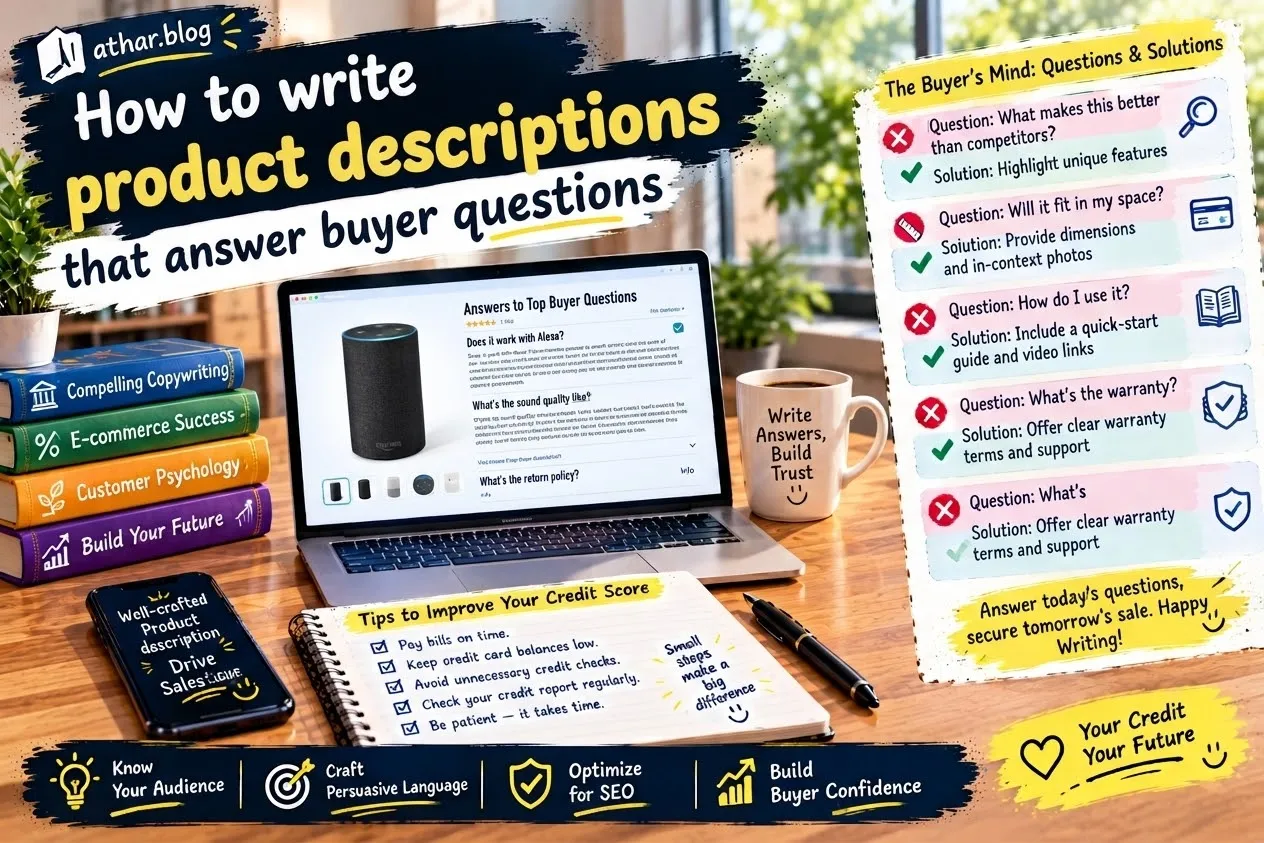
Effective product descriptions transform mere specifications into tangible benefits, guiding potential customers toward informed purchasing decisions. The goal isn't to emulate a competitor's strategy but to craft a thoughtful approach tailored to your unique offerings and constraints. This guide outlines how to construct descriptions that proactively address buyer queries, foster trust, and ultimately enhance sales conversions.
Define Your Objective: The Core Question
Before embarking on any revision, clearly articulate the desired outcome in a single, precise sentence. Distinguish between a measurable objective and a vague aspiration. For instance, "reducing customer support inquiries about product compatibility" is a specific aim, unlike "improving customer satisfaction." Other concrete goals might include "decreasing return rates due to mismatched expectations," "increasing conversion rates for a specific product category," or "ensuring all critical product information is accessible within the first 100 words of the description."
Understanding Your Current State
To accurately gauge the impact of your changes, document your existing process. What is the average time spent answering common customer questions? What is the current return rate? What friction points exist in the customer's journey from viewing a product to making a purchase? Record the time, cost, and specific friction points associated with your current approach. This baseline data provides a fair and objective reference for comparing future results. Without it, improvements can feel anecdotal rather than demonstrable.
Strategize a Practical Framework
Effective product descriptions lead with the product's primary purpose and then systematically unpack details that address common buyer concerns. Organize information logically, moving from broad functionality to specific attributes.
Key Elements to Include Systematically:
- Purpose/Benefit: Why does this product exist? What problem does it solve?
- Dimensions/Specifications: Provide exact measurements, weight, capacity, or other relevant quantitative data.
- Materials/Composition: Detail what the product is made from, which can inform durability, feel, and care.
- Care Instructions: How should the product be maintained? (e.g., wash cold, dry flat, wipe clean).
- Compatibility/Requirements: What other products or systems does it work with? Are there any prerequisites for its use?
- Meaningful Limitations: Be upfront about what the product cannot do or specific use cases it's not designed for.
When faced with multiple options for presenting information or features, evaluate them using consistent criteria: cost (to implement the description, e.g., images, video), effort (for the customer to understand), reliability (of the information), reversibility (can you easily change it later?), and the impact on various user segments. A structured comparison often prevents costly mistakes by revealing hidden trade-offs before you commit. Always start with the smallest useful version; if it proves beneficial, expand upon it. If not, you can pivot without significant loss of resources.
Transform Features into Customer Decisions
The essence of a compelling product description lies in translating dry specifications into tangible reasons for a customer to choose your product. Instead of merely listing features, explain what those features enable the customer to do or experience.
Examples of Feature-to-Benefit Translation:
- Feature: "Ergonomic handle design."
Benefit: "The ergonomic handle ensures a comfortable grip even during prolonged use, reducing hand fatigue while gardening."
- Feature: "Water-resistant fabric."
Benefit: "Made from water-resistant fabric, this backpack protects your essentials from unexpected drizzles, keeping your laptop dry during your commute."
- Feature: "Integrated smart sensor."
Benefit: "The integrated smart sensor automatically adjusts lighting based on ambient conditions, saving energy and providing optimal illumination without manual intervention."
Consider the questions a customer might silently ask themselves. For a coffee maker, they might wonder: "Is it easy to clean?" "Does it make good-tasting coffee?" "How long does it take?" Your description should proactively address these by highlighting easy-to-remove parts, brewing mechanisms, or fast heating times. This approach shifts the focus from what the product is to what it does for the customer.
Practical Steps to Enhance Your Descriptions
To systematically improve your product descriptions and ensure they truly answer buyer questions, follow a structured process.
Step-by-step Implementation:
- Audit Existing Descriptions: Select a handful of your most popular or problem-prone products. Read their current descriptions as if you were a first-time buyer. What questions remain unanswered? What ambiguities exist?
- Collect Customer Questions: Review customer service tickets, live chat transcripts, product reviews (especially 3-star reviews that highlight nuances), and FAQs. Compile a list of the top 5-10 most frequently asked questions for each product.
- Prioritize and Integrate: Rank these questions by frequency and importance. Strategically weave the answers into your product descriptions. Don't just tack on an FAQ section at the end; integrate the answers naturally into the narrative of the description itself, close to the relevant features.
- Use Clear and Concise Language: Avoid jargon where possible. If technical terms are necessary, explain them simply. Use short sentences and paragraphs for readability.
- Incorporate Visual Aids (where applicable): While not strictly part of the text, consider how images, videos, or diagrams can complement your description by visually answering questions about size, scale, usage, or components.
Pitfalls to Avoid and What to Monitor
Generic superlatives and undisclosed limitations are primary drivers of customer dissatisfaction and product returns. Avoid vague claims like "best in class" or "premium quality" without concrete, verifiable details to back them up. Be meticulous about accuracy. If a product is merely splash-resistant, do not promise full waterproofing. Such misrepresentations erode trust and lead to preventable returns.
Be wary of advice that omits crucial factors like costs, context, or inherent uncertainties. Always record not just what succeeded but also what failed and why. A missed target is invaluable data for future adjustments, not a reason to abandon your entire strategy. For products involving sensitive areas like health, financial services, legal obligations, or personal data, always verify local regulations and seek expert guidance when required. Ensure your descriptions align with all relevant compliance standards.
Your Next Action Plan
To initiate this improvement process, identify five common customer questions related to one of your products. Take the existing listing for that product and revise it, ensuring that each of those five questions is clearly and easily answered within the description. Assign a realistic review date for this specific change – perhaps two to four weeks out.
On your review date, compare the revised listing's performance against your previously established baseline. Did the change address the original problem (e.g., reduced inquiries, improved conversion)? Based on your findings, decide whether to:
- Continue: Expand this approach to more products if successful.
- Revise: Adjust your strategy based on what you learned and re-test.
- Stop: If the change yielded no positive results, discontinue the approach and explore alternatives.
Consistent progress often stems from small, deliberate actions repeatedly refined, rather than grand, one-off initiatives. Document your observations and results meticulously. This self-generated evidence will inform your subsequent decisions, grounding your strategy in your own unique experiences rather than relying on generalized success stories.
--- Related Articles:

العمل الحر من العالم العربي: دليل البداية خطوة بخطوة
دليل عملي للبدء في العمل الحر: اختيار المهارة، بناء معرض أعمال، التسعير، استلام المدفوعات وتجنب الاحتيال.

أفضل بدائل جوجل أدسنس للمواقع والمدونات العربية في 2026: شبكات إعلانية تقبل المواقع الجديدة
دليل أفضل شبكات بدائل جوجل أدسنس للمواقع والمدونات العربية في 2026. شبكات تقبل المواقع الجديدة بدون شروط تعجيزية وتدفع بانتظام عبر بايبال والعملات الرقمية.
Small Business Marketing Without a Big Budget
Proven low-cost strategies for local shops and freelancers to attract customers and build loyalty.