Local SEO basics for service businesses
Help nearby customers confirm where and when you can help. Keep business name, address, hours and phone consistent on owned pages and trusted listings.
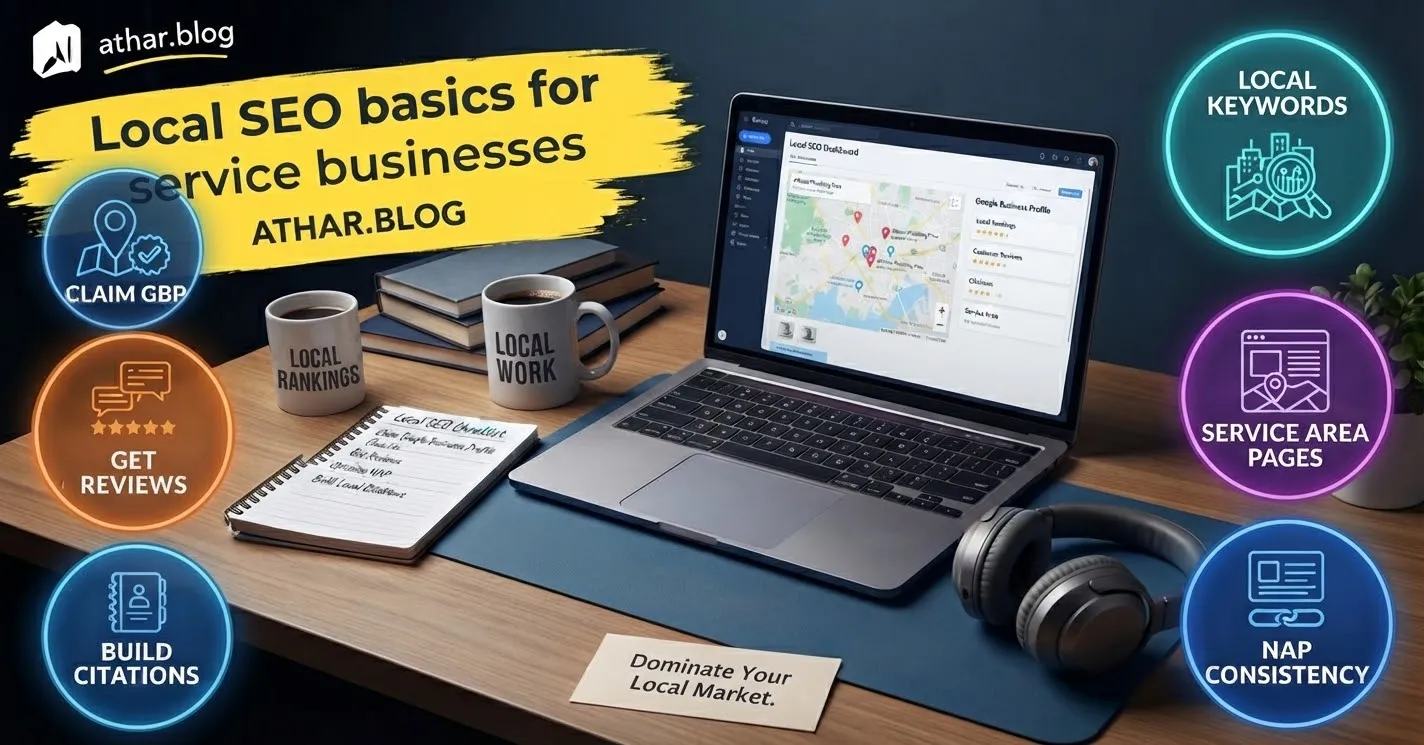
A successful strategy for local SEO in service businesses begins with a focused objective, rather than a mere compilation of impressive-sounding concepts. Navigating the essentials of local SEO becomes considerably simpler when you pinpoint exactly what needs modification, assess the resources at your disposal, and establish clear metrics for determining success. The primary goal is to help potential clients in your vicinity readily understand your service offerings, operational hours, and geographical coverage. This approach isn't about replicating someone else's strategy wholesale; it's about making deliberate, well-considered choices that align perfectly with your unique operational constraints and capabilities.
Defining Your Core Objective
Before embarking on any optimization efforts, articulate the specific outcome you wish to achieve in a single, concise sentence. This helps differentiate a measurable result from a broad aspiration. For instance, "reducing client acquisition costs by 15% within six months" is a measurable outcome, whereas "improving online visibility" is a vague aspiration. Tasks like streamlining internal processes, mitigating operational errors, proactively addressing frequent customer inquiries, or cultivating consistent outreach habits each represent distinct objectives requiring tailored approaches.
It's equally crucial to identify elements that are already performing well. Avoid discarding successful strategies without a clear rationale. Before implementing any changes, meticulously document your current procedures, noting the time investment, associated costs, and any points of friction or inefficiency. This documentation provides an objective baseline against which you can accurately measure the impact of future modifications.
Crafting a Strategic Framework
A cornerstone of effective local SEO for service businesses is maintaining absolute consistency across all your online presences. This means ensuring your business name, physical address, operating hours, and contact phone number are identical on your official website, social media profiles, and every trusted online directory listing. Beyond basic contact information, accurately describe the actual services you provide and the precise geographical areas you serve. Avoid generic descriptions; be specific about your expertise.
When faced with multiple potential optimization avenues, evaluate each option using a consistent set of criteria. Consider factors such as initial cost, the effort required for setup and ongoing maintenance, the reliability of the proposed solution, its reversibility should it not yield desired results, and the impact it will have on your team or existing workflows. A structured, written comparison often serves as an invaluable safeguard against making costly commitments before fully grasping the inherent trade-offs. Always aim to implement the smallest viable version of any change first. If it proves beneficial, you can incrementally scale and refine it. If it doesn't meet expectations, you can pivot without having invested significant time or resources.
Practical Implementation Steps
- Audit Your Current Listings: Begin by searching for your business on Google, Yelp, Bing Places, and any industry-specific directories. Note every instance of your Name, Address, and Phone number (NAP).
- Verify Google Business Profile: Ensure your Google Business Profile (formerly Google My Business) is claimed, verified, and completely up-to-date with accurate information, photos, and service areas.
- Update Core Information: Correct any discrepancies found during your audit. Prioritize critical listings first.
- Solicit Genuine Reviews: Encourage satisfied customers to leave authentic reviews on relevant platforms, making the process easy for them.
- Create Service-Specific Content: Develop dedicated web pages for each primary service you offer, detailing what it entails and its benefits.
- Optimize for Local Keywords: Research and incorporate local keywords (e.g., "plumber near me," "appliance repair [city name]") naturally into your website content and descriptions.
Illustrative Example
Consider an appliance repair service operating in a specific urban area. Their local SEO strategy should involve publishing separate, genuinely informative service descriptions for each type of appliance repair they offer (e.g., "Washing Machine Repair in [City]," "Refrigerator Maintenance in [City East Side]"). Critically, their website and online listings must make the booking process crystal clear and easily navigable, especially on mobile devices. This example starts with a real-world constraint – the need to connect with local customers seeking specific repairs – and aims for an observable outcome, such as an increase in booked appointments. The key is to adapt the scope and level of detail to your specific situation. If the decision impacts another team member or department, actively solicit their input on what would make the proposed change genuinely useful, rather than making assumptions.
Critical Considerations and Pitfalls
Ethical and honest practices are paramount in local SEO. Never fabricate physical addresses or attempt to artificially inflate your online reputation by purchasing fake reviews. Creating numerous "thin" location pages, where only the city name is swapped out with generic content, offers minimal SEO value and can even harm your standing with search engines.
Be particularly cautious of advice that omits crucial details regarding potential costs, the specific context required for a strategy to work, or the inherent uncertainties involved. Not all tactics are universally applicable, and what worked for one business might not work for another. Diligently record not only what succeeded but also what went wrong. A missed target or an unsuccessful experiment provides valuable data; it's an opportunity for learning, not a reason to abandon your entire plan. For any topics involving finances, health, legal obligations, or sensitive personal data, always verify local regulations and seek guidance from qualified professionals when necessary.
Best Practices to Adopt
- Transparency First: Be upfront about your services, pricing structures (where applicable), and business model.
- Focus on User Experience: Ensure your website is fast, mobile-friendly, and easy for customers to find the information they need.
- Engage with Reviews: Respond to all reviews, positive and negative, demonstrating customer care.
- Regular Updates: Keep your Google Business Profile and other directory listings current, especially regarding holiday hours or service changes.
Measuring Success and Adapting Your Strategy
The initial "next step" should always be concrete and manageable. For example, verify your primary official online listing (likely Google Business Profile) and correct the three most visible inconsistencies in your business information. This could involve an outdated phone number, incorrect hours, or a missing service category.
Establish a realistic date for reviewing the impact of these changes – perhaps 30 or 60 days out. At that review point, compare the results against your initial baseline. Ask yourself: Did this change effectively address the original problem you identified? Based on this assessment, decide whether to continue with the current approach, revise it based on new insights, or discontinue it if it proved ineffective. Significant progress often stems from small, deliberate actions consistently applied, rather than from singular, dramatic overhauls. Maintain detailed notes throughout this process. These records will ensure your subsequent strategic decisions are informed by your own empirical evidence, rather than solely relying on generic success stories that may not apply to your unique circumstances.
[related-articles id="123,456"]

العمل الحر من العالم العربي: دليل البداية خطوة بخطوة
دليل عملي للبدء في العمل الحر: اختيار المهارة، بناء معرض أعمال، التسعير، استلام المدفوعات وتجنب الاحتيال.

أفضل بدائل جوجل أدسنس للمواقع والمدونات العربية في 2026: شبكات إعلانية تقبل المواقع الجديدة
دليل أفضل شبكات بدائل جوجل أدسنس للمواقع والمدونات العربية في 2026. شبكات تقبل المواقع الجديدة بدون شروط تعجيزية وتدفع بانتظام عبر بايبال والعملات الرقمية.
Small Business Marketing Without a Big Budget
Proven low-cost strategies for local shops and freelancers to attract customers and build loyalty.