How to Build a 13-Week Cash Flow Forecast for a Small Business
A practical method to see cash shortfalls before they happen: what to include, how to update it weekly and which decisions it should drive.
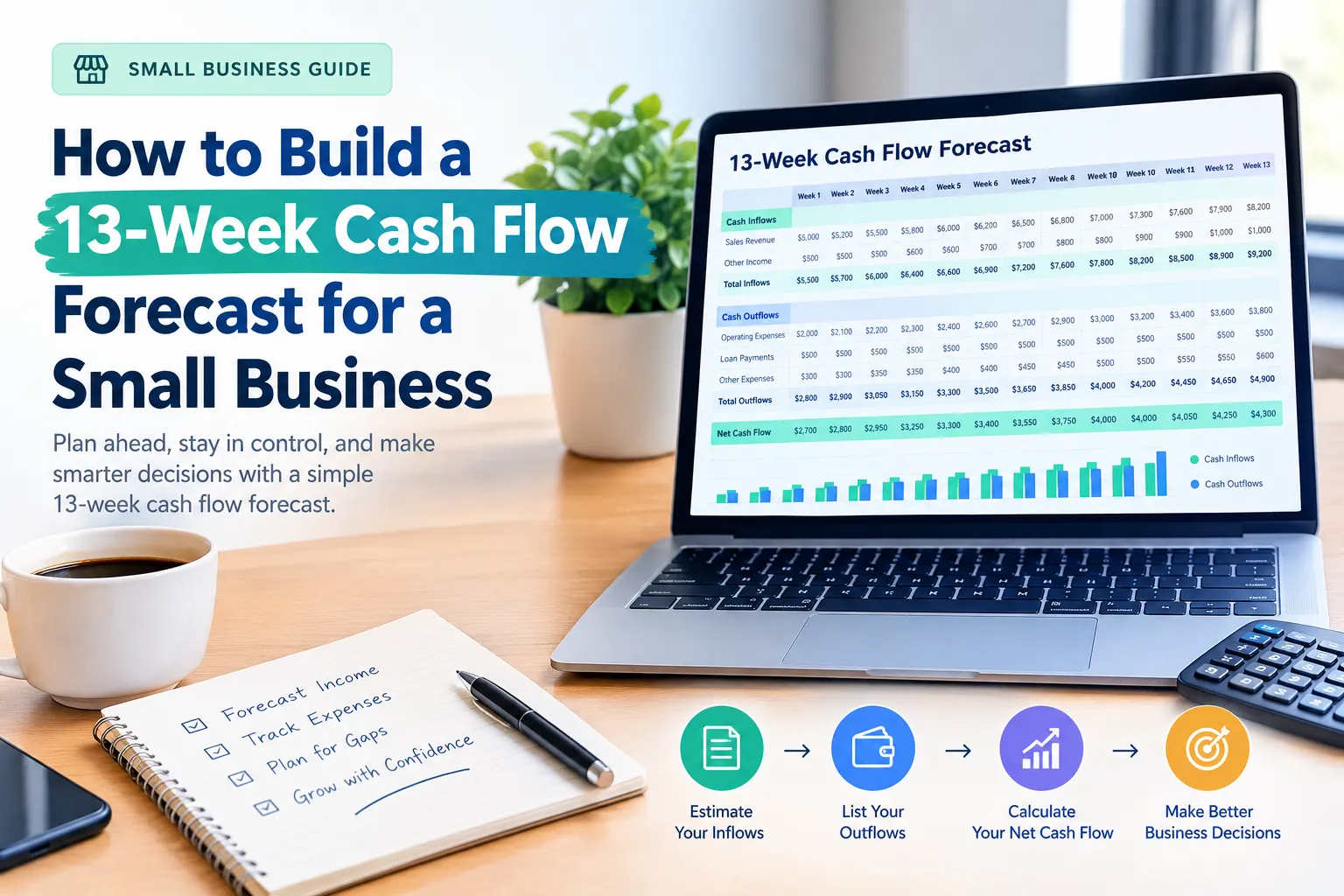
Profit is not cash
Many profitable small businesses fail because money arrives later than bills are due. A 13-week cash flow forecast shows, week by week, how much cash you will actually have, so you can act before an account runs dry.
Why 13 weeks
Thirteen weeks covers a full quarter. It is long enough to spot a tax payment, a slow season or a large supplier invoice, and short enough that your estimates stay realistic.
Build the sheet
Create one column per week and these rows:
- Opening cash: the real bank balance at the start of the week.
- Cash in: customer payments you expect to receive, based on when customers really pay, not the invoice due date.
- Cash out: payroll, rent, suppliers, loan repayments, subscriptions, taxes and owner drawings.
- Closing cash: opening cash plus cash in minus cash out. This becomes next week's opening cash.
Use honest assumptions
Look at your last three months of bank statements. If customers pay on average 12 days late, forecast that. Put irregular costs such as insurance or annual software renewals in the exact week they leave your account.
Update every week
Each Monday, replace last week's forecast with actual figures, note why they differed, and extend the forecast by one week. Within a month you will learn which estimates you are consistently wrong about.
Decisions it should trigger
- If closing cash falls below a minimum buffer, such as one month of fixed costs, act now: chase overdue invoices, offer a small early-payment discount or delay a non-urgent purchase.
- If a large surplus appears, plan tax reserves before spending it.
- Before hiring or signing a lease, add the new cost to the forecast and see whether the buffer survives.
Mistakes to avoid
Do not mix up sales and payments, do not forget VAT or sales tax, and do not treat an overdraft limit as cash you own.
The takeaway
A simple spreadsheet updated for fifteen minutes a week gives you early warning of problems and the confidence to invest when cash allows it.

الربح من الانترنت دليلك للبدايه الصحيحه
تعرّف على أفضل طرق الربح من الإنترنت للمبتدئين: الفريلانس، التسويق بالعمولة، صناعة المحتوى، والتجارة الإلكترونية، مع نصائح تجنبك النصب والاحتيال.

كيف تكتب على موقع أثر وتربح من مقالاتك؟ الدليل الكامل خطوة بخطوة
دليل عملي يشرح التسجيل والكتابة والمراجعة واحتساب المشاهدات والأرباح وشروط السحب على منصة أثر.

Small Business Marketing Without a Big Budget
Proven low-cost strategies for local shops and freelancers to attract customers and build loyalty.