Start an online store: a lean launch checklist
Test demand and operations before paying for an elaborate storefront. Define a narrow customer group, estimate product costs and fees, choose reliable fulfillme
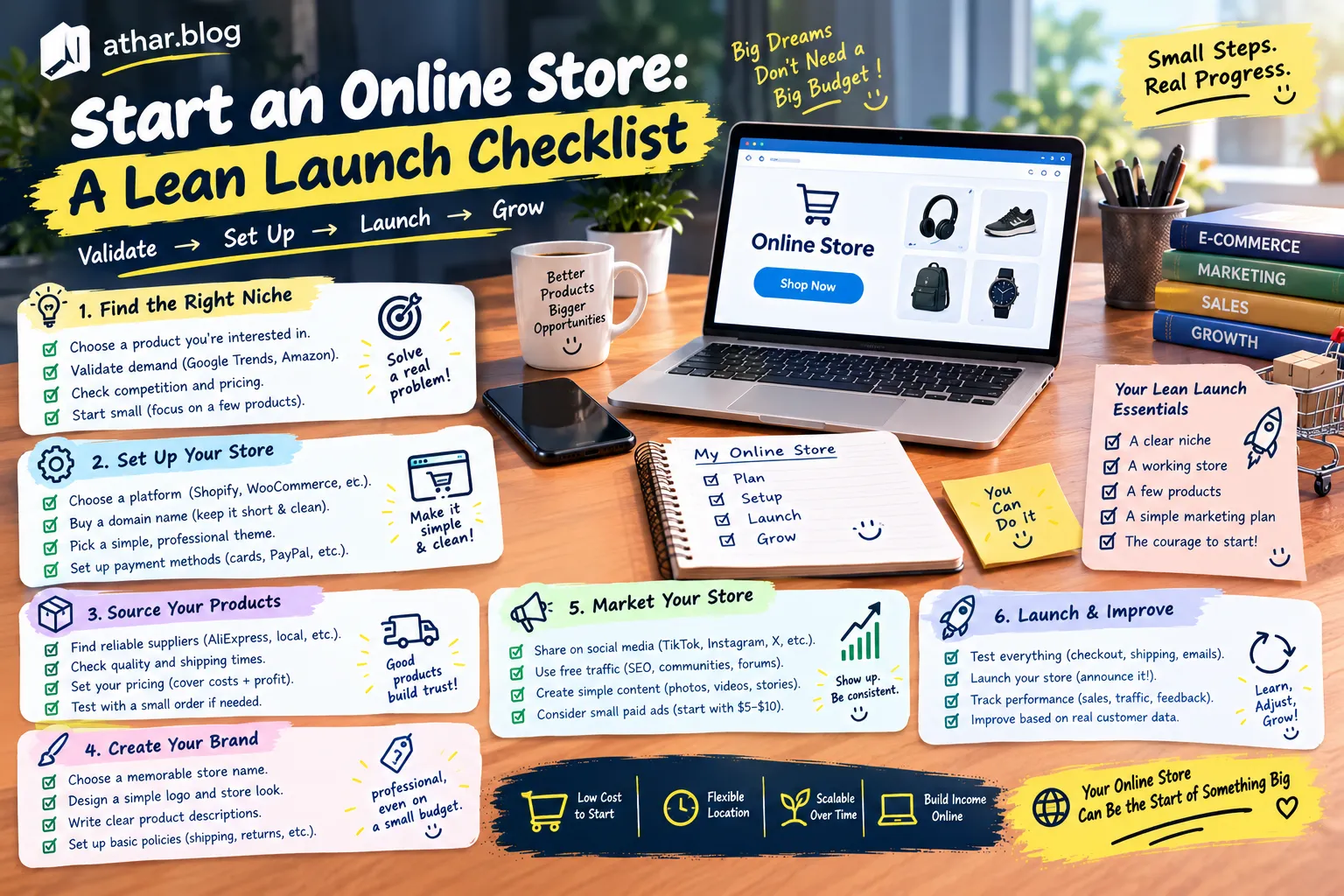
A practical guide for launching an online store emphasizes specific, actionable decisions over a collection of impressive but vague terms. This "lean launch" checklist provides an easier framework to approach the venture when you clearly identify what needs to change, what resources are at your disposal, and how you will quantitatively measure success. The core principle involves testing both market demand and operational efficiency before investing in an elaborate, feature-rich storefront. The objective here is not to replicate someone else’s journey, but to empower you to make a thoughtful choice that aligns precisely with your unique circumstances and constraints.
Define Your Core Problem and Desired Outcome
The initial step in any lean launch process is to articulate the specific result you aim to achieve in a single, clear sentence. This clarity helps differentiate a measurable outcome from a mere aspiration. For instance, "reducing order processing time by 20%" is a measurable outcome, unlike "saving time," which is vague. Similarly, "avoiding common shipping errors," "answering customer FAQs efficiently," or "establishing a consistent content publishing habit" are distinct, definable objectives.
Before embarking on any changes, it is crucial to understand your current state. Document what aspects of your existing process are functioning well so you do not inadvertently discard them. Meticulously note your current operational procedures, including the time, cost, or friction involved in each step. This documentation establishes a fair and objective baseline against which you can later compare the results of your new initiative. Without this baseline, evaluating progress or regression becomes challenging.
Practical Steps for Defining Goals
- Identify the "Why": Why do you want to start an online store? Is it to reach new customers, automate sales, or diversify income?
- Quantify Your Goal: Instead of "increase sales," aim for "increase online sales by 15% within the first six months."
- Define Success Metrics: What will tell you that you've achieved your goal? (e.g., specific number of orders, average order value, customer satisfaction ratings).
- Acknowledge Current State: "Currently, I sell products manually through social media DMs, which takes 3 hours per day to manage orders and invoicing."
Construct a Pragmatic Operational Framework
A lean approach mandates focusing on essential elements first. Begin by defining a narrow, specific customer group for your product. Subsequently, estimate all associated product costs and fees, including production, packaging, and transaction charges. Select reliable fulfillment methods that align with your product type and customer expectations. Crucially, draft clear and transparent returns policies and privacy information to build customer trust from the outset.
When faced with multiple attractive options, such as various e-commerce platforms or shipping carriers, compare them systematically using consistent criteria. These criteria might include initial cost, setup effort, long-term reliability, reversibility (how easy it is to change later), and the impact on involved personnel. A simple written comparison or a decision matrix often serves as a powerful preventative measure against costly errors—specifically, committing resources before fully understanding the inherent trade-offs. Always aim to implement the smallest viable version of your concept first. If this minimal version proves beneficial, then proceed with iterative improvements; if it does not meet expectations, you can pivot without having squandered months of effort or significant financial investment.
A Real-World Illustration
Consider a small artisan who creates bespoke handmade stationery. Instead of immediately launching a comprehensive e-commerce site with hundreds of products, they can adopt a lean approach. They might begin by offering a limited collection of their most popular items—perhaps five different card designs and two types of notebooks—on a simple online platform or even a dedicated social media shop. The primary goals for this initial phase would be to:
- Test Demand: Observe which specific products generate the most interest and sales.
- Refine Operations: Ensure the processes for packaging, shipping, and order tracking function smoothly and reliably before scaling up.
This example highlights starting with a tangible constraint (limited product range) and an observable outcome (reliable shipping), rather than a broad promise of universal success. The scale and specific details should always be adapted to your unique situation. If the decision impacts another individual, genuinely solicit their input on what would make the change useful to them, rather than making assumptions.
Crucial Aspects to Monitor and Anticipate
Even the most aesthetically pleasing website cannot compensate for ambiguous delivery promises or pricing margins that fail to account for returns and operational overheads. It is imperative to research and understand all applicable taxes and consumer protection regulations relevant to your operating location and target markets. Be particularly cautious of advice that conveniently omits mentioning costs, contextual nuances, or inherent uncertainties.
Cultivate a habit of meticulously documenting both successes and failures. A missed target or an unexpected setback should be viewed as valuable information, not a reason to abandon the entire plan. This data is critical for refining your strategy. If your venture involves sensitive areas such as financial transactions, health-related products, legal obligations, or private information, always verify local regulations and seek qualified professional advice when necessary. Compliance is not optional.
Risk Mitigation Checklist
- Regulatory Compliance:
- Verify sales tax obligations for all jurisdictions you sell to.
- Understand consumer rights laws (e.g., return periods, privacy policies like GDPR or CCPA).
- Check specific product regulations if applicable (e.g., food, cosmetics).
- Financial Safeguards:
- Set up a separate business bank account.
- Implement secure payment gateways.
- Understand chargeback procedures.
Your Immediate Next Steps for Launch
Before formally inviting customers to your online store, execute a critical two-step validation process. First, calculate the precise profit margin on a single sample order, meticulously accounting for all costs—from raw materials and production to packaging, shipping, and transaction fees. Second, perform a complete test purchase yourself. This involves placing an order, processing payment, going through the fulfillment steps, and even simulating a return, to ensure every aspect of the customer journey functions as intended.
Following these preparatory steps, set a realistic review date for your launch—for instance, one month after going live. At this predetermined point, compare your actual results against the baseline metrics you established earlier. Ask yourself objectively whether the implemented changes effectively solved the original problem you identified. Based on this evidence, make a clear decision: either continue with your current strategy, revise specific aspects of it, or discontinue the initiative if it proves unviable. Remember, sustained progress often stems from consistent, modest actions rather than a singular, dramatic intervention. Maintain detailed notes throughout this process. Your future strategic choices should be informed by your own gathered evidence and experiences, rather than relying solely on generic success narratives.
Related articles:

العمل الحر من العالم العربي: دليل البداية خطوة بخطوة
دليل عملي للبدء في العمل الحر: اختيار المهارة، بناء معرض أعمال، التسعير، استلام المدفوعات وتجنب الاحتيال.

أفضل بدائل جوجل أدسنس للمواقع والمدونات العربية في 2026: شبكات إعلانية تقبل المواقع الجديدة
دليل أفضل شبكات بدائل جوجل أدسنس للمواقع والمدونات العربية في 2026. شبكات تقبل المواقع الجديدة بدون شروط تعجيزية وتدفع بانتظام عبر بايبال والعملات الرقمية.
Small Business Marketing Without a Big Budget
Proven low-cost strategies for local shops and freelancers to attract customers and build loyalty.