The Latest Smartphones of 2026: A Complete Comparison to Help You Choose the Best Phone
Compare the latest smartphones of 2026, including Apple iPhone, Samsung Galaxy, and Google Pixel. Discover features, cameras, battery life, prices, and buying t
- Introduction
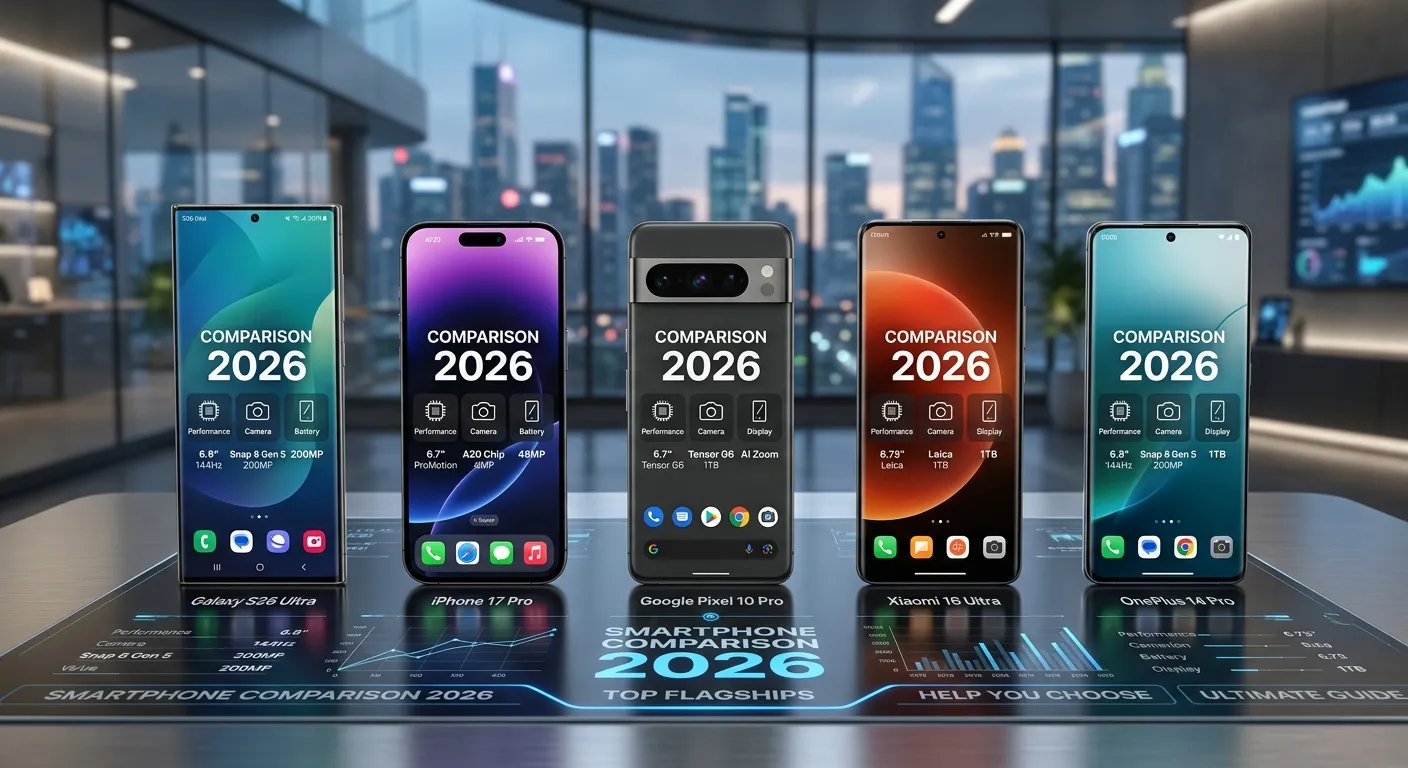
The smartphone market continues to evolve, with manufacturers introducing new technologies, improved cameras, faster processors, longer-lasting batteries, and advanced artificial intelligence (AI) features. In 2026, choosing a new smartphone is no longer just about selecting a famous brand. It is about finding the right balance between performance, price, design, and everyday usability.
In this article, we compare some of the latest flagship smartphones, including the Apple iPhone 18 Pro Max, Samsung Galaxy S26 Ultra, and Google Pixel 11 series. We will explore their key features, advantages, limitations, and value for money to help you make a more informed buying decision.
- The Latest Smartphones: An Overview
Apple iPhone 18 Pro Max
The iPhone 18 Pro Max is designed for users who want premium performance, advanced photography, and a powerful iOS experience. It features Apple's A20 Pro processor, a large OLED display, and a versatile camera system.
Main advantages:
Powerful processor for demanding applications and games.
Advanced photography and video-recording capabilities.
Integration with Apple's ecosystem, including Mac, iPad, and Apple Watch.
Potential drawbacks:
Premium pricing.
Some users may prefer the flexibility and customization offered by Android.
Samsung Galaxy S26 Ultra
Samsung's Galaxy S26 Ultra targets users who want a feature-rich Android smartphone. It combines a large display, powerful hardware, advanced camera technology, and productivity features.
Main advantages:
Large display suitable for entertainment and multitasking.
Versatile camera system with high-resolution photography.
Android customization and Samsung productivity features.
Potential drawbacks:
High purchase price.
Its large size may not suit users who prefer compact phones.
Google Pixel 11 Series
The Google Pixel 11 series focuses on a clean Android experience, computational photography, and AI-powered features. It is worth considering for users who value straightforward software, smart photo editing, and integration with Google services.
Main advantages:
Google's software and AI features.
Computational photography designed to improve everyday pictures.
A relatively clean Android interface.
Potential drawbacks:
Availability and pricing vary by country.
Certain features may be limited by language, region, or subscription requirements.
Note: Product availability and specifications can differ by market. Confirm the exact model and locally available features before purchasing.
- Comparing the Three Smartphones
Feature
iPhone 18 Pro Max
Galaxy S26 Ultra
Pixel 11 Series
Operating system
iOS
Android
Android
Main strength
Performance and video
Versatility and productivity
Photography and AI
Customization
More controlled
Extensive
Flexible, relatively clean
Best for
Apple ecosystem users
Power users
Google services and smart photography
Price category
Premium
Premium
Depends on model
This comparison highlights the main differences in their intended user experiences. The best choice depends on your priorities rather than on a single specification.
- How to Choose the Best Smartphone: A Step-by-Step Guide
Step 1: Set your budget
Before comparing specifications, decide how much you can spend. A more expensive phone is not necessarily the best choice for your needs.
For example, if you mainly use WhatsApp, browse the internet, watch videos, and take occasional photographs, a good mid-range phone may offer better value than a flagship model.
Step 2: Identify your main priority
Ask yourself what matters most:
Photography: Compare image quality, low-light performance, zoom, and video stabilization.
Gaming: Focus on processor performance, cooling, display refresh rate, and battery life.
Work and productivity: Consider multitasking, storage, security, and compatibility with your other devices.
Everyday use: Prioritize reliability, battery life, software support, and ease of use.
Step 3: Compare battery life and charging
Battery capacity, measured in milliampere-hours (mAh), is useful but does not tell the whole story. Actual battery life also depends on screen brightness, processor efficiency, software, and how heavily you use the phone.
Check independent battery tests and charging times rather than relying only on the advertised battery capacity.
Step 4: Evaluate the camera beyond megapixels
A 200-megapixel camera is not automatically better than a 48-megapixel camera. Sensor quality, image processing, optical stabilization, lens selection, and lighting conditions can make a significant difference.
If possible, compare photographs taken by each phone under the same conditions.
Step 5: Check software updates and local availability
Choose a device with a clear software-support policy. Also verify the warranty, repair options, network compatibility, and availability of replacement parts in your country.
These factors can affect the total cost of ownership long after the initial purchase.
- Practical Examples: Which Phone Fits Your Lifestyle?
Example 1: A content creator
If you regularly record videos for YouTube, Instagram, or TikTok, compare stabilization, audio quality, recording formats, and performance during long recording sessions. The iPhone may appeal to users who prioritize video workflows, but you should test the actual models before deciding.
Example 2: A mobile gamer
If you play demanding games, compare sustained performance, heat management, battery life, and screen responsiveness. A phone with a powerful processor may still struggle during long sessions if it becomes too hot.
Example 3: A photography enthusiast
If you enjoy taking portraits, night photographs, and travel pictures, compare the main camera, ultrawide lens, optical zoom, and image processing. Pixel devices are worth considering for their computational photography, while Samsung's Ultra models offer a versatile camera approach.
Example 4: A professional user
If you use your smartphone for emails, meetings, documents, and business applications, consider security updates, multitasking, file management, and integration with your computer. The best device is the one that supports your daily workflow efficiently.
- Practical Tips Before Buying a New Phone
Compare local prices: Check at least two or three reputable sellers.
Read independent reviews: Look for real-world battery, camera, and performance tests.
Choose adequate storage: Consider your photos, videos, applications, and expected use over several years.
Test the phone physically: Check its weight, grip, screen visibility, and ease of use.
Check warranty coverage: Confirm whether the phone is officially distributed in your market.
Calculate the total cost: Include accessories, repairs, insurance, and potential storage upgrades.
Avoid buying based on specifications alone: Real-world performance matters more than impressive numbers on a product page.
- Frequently Asked Questions (FAQs)
Which smartphone is the best in 2026?
There is no single best phone for everyone. The iPhone may suit users who prefer iOS and Apple's ecosystem, Samsung may appeal to users seeking extensive features and customization, and Google Pixel may suit people who value Google's software and photography features.
Is an expensive flagship phone worth buying?
It can be worthwhile if you need its advanced cameras, processing power, display, or productivity features. However, users with basic needs may get better value from a mid-range device.
Does a higher megapixel count mean a better camera?
No. Megapixels describe image resolution, but sensor quality, lens design, stabilization, and image processing also affect the final result.
How much storage do I need?
The right amount depends on your usage. If you take many high-resolution photos, record videos, or install large games, consider a higher-storage version. Also check whether the phone supports expandable storage.
Should I buy a new phone immediately or wait?
If your current phone works well, waiting may allow you to compare more reviews or benefit from price reductions. If your phone is unreliable, no longer receives security updates, or cannot handle your daily tasks, upgrading may make sense.
Is Android better than iOS?
Neither is universally better. Android offers more choice and customization across different manufacturers and budgets. iOS provides Apple's distinctive interface and close integration with its devices and services. Your preferences and existing devices should guide your decision.
- Conclusion
The latest smartphones offer impressive improvements in performance, photography, displays, and AI-powered tools. However, choosing the right device requires more than following launch announcements or selecting the most expensive model.
The iPhone 18 Pro Max, Samsung Galaxy S26 Ultra, and Google Pixel 11 series each appeal to different priorities. Before buying, define your budget, compare real-world performance, evaluate battery life and cameras, and check local warranty and software support.
The best smartphone is not necessarily the newest or most expensive one. It is the phone that delivers the features you need, at a price you can justify, with a reliable experience over the years you plan to use it.
10 Best Free AI Tools for Content Creators in 2026
A practical, honest guide to free AI tools, with realistic options, safety checks, common mistakes, and a clear starting plan.
أدوات الذكاء الاصطناعي لصنّاع المحتوى العرب: دليل عملي ومسؤول
كيف يستفيد صانع المحتوى العربي من أدوات الذكاء الاصطناعي في البحث والتنظيم والتدقيق دون أن يفقد أصالته أو ثقة جمهوره.
كيف تتصدر نتائج بحث جوجل في وقت قياسي؟ دليل السيو العملي للمواقع الجديدة في 2026
دليل السيو العملي لعام 2026: كيف تتصدر نتائج بحث جوجل بموقعك الجديد وتجلب آلاف الزيارات المجانية في وقت قياسي وبأمان.