The Rise of AI Video in Digital Advertising: Trends and Case Studies (2026)
Explore how AI video is revolutionizing digital advertising in 2026. Discover viral campaign case studies, dynamic creative personalization, and production co
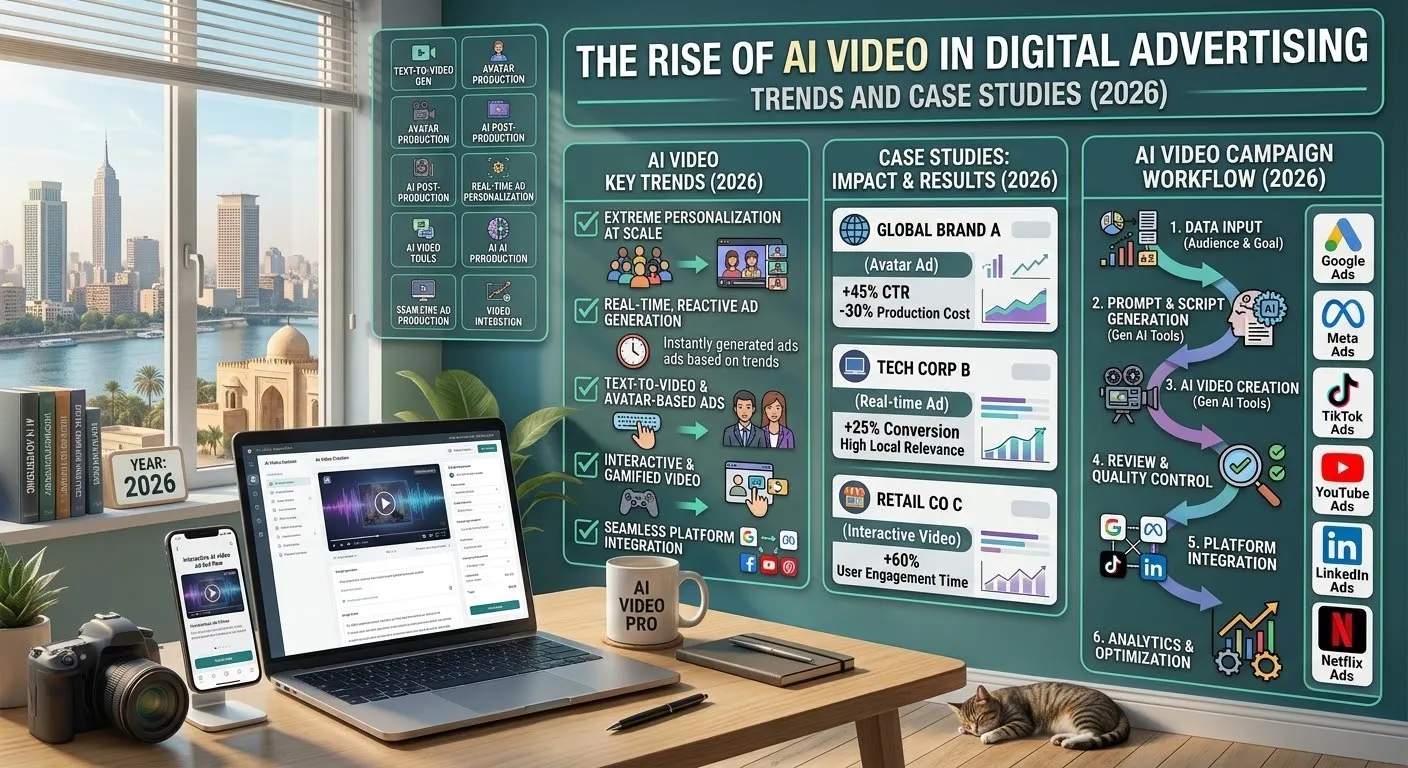
Digital advertising has reached an unprecedented inflection point. For decades, producing broadcast-quality commercial video campaigns required massive capital expenditures. Brands routinely allocated $50,000 to $200,000 for single television commercials or social ad spots, funding director fees, talent scouting, studio rentals, location scouting, lighting crews, and weeks of tedious post-production editing. Because production cycles were lengthy and expensive, marketing teams were forced to place massive bets on just one or two creative variations.
In 2026, generative artificial intelligence has dismantled this traditional production paradigm. Modern commercial enterprises and direct-to-consumer (DTC) brands now leverage cutting-edge neural video generators to produce hyper-personalized, photorealistic video advertisements in minutes at a fraction of previous costs. In this comprehensive analytical review, we dissect the major trends driving AI video adoption in digital advertising and examine real-world case studies demonstrating its commercial viability.
The Paradigm Shift: From Fixed Production to Dynamic Creative Optimization
The traditional advertising agency model struggled with creative fatigue. On platforms like Meta, TikTok, and YouTube, user ad fatigue sets in within ten to fourteen days; audiences tune out identical video ads, causing Cost Per Acquisition (CPA) metrics to surge dramatically.
Generative AI enables what performance marketers call Dynamic Creative Optimization (DCO) at scale. Instead of shooting a single commercial featuring one demographic actor in one environment, marketing teams use tools like Higgsfield AI and Runway Gen-3 to render thirty localized variants simultaneously. A performance marketing manager can test the exact same value proposition across different ethnic backgrounds, localized urban settings, and seasonal themes simultaneously, allocating ad spend exclusively to top-performing variants in real time.
Analyzing Real-World Case Studies: DTC Brands Slashing CPA
Real-world deployment data from consumer brands demonstrates that synthetic video is not a futuristic novelty; it is an aggressive competitive weapon driving superior return on ad spend (ROAS).
Case Study: Beauty and Cosmetics Personalized Visuals
A leading international cosmetics brand utilized synthetic facial video pipelines to demonstrate foundation matching across sixty distinct skin complexions. Rather than flying sixty professional models to a studio, the brand prompted generative character models to apply virtual cosmetic layers under identical lighting conditions. The resulting targeted ad campaign delivered a 38% decrease in customer acquisition costs and generated a 2.4x increase in online checkout conversion rates compared to static image ads.
Case Study: B2B Enterprise Software Product Explainers
A cloud security SaaS firm replaced generic screen recordings with cinematic, stylized animated video narratives illustrating complex cyber defense scenarios. Using advanced generative camera dolly paths and realistic character expressions, they produced three-minute corporate video explainers for under $1,000 in software compute credits. To understand how independent teams build software and digital platforms with AI tools, review our guide on How to Build and Launch Your First Web App Without Code.
Hyper-Localization and Seamless Multilingual Dubbing
One of the most friction-heavy aspects of global brand expansion has historically been creative localization. Adapting an English commercial for audiences in Tokyo, Berlin, or Dubai previously meant recording dubbed voiceovers that looked disjointed due to mismatched lip movements.
Modern synthetic advertising pipelines incorporate automated neural lip-sync technology. Engines analyze the audio frequency of translated voiceovers in German, Japanese, or Arabic, seamlessly modifying the actor's mouth shape and facial muscle contractions to match the foreign phonetic sounds flawlessly. A single video creative can now be deployed across thirty international markets simultaneously without hiring regional voice actors or reshooting video scenes.
Cinematic Fidelity and Character Consistency Breakthroughs
Early AI video tools in 2023 and 2024 suffered from notorious visual bugs: unnatural six-fingered hands, distorted facial features during fast movement, and flickering background geometry. These flaws rendered them unusable for premium luxury advertising.
In 2026, advanced foundational diffusion models have largely eliminated these issues. Platforms like Higgsfield AI deliver exceptional facial structural stability and photorealistic textile rendering, allowing luxury apparel and automotive brands to showcase intricate fabrics and metallic reflections convincingly. For an exhaustive feature comparison between today's dominant video engines, explore our Higgsfield AI vs Runway Gen-3 Comparison.
Ethical Disclosures, Watermarking, and Platform Ad Policies
As synthetic video adoption accelerates, major advertising networks and government regulatory bodies have established strict guidelines to safeguard consumer transparency.
Platforms like Google, Meta, and TikTok require advertisers to declare whether promotional media contains synthetically generated or altered photorealistic elements. Advertisers who fail to declare AI-generated visuals face immediate ad account bans and creative rejections. Leading brands navigate this gracefully by embracing transparent disclosure, frequently highlighting their cutting-edge technological creativity as an attractive brand attribute rather than concealing it.
The Future of Advertising Agencies in an Autonomous Video Era
The commercial advertising agency is not becoming extinct; rather, it is transforming from an equipment-heavy production house into a strategic narrative consultancy.
Agencies that rely on renting physical cameras and charging heavy markups for hourly editing are experiencing rapid client attrition. Conversely, modern agile studios that master prompt architecture, prompt-to-video direction, and real-time algorithmic creative testing are commanding premium enterprise retainers. To see how ambitious freelancers are capitalizing on these exact corporate service shifts, read our actionable guide on How to Build a High-Ticket Freelance Business Using AI in 2026.

Passkeys Explained: How to Replace Your Passwords Safely
What passkeys are, why they resist phishing, and a step-by-step plan to switch your email, bank and social accounts without getting locked out.
Understanding the Basics of Cybersecurity at Home
Simple, jargon-free steps every household can take to protect accounts, devices and personal data.

15 Best AI Tools for Bloggers in 2026
A practical, honest guide to AI tools for bloggers, with realistic options, safety checks, common mistakes, and a clear starting plan.