Debt snowball vs avalanche: choosing a payoff plan
Select a repayment approach you can sustain. List every balance, interest rate, minimum payment and due date. Pay minimums on all accounts
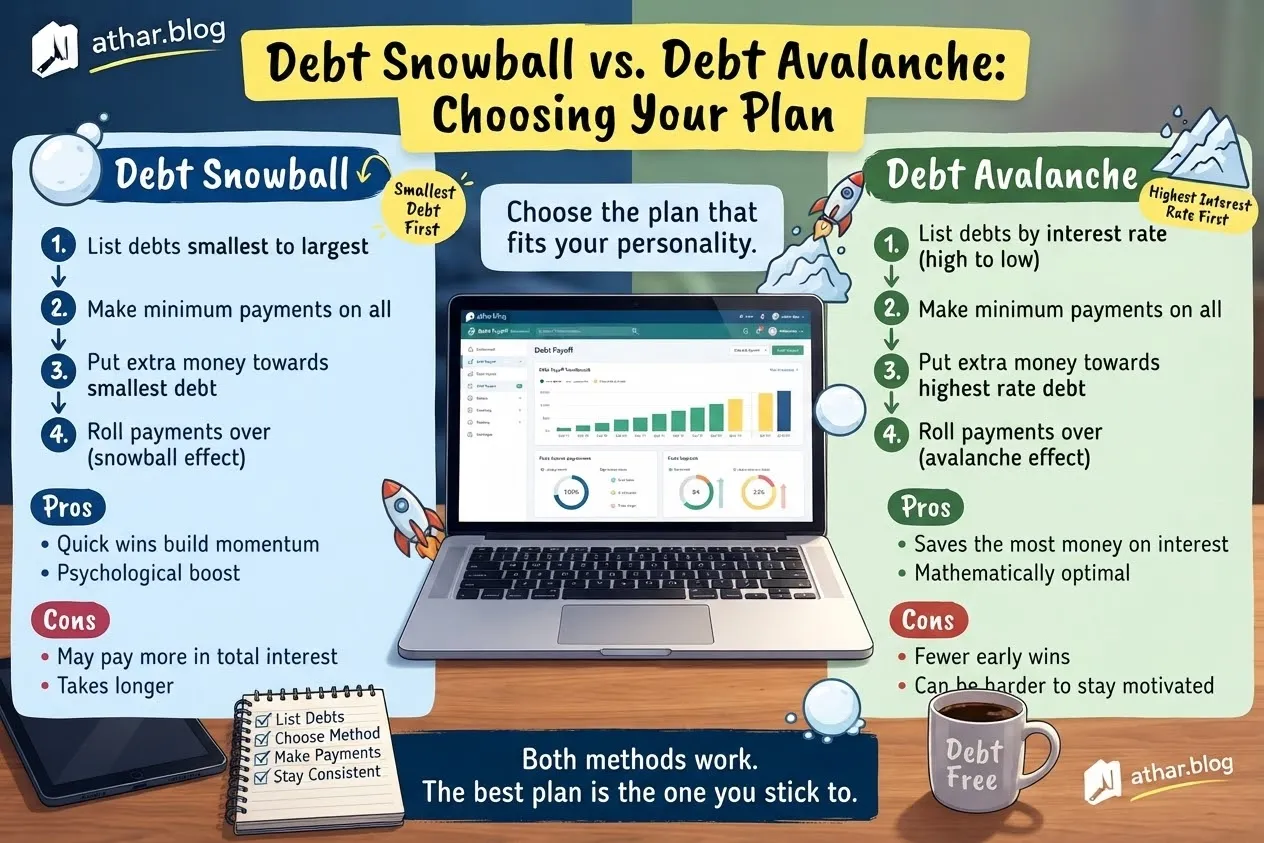
A truly effective financial strategy begins with a precise objective, rather than a mere collection of impressive financial terms. Deciding between the debt snowball and avalanche methods becomes significantly clearer when you meticulously define your financial goals, assess your available resources, and establish concrete metrics to measure success. The core principle is to select a repayment approach you can realistically sustain over the long term. The aim here is not to replicate someone else’s financial blueprint; it is to make a thoughtful, informed choice that aligns perfectly with your individual circumstances and limitations.
Defining Your Objective and Current State
Before embarking on any debt repayment journey, articulate the desired outcome in a single, unambiguous sentence. Distinguish between a quantifiable result and a vague aspiration. For instance, "reducing total interest paid by 20% within two years" is a measurable outcome, unlike "getting out of debt faster." Understand that different tasks, such as improving cash flow, eliminating high-interest debt, or building financial discipline, each demand a tailored approach.
Crucially, identify what aspects of your current financial management are already functioning well, ensuring you do not discard them without due consideration. Prior to implementing any changes, document your existing financial processes, noting the associated time, cost, or friction involved. This meticulous record-keeping provides a robust baseline against which you can accurately compare future results, allowing for a fair assessment of your new strategy's efficacy.
Understanding Debt Payoff Strategies
When tackling multiple debts, two primary strategies, debt snowball and debt avalanche, consistently emerge as the most discussed. Each offers distinct advantages, catering to different psychological and financial priorities.
The Debt Snowball Method
The debt snowball method prioritizes psychological momentum. Here, you focus on paying off your smallest debt first, regardless of its interest rate. After making minimum payments on all other debts, any extra funds are directed towards the smallest balance. Once that debt is fully repaid, the money you were paying on it (the minimum payment plus any extra funds) is then rolled into the next smallest debt. This continues, creating a "snowball" effect.
Practical Steps:
- List all your debts from smallest balance to largest.
- Make minimum payments on all debts except the smallest one.
- Direct all additional available funds to the smallest debt.
- Once the smallest debt is paid off, take the money you were paying on it and add it to the minimum payment of the next smallest debt.
- Repeat this process until all debts are cleared.
The primary benefit of the snowball method is the psychological boost you receive from quickly eliminating an entire debt. This rapid succession of small wins can be incredibly motivating, helping individuals stay committed to their repayment plan, especially when facing a daunting amount of debt.
The Debt Avalanche Method
Conversely, the debt avalanche method prioritates financial efficiency. This strategy involves tackling debts with the highest interest rates first, regardless of their balance. By focusing extra payments on high-interest debts, you minimize the total amount of interest paid over the life of your loans, potentially saving a significant sum of money.
Practical Steps:
- List all your debts, ordered by their interest rate from highest to lowest.
- Make minimum payments on all debts except the one with the highest interest rate.
- Direct all additional available funds to the debt with the highest interest rate.
- Once the highest interest rate debt is paid off, take the money you were paying on it and add it to the minimum payment of the next debt with the highest interest rate.
- Continue this process until all debts are retired.
The key advantage of the avalanche method is the maximization of financial savings. By systematically eliminating the most expensive debts first, you reduce the overall cost of borrowing, making it the mathematically superior choice for those who can maintain strict discipline.
Constructing Your Practical Approach
To begin, meticulously list every outstanding balance, its corresponding interest rate, the minimum payment required, and the due date for each account. Your core strategy will involve consistently making minimum payments on all accounts to avoid penalties and negative credit reporting. Subsequently, direct any surplus funds towards either the smallest balance (snowball) or the debt with the highest interest rate (avalanche).
When contemplating various repayment options, it is essential to evaluate them using a consistent set of criteria. Consider the total cost implications, the effort required for setup and ongoing management, the reliability of the proposed method, its reversibility should circumstances change, and the impact on any other individuals dependent on your financial decisions. A straightforward, written comparison of these factors often serves to prevent costly errors—those resulting from commitment before a thorough understanding of the trade-offs. Always commence with the most concise, yet useful, version of your chosen strategy. If it proves beneficial, refine and expand it; if not, you can pivot without sacrificing months of dedicated effort.
Essential Considerations and Potential Pitfalls
A critical aspect of any debt repayment plan is the unwavering commitment to making all minimum payments. Neglecting these minimums invariably leads to late fees, potential increases in interest rates, and significant damage to your credit score, undermining the very purpose of your efforts. A strategy that appears flawless on paper can quickly falter if its monthly demands are unrealistic given your income and expenses. Be particularly cautious of financial advice that omits crucial details regarding costs, specific contextual factors, or inherent uncertainties.
Maintain a meticulous record of both successes and setbacks. A missed target or a deviation from the plan should be viewed as valuable information for adjustment, not as grounds to abandon the entire endeavor. For financial decisions, especially those involving significant sums, legal obligations, or sensitive personal information, always verify local regulations and seek qualified professional guidance when necessary.
Your Next Steps and Continuous Review
After carefully considering the snowball and avalanche methods, choose one that resonates with your personal motivation and financial capacity. Immediately set up automatic minimum payments for every single debt to ensure consistency and avoid oversights. Then, commit to a scheduled, realistic review date—perhaps monthly or quarterly.
At each review, compare your current progress against your initial baseline. Ask yourself whether the changes implemented have effectively addressed your original financial challenge. Based on this assessment, decide whether to continue with the current plan, revise specific elements, or, if necessary, adopt an entirely new strategy. Financial progress is more often the result of modest, consistent actions diligently repeated, rather than sporadic, dramatic one-off decisions. Crucially, keep detailed notes throughout your journey. This personal evidence will inform your future choices, ensuring they are based on your actual experience rather than generalized success stories.
Related Articles

إنشاء وبيع الكتب الإلكترونية بالذكاء الاصطناعي: دليلك العملي لعام 2026
`تعلم كيفية إنشاء وبيع الكتب الإلكترونية بالذكاء الاصطناعي في 2026 من اختيار الفكرة وكتابة المحتوى حتى التصميم والتسويق لتحقيق دخل سلبي مستدام عبر الإنترنت.

The 50/30/20 Budget Rule: A Simple Guide With Real Examples
Learn how the 50/30/20 budget works, how to adapt it to high rent or irregular income, and the tools that make it stick.

كيف تستلم أرباحك من التدوين والإنترنت في الدول العربية: أفضل البنوك الإلكترونية والحسابات 2026
دليل شامل لسحب واستلام أرباح التدوين والعمل عبر الإنترنت في مصر والدول العربية في 2026. مقارنة بايونير، وايز، بايبال، والحسابات البنكية بالدولار.