The 50/30/20 Budget Rule: A Simple Guide With Real Examples
Learn how the 50/30/20 budget works, how to adapt it to high rent or irregular income, and the tools that make it stick.
Understanding the 50/30/20 Budget Rule: A Practical Framework for Financial Control
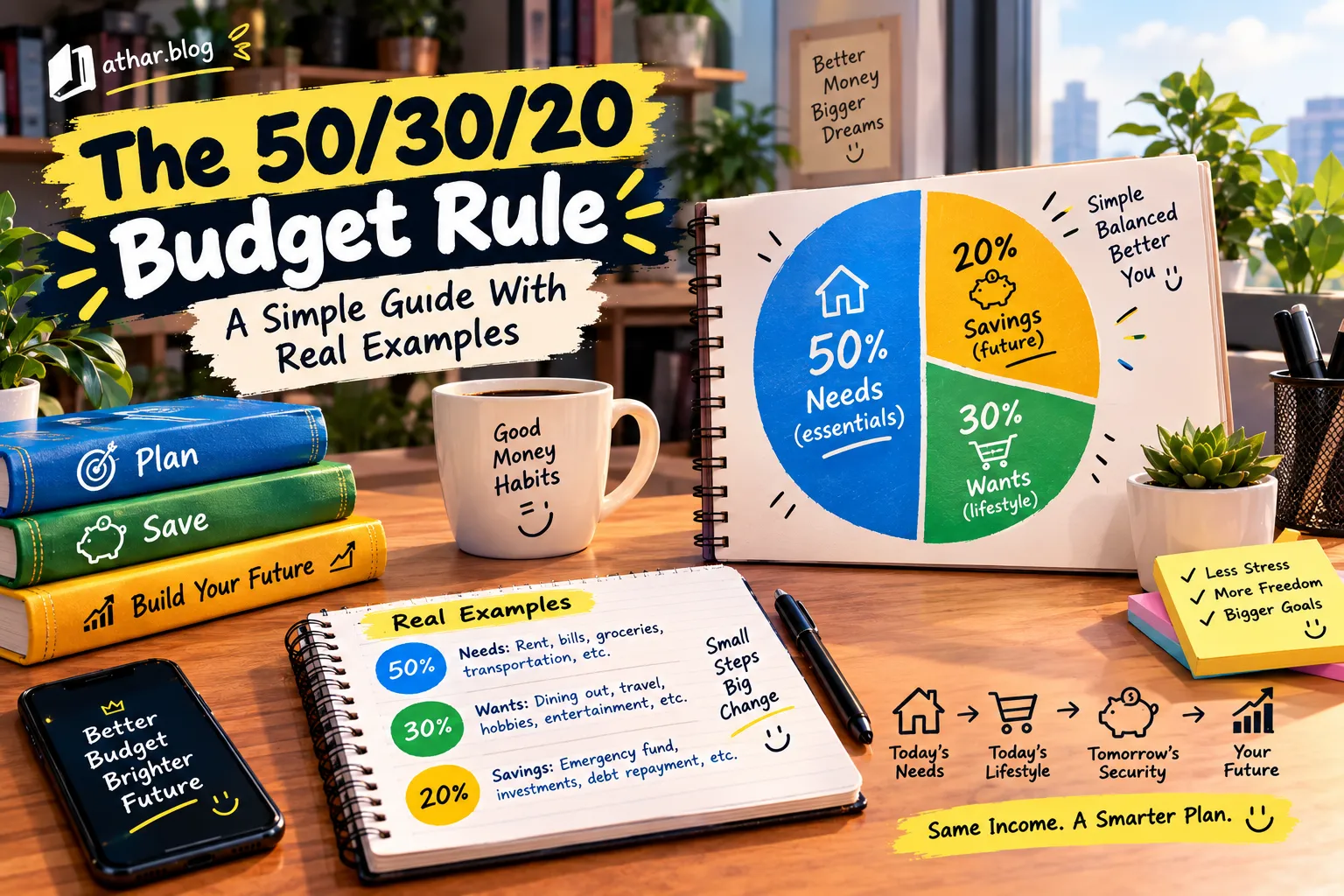
The 50/30/20 budget rule is a widely adopted financial guideline, celebrated for its straightforward approach to managing personal finances. At its core, this method suggests allocating approximately 50 percent of your after-tax income to essential needs, 30 percent to discretionary wants, and 20 percent to financial objectives such as savings and debt reduction. Its appeal lies in its simplicity and flexibility, offering a practical structure without demanding meticulous tracking of every minor expenditure. This approach encourages mindful spending habits while ensuring progress towards future financial stability.
Deconstructing the Categories: Needs, Wants, and Savings
Effectively implementing the 50/30/20 rule requires a clear understanding of what constitutes each spending category. Misclassifying expenses can lead to an unbalanced budget and hinder your financial progress.
Defining Essential Needs
Essential needs encompass all expenditures that are absolutely critical for your survival and basic living. These are costs you would incur serious negative consequences if you failed to pay them.
Examples of essential needs include:
- Housing: Rent or mortgage payments, property taxes.
- Utilities: Electricity, gas, water, and basic internet service.
- Groceries: Funds for necessary food and household supplies.
- Transportation: Fuel, public transport fares, or car payments required for commuting to work.
- Insurance: Health insurance premiums, car insurance, homeowner's or renter's insurance.
- Minimum Debt Payments: The minimum required payments on credit cards, student loans, or other debts to avoid penalties and protect your credit score.
It's crucial to distinguish between a "need" and an "upgraded need." For instance, a basic internet connection is a need for most modern households, but the fastest, most expensive fiber optic plan might be considered a want if a more economical option suffices.
Identifying Discretionary Wants
Wants are non-essential expenses that enhance your quality of life but are not strictly necessary for survival. These are items or services you could live without, even if they bring significant enjoyment. The 50/30/20 rule acknowledges that wants are an important part of life, but it provides a framework to keep them in check.
Typical examples of wants include:
- Dining out at restaurants or ordering takeout.
- Subscription services for entertainment (streaming, gaming, music).
- Hobbies and recreational activities (e.g., gym memberships beyond a basic fitness need, craft supplies).
- Travel and vacations.
- New clothing that isn't replacing worn-out essentials.
- Upgraded electronics, such as the latest smartphone model.
- Premium coffee drinks or frequent casual purchases.
Understanding this distinction allows for conscious choices. By recognizing these expenditures as wants, you gain the power to adjust them if your budget becomes constrained in other areas.
Prioritizing Savings and Debt Repayment
The 20 percent allocation is dedicated to bolstering your financial future. This critical portion addresses two key areas: building financial security and reducing debt obligations.
The order of priority for this 20 percent typically follows these steps:
- Establishing an Emergency Fund: This involves saving 3-6 months' worth of essential living expenses in an easily accessible, high-yield savings account. This fund acts as a financial buffer against unforeseen circumstances like job loss, medical emergencies, or significant home repairs.
- Aggressive Debt Repayment: Once a foundational emergency fund is in place, focus on paying down high-interest debt beyond the minimum payments. This includes credit card balances, personal loans, or any debt with substantial interest rates. Eliminating high-interest debt is often considered a guaranteed return on investment.
- Long-Term Investing: After clearing high-interest debt, direct funds towards long-term financial growth. This could involve contributing to retirement accounts (e.g., 401(k), IRA), investing in a diversified portfolio of stocks and bonds, or saving for major life goals such as a down payment on a house or a child's education.
Practical Application: A Detailed Example
Let's illustrate how the 50/30/20 rule applies to a hypothetical individual with a monthly take-home income of €2,500 after taxes.
- 50% for Needs: €1,250
- 30% for Wants: €750
- 20% for Savings & Debt Repayment: €500
Now, consider a scenario where this individual's rent alone is €1,100 per month. In this case, the housing expense alone consumes a significant portion of the €1,250 allocated for needs. If other essential bills (utilities, groceries, transport, insurance) amount to an additional €300, the total needs expenditure reaches €1,400 (€1,100 + €300). This figure already exceeds the 50% guideline by €150.
To adhere to the spirit of the rule, adjustments are necessary:
- Prioritize Savings: The 20% for savings (€500) should ideally remain untouched, as this is crucial for financial security. Even in challenging circumstances, maintaining at least a 10% saving rate is highly recommended.
- Reduce Wants: Since needs have surpassed their allocated share, the excess amount must come from the wants category. The €150 overage in needs means the wants budget needs to be reduced from €750 to €600 (€750 - €150). This requires a temporary curtailment of discretionary spending.
- Seek Long-Term Solutions: If needs consistently exceed 50%, it may signal a need for more substantial changes, such as exploring options for lower housing costs, reducing utility usage, or finding more affordable transportation.
This example highlights the rule's flexibility: it's a guideline, not a rigid law. When one category is strained, others must adapt.
Navigating Irregular Income
For individuals with fluctuating income, such as freelancers, commission-based earners, or contract workers, implementing the 50/30/20 rule requires a strategic approach to maintain consistency and avoid financial stress.
Strategies for Income Volatility:
- Base Budget on Lowest Typical Income: Create your core 50/30/20 budget using your lowest anticipated monthly income. This ensures that even during lean periods, you can meet essential expenses and continue saving.
- Utilize an Income Buffer Account: Establish a separate savings account specifically for "extra" income earned above your lowest typical month. This acts as a buffer.
- Pay Yourself a Consistent Salary: From your income buffer, pay yourself a steady, predetermined amount each month, matching your base budget. This smooths out income fluctuations and allows for consistent application of the 50/30/20 rule.
- Allocate Surplus Funds: Any remaining funds in the buffer account, after covering your consistent "salary," can be strategically allocated towards accelerated debt repayment, boosting your emergency fund, or investing.
Practical Steps for Irregular Income:
- Calculate your average monthly income over the past 6-12 months.
- Identify your absolute lowest income month during that period. This is your conservative baseline.
- Set up an automated transfer to your income buffer account for all income received.
- From the buffer, set up a recurring transfer to your main spending account on a fixed day each month.
Automating Your Financial Flow
One of the most effective ways to adhere to the 50/30/20 rule, and budgeting in general, is to automate your financial processes. This reduces the mental effort involved and minimizes the chance of overspending.
Steps to Automate Your Budget:
- Separate Accounts or Digital Pockets:
- Option 1: Multiple Bank Accounts: Open separate checking or savings accounts for "Needs," "Wants," and "Savings/Debt." This provides clear visual separation of funds.
- Option 2: Digital Budgeting Tools/Envelopes: Many modern banking apps and budgeting platforms offer features like "envelopes," "jars," or "pockets" where you can digitally allocate funds within a single account.
- Automated Transfers on Payday:
- Savings First: Immediately upon receiving your paycheck, set up an automatic transfer for your 20% savings and debt repayment portion into its designated account or digital pocket. This adheres to the "pay yourself first" principle.
- Needs Allocation: Transfer your 50% for needs into its respective account or pocket.
- Wants Allocation: The remaining 30% for wants can either be transferred to a separate "wants" account or simply left in your primary checking account, assuming all other automated transfers have occurred.
- Direct Debits for Fixed Expenses:
- Set up direct debits or automatic bill payments for all your fixed needs, such as rent, mortgage, utilities, and insurance premiums. Schedule these to occur shortly after payday from your "Needs" account.
By establishing these automated processes, your money is directed to its intended purpose before you even have a chance to spend it elsewhere. This creates a powerful system that reinforces your budgeting goals.
Regular Review and Adjustment
A budget is a living document, not a static one. Consistent review and adjustment are crucial for its long-term effectiveness.
Importance of Monthly Check-ins:
- Track Performance: Dedicate 10-15 minutes at the end of each month to review your spending. Analyze where your money actually went compared to your budget.
- Identify Deviations: Note any categories where you consistently overspent or underspent. For instance, if your "Wants" category is always depleted mid-month, it might indicate unrealistic initial allocation or a need for more discipline.
- Adapt to Changes: Life circumstances change, and your budget must adapt.
- Income Growth: As your income increases, resist the urge for instant "lifestyle creep." Instead of immediately increasing discretionary spending, consider raising your savings rate to 25% or 30%, or accelerate debt repayment.
- Major Life Events: Marriage, childbirth, job changes, or significant purchases (like a new car or home) all necessitate a complete budget re-evaluation.
- Goal Revisions: If your financial goals evolve (e.g., saving for a sabbatical instead of a down payment), adjust your 20% allocation accordingly.
Reviewing your budget isn't about punishment; it's about empowerment. It gives you the information needed to make informed financial decisions and ensure your spending aligns with your long-term objectives.
Related Articles:

إنشاء وبيع الكتب الإلكترونية بالذكاء الاصطناعي: دليلك العملي لعام 2026
`تعلم كيفية إنشاء وبيع الكتب الإلكترونية بالذكاء الاصطناعي في 2026 من اختيار الفكرة وكتابة المحتوى حتى التصميم والتسويق لتحقيق دخل سلبي مستدام عبر الإنترنت.

كيف تستلم أرباحك من التدوين والإنترنت في الدول العربية: أفضل البنوك الإلكترونية والحسابات 2026
دليل شامل لسحب واستلام أرباح التدوين والعمل عبر الإنترنت في مصر والدول العربية في 2026. مقارنة بايونير، وايز، بايبال، والحسابات البنكية بالدولار.

How to Build a High-Yield Savings Strategy That Actually Beats Inflation
Practical steps to grow an emergency fund and short-term savings: account types, rate traps to avoid, and how to split money by goal.