How to Build a High-Yield Savings Strategy That Actually Beats Inflation
Practical steps to grow an emergency fund and short-term savings: account types, rate traps to avoid, and how to split money by goal.
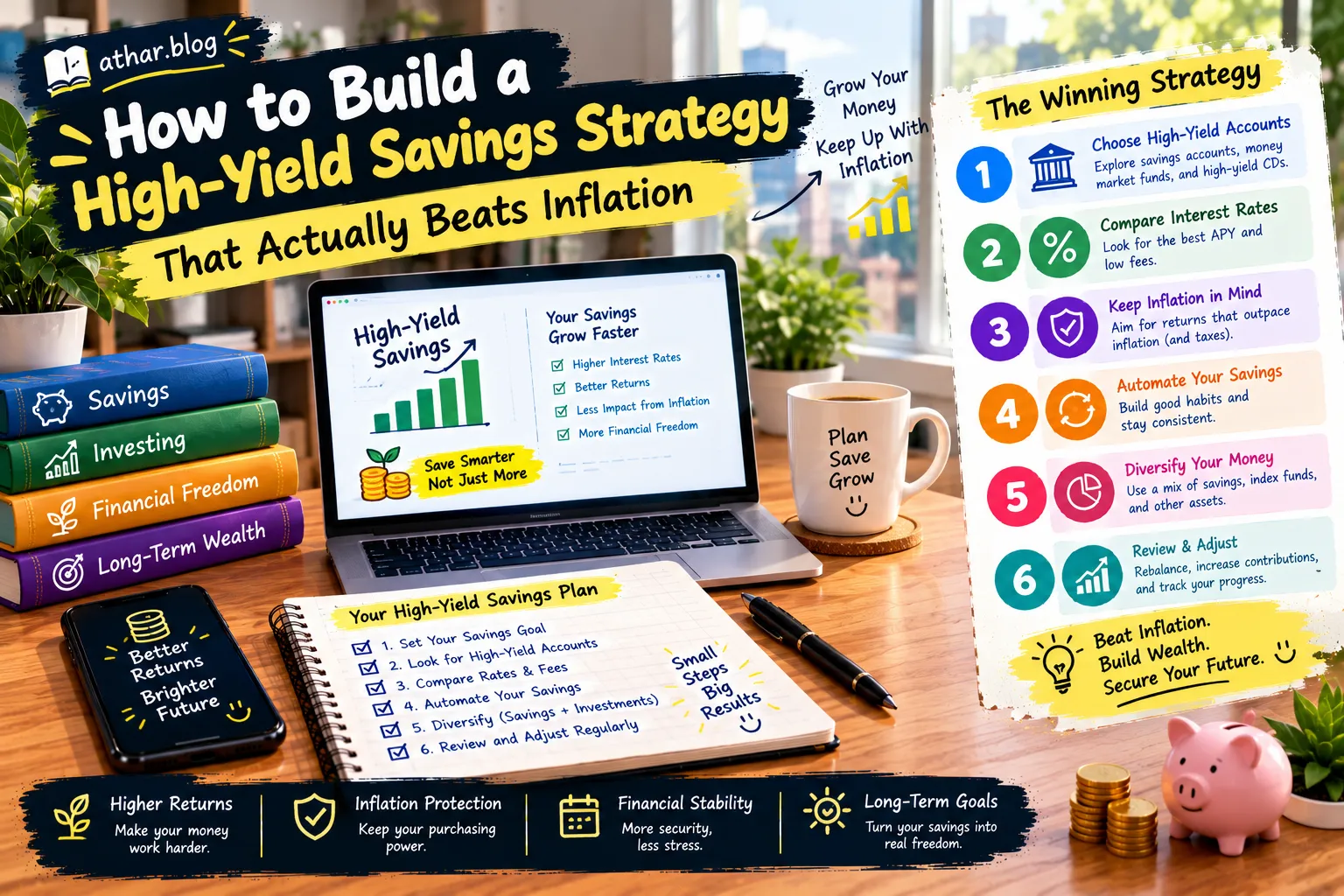
The Erosion of Wealth: Why Standard Savings Accounts Fall Short
In an economic climate where the cost of living frequently outpaces the modest returns offered by conventional financial products, relying solely on a standard savings account can inadvertently lead to a gradual erosion of your financial stability. While these accounts provide security and easy access, their interest rates are typically negligible, often failing to even keep pace with inflation. This means that the purchasing power of your carefully saved money diminishes over time, even as the numerical value remains constant. A sophisticated high-yield savings strategy, therefore, isn't about chasing speculative or high-risk investments; it's about making deliberate choices to place each segment of your capital in vehicles that maximize its earning potential while ensuring it remains readily accessible for its intended purpose. It's about optimizing liquidity, return, and risk for different financial objectives.
Understanding the Impact of Inflation
Inflation, simply put, is the rate at which the general level of prices for goods and services is rising, and consequently, the purchasing power of currency is falling. If your savings account offers an annual interest rate of 0.5% and inflation is running at 3%, your money is effectively losing 2.5% of its value each year. Over a decade, this can significantly reduce what your savings can buy. A proactive high-yield strategy aims to mitigate this silent thief, ensuring your money works as hard as you do to maintain or even grow its real value.
Strategically Allocating Funds: The Bucket Approach
An effective high-yield savings strategy begins with categorizing your money based on its intended use and timeframe. This "bucket" approach helps you match each sum to the most appropriate financial product, balancing access, risk, and potential returns.
The Emergency Fund: Non-Negotiable Accessibility
Your emergency fund represents your immediate financial safety net. It should ideally cover three to six months of essential living expenses, including housing, utilities, food, and transportation. The paramount characteristic of this fund is instant accessibility, meaning it should be held in a highly liquid account where funds can be withdrawn without penalty or delay. The primary goal here is preservation of capital and immediate availability, not maximum returns.
- Practical Step: Calculate your average monthly essential expenses. Multiply this by 3 (for a lean fund) or 6 (for a robust fund). This is your emergency fund target.
- Example: If your essential monthly expenses are $3,000, your emergency fund should be between $9,000 and $18,000.
Short-Term Goals: Balancing Access and Growth
Funds earmarked for short-term goals, such as saving for a new appliance, an educational course, or a vacation planned within the next one to two years, can tolerate slightly less immediate liquidity than an emergency fund. These funds can be placed in accounts that offer better interest rates without locking up your money for extended periods.
Long-Term Objectives: Diversified Growth
Money not needed for five years or more, such as retirement savings or a future down payment on a home, should generally be directed towards diversified investment vehicles. These typically offer higher growth potential over extended periods, albeit with greater market fluctuations. Such funds are outside the scope of a high-yield savings strategy, as they belong in investment portfolios, but differentiating them is crucial for proper financial planning.
Exploring High-Yield Savings Vehicles
Once your funds are categorized, you can select the most suitable financial products. Here are some popular options to consider:
- High-Yield Online Savings Accounts: These accounts consistently offer significantly higher interest rates than traditional brick-and-mortar bank accounts. Operating primarily online allows these institutions to incur lower overheads, which they often pass on to customers through better rates. Funds remain fully liquid, allowing withdrawals at any time without penalty, making them ideal for emergency funds and short-term goals.
- Fixed-Term Deposits (Certificates of Deposit - CDs): CDs require you to deposit a sum for a specified period (e.g., 6 months, 1 year, 3 years) in exchange for a guaranteed interest rate, which is typically higher than that of standard savings accounts. A common strategy is to "ladder" CDs. This involves opening several CDs with varying maturity dates. For instance, you could open a 6-month, 1-year, and 2-year CD. As each one matures, you can reinvest it or use the funds, ensuring a portion of your capital becomes available regularly while enjoying better rates than a fully liquid savings account.
- Money Market Funds (MMFs): These are mutual funds that invest in highly liquid, short-term debt instruments like Treasury bills, commercial paper, and repurchase agreements. They are generally considered low-risk and offer competitive yields that track current short-term interest rates. Money market funds are often used for cash that might be needed within several months but still needs to earn more than a traditional checking account. While not always FDIC-insured like bank deposits, they are regulated and aim to maintain a stable net asset value of $1 per share.
- Government Savings Bonds: In certain countries, government-issued savings bonds (e.g., I Bonds in the U.S.) offer rates linked to inflation, providing a measure of protection against rising prices. These are backed by the full faith and credit of the issuing government, making them extremely low-risk. They often come with specific holding periods and redemption rules, so it's essential to understand their terms before investing.
Navigating Potential Pitfalls and Ensuring Security
While pursuing higher yields, it's crucial to remain vigilant and avoid common traps that can negate your efforts.
- Beware of Introductory Rates: Some institutions lure new customers with attractive "teaser" rates that are exceptionally high for a few months but then revert to much lower rates. Always check the ongoing rate, not just the initial promotional offer.
- Scrutinize Minimum Balance Requirements: Many high-yield accounts have minimum balance thresholds that must be maintained to earn the advertised rate or avoid fees. Ensure your planned deposit meets these requirements.
- Understand Monthly Fees and Early Withdrawal Penalties: Hidden fees or penalties for withdrawing funds before a CD matures can significantly eat into your returns. Always read the fine print regarding account maintenance fees, transaction fees, and any early redemption charges.
- Confirm Deposit Insurance: Always verify that the financial institution is licensed and that your deposits are protected by your country's guarantee scheme (e.g., FDIC in the U.S., FSCS in the UK). This insurance protects your money up to a certain limit in the unlikely event of the institution's failure. Look for clear indications on the bank's website or in its disclosures.
Harnessing Automation for Consistent Growth
One of the most effective ways to build consistent savings is to remove the element of conscious decision-making. By automating your savings, you ensure that contributions happen regularly, transforming saving into a habit rather than an occasional effort.
- Set Up Automatic Transfers: Schedule a recurring transfer from your checking account to your high-yield savings account on payday. Even a modest fixed amount, consistently transferred, leverages the power of compounding over time. This "pay yourself first" approach ensures saving happens before spending.
- Direct Deposit Allocation: Many employers allow you to split your direct deposit, sending a portion directly to a savings account. This is an excellent way to automate savings without ever seeing the money in your primary checking account.
- Round-Up Programs: Some banking apps offer features that round up your purchases to the nearest dollar and transfer the difference to your savings. While small individually, these micro-savings can accumulate surprisingly quickly.
The Importance of Regular Review and Adaptation
Financial markets and personal circumstances are dynamic, making periodic review of your savings strategy indispensable.
- Bi-Annual Rate Comparisons: At least twice a year, dedicate time to compare the interest rate you are currently earning with the best available rates in the market. Financial institutions frequently adjust their offerings, and better opportunities often emerge.
- Strategic Fund Transfers: If you discover a significant difference in rates (e.g., 0.5% or more), consider moving your funds to a new, higher-yielding account. The process of transferring money between online banks is typically straightforward, though it might take a few business days.
- Emergency Fund Reassessment: Life changes. Your essential expenses might increase due to a new child, a mortgage, or rising costs of living. Regularly reassess your emergency fund target to ensure it still adequately covers three to six months of your current essential expenses. If your expenses have grown, make a plan to top up your emergency fund. This regular check-up ensures your safety net remains robust and relevant to your financial reality.
--- Related articles:

إنشاء وبيع الكتب الإلكترونية بالذكاء الاصطناعي: دليلك العملي لعام 2026
`تعلم كيفية إنشاء وبيع الكتب الإلكترونية بالذكاء الاصطناعي في 2026 من اختيار الفكرة وكتابة المحتوى حتى التصميم والتسويق لتحقيق دخل سلبي مستدام عبر الإنترنت.

The 50/30/20 Budget Rule: A Simple Guide With Real Examples
Learn how the 50/30/20 budget works, how to adapt it to high rent or irregular income, and the tools that make it stick.

كيف تستلم أرباحك من التدوين والإنترنت في الدول العربية: أفضل البنوك الإلكترونية والحسابات 2026
دليل شامل لسحب واستلام أرباح التدوين والعمل عبر الإنترنت في مصر والدول العربية في 2026. مقارنة بايونير، وايز، بايبال، والحسابات البنكية بالدولار.