AI Agents Explained: What They Can Actually Do for You in 2026
A clear guide to AI agents: how they differ from chatbots, where they save real time, and the risks to manage before you rely on them.
From Reactive Chatbots to Proactive AI Agents
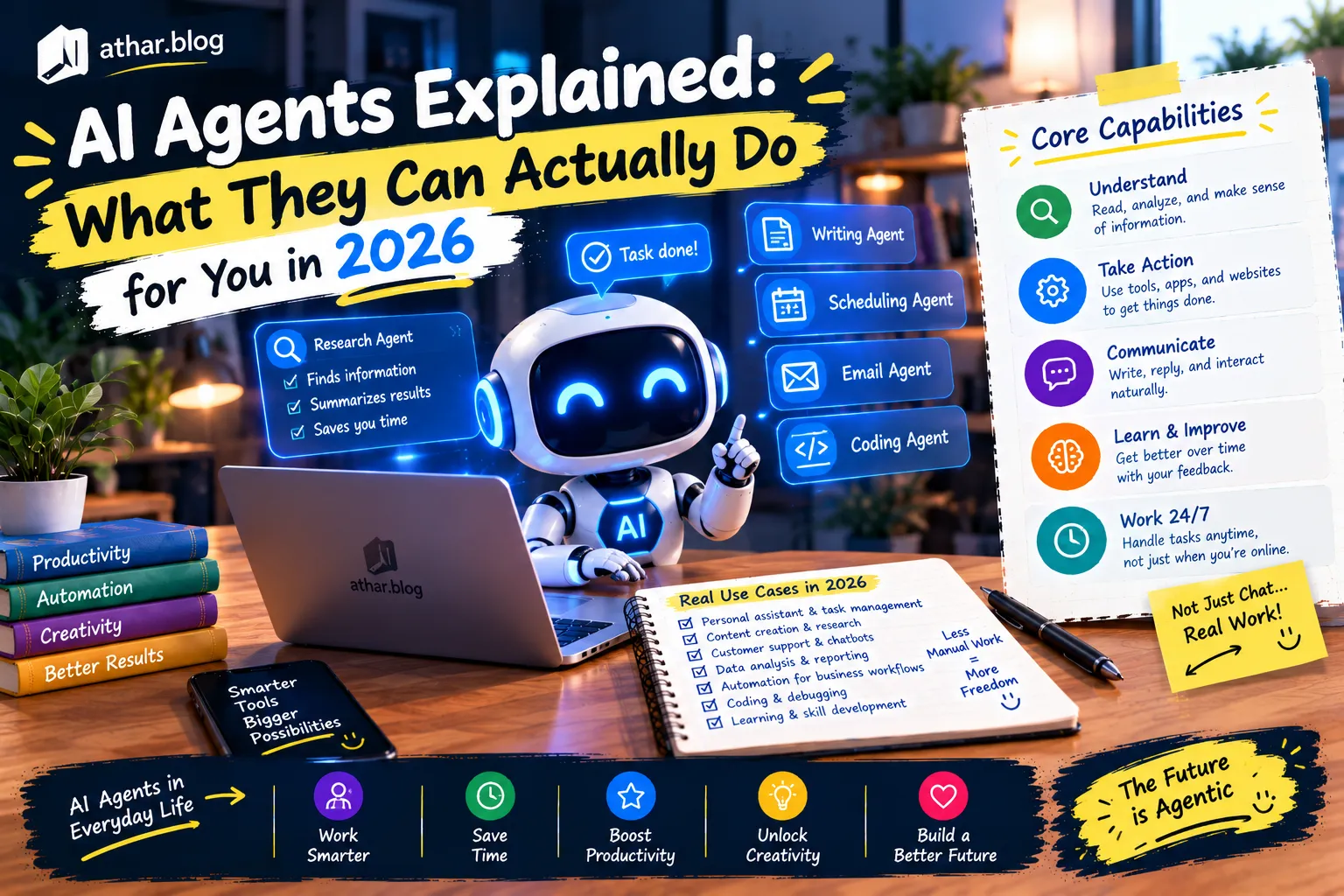
The landscape of artificial intelligence is rapidly evolving, moving beyond simple conversational interfaces to more dynamic and autonomous systems. Traditional chatbots, while useful for answering specific queries, typically operate in a reactive mode: a user asks a question, and the bot provides an answer before concluding the interaction. The advent of AI agents represents a significant paradigm shift. An AI agent is designed not merely to respond but to act. It receives a high-level goal, autonomously breaks it down into a series of actionable steps, and then utilizes various digital "tools" — such as web browsers, spreadsheet software, email clients, or even custom APIs — to execute these steps. Crucially, these agents often incorporate self-correction mechanisms, allowing them to verify their own outputs and iterate until the task is successfully completed or they require human intervention or approval. This fundamental transition from simply providing information to independently performing tasks is the core reason why AI agents have emerged as one of the most compelling and frequently discussed topics in the artificial intelligence domain this year.
The Evolution of Autonomy
The journey from a basic script-based chatbot to a sophisticated AI agent involves several layers of complexity. Early chatbots relied heavily on predefined rules and keyword matching. More advanced versions leverage large language models (LLMs) to understand natural language and generate contextually relevant responses. AI agents take this a step further by integrating LLMs with planning modules, memory systems, and tool-use capabilities. This enables them to not just comprehend but also to strategize and execute. They maintain a persistent "context" of the task at hand, allowing for multi-step operations and adaptive behavior, making them far more versatile than their predecessors.
Current Practical Applications of AI Agents
While the capabilities of AI agents are expanding, their most reliable and impactful applications today are found in scenarios that are both narrow in scope and highly repetitive. These are tasks where the agent operates within clearly defined parameters, minimizing ambiguity and maximizing predictability.
Streamlining Administrative and Data Management Tasks
Consider the everyday challenges faced by businesses and individuals alike in managing routine administrative tasks. AI agents are proving invaluable here:
- Inbox Categorization and Prioritization: Agents can autonomously sort incoming emails into predefined categories (e.g., "Urgent," "Information," "Spam," "Project X"), allowing users to focus on high-priority messages. They can even draft preliminary replies for common inquiries, which a human then reviews and sends.
- Financial Reconciliation: Automating the reconciliation of invoices against bank statements or expense reports is another prime example. An agent can ingest data from various sources, identify discrepancies, and flag them for human review, significantly reducing manual effort and potential errors.
- Data Entry and Form Filling: For businesses dealing with large volumes of structured data, agents can extract relevant information from documents and accurately populate online forms or databases. This is particularly useful in sectors like healthcare, finance, and legal services where data accuracy is paramount.
Monitoring and Reporting
Beyond administration, agents excel at continuous monitoring and data aggregation:
- Price Tracking: E-commerce businesses or consumers can deploy agents to monitor product prices across multiple online retailers, alerting them to drops or changes.
- Market Trend Analysis: Agents can scrape financial news, social media, and market data, summarizing key trends and sentiment for analysts.
- Meeting Summaries and Action Item Extraction: Post-meeting, an agent can process a transcript, distil key decisions, extract actionable items, and even assign them to relevant team members, facilitating timely follow-up.
In each of these scenarios, the agent operates within clear operational boundaries, and a human always retains oversight, often providing the final sign-off on the agent's work. This human-in-the-loop approach is crucial for both accuracy and accountability.
Understanding Current Limitations and Challenges
Despite their impressive advancements, AI agents are not without their pitfalls. A common issue is their tendency to make "confident mistakes." This means they can misinterpret information, especially from unstructured sources like complex webpages, or enter into infinite loops if a step consistently fails without a robust error-handling mechanism. There's also the risk of an agent taking an unintended action if its instructions are ambiguous or if it misinterprets context.
The Need for Human Oversight
Tasks requiring nuanced judgment, delicate negotiation, or those carrying significant legal and ethical responsibilities are firmly within the human domain. An AI agent, no matter how sophisticated, lacks genuine empathy, moral reasoning, or the ability to navigate complex social dynamics. Therefore, it is essential to treat an AI agent like a highly capable new assistant: incredibly useful from day one for defined tasks, but always requiring supervision and review, especially during its initial deployment and for critical operations. This ensures that while efficiency gains are realized, the potential for error or inappropriate action is minimized.
A Prudent Approach to Adopting AI Agents
Integrating AI agents into your workflow should be a measured and systematic process to ensure successful outcomes and mitigate risks. Here’s a practical guide:
- Identify a Suitable Task: Begin by selecting a single, repetitive task that consumes a significant amount of your or your team's time weekly – ideally one that takes at least thirty minutes. This allows for a clear return on investment measurement.
- Document the Process Meticulously: Write down the exact, step-by-step procedure required to complete this task, including all decision points and what constitutes a correct and complete result. This clarity is vital for instructing the agent and evaluating its performance.
- Start with Read-Only Access, Then Progressive Automation: Initially, configure the agent with read-only permissions. Observe its performance over several runs, validating its understanding and output. Only when you are confident in its accuracy should you grant it permissions to take actions.
- Implement Robust Logging and Auditing: Maintain a comprehensive log of every action the agent performs and its outcomes. This log is crucial for auditing purposes, allowing you to easily identify and diagnose errors or unexpected behaviors.
- Utilize Secure Integrations: Never share direct passwords with an AI agent. Instead, leverage official integrations or API keys with strictly limited permissions. This minimizes the security risk should the agent's access be compromised.
Real-World Example: Enhancing Customer Support
Consider a small e-commerce business receiving numerous customer inquiries daily.
- Initial Problem: Customer service representatives spend hours categorizing emails, answering FAQs, and escalating complex issues.
- Agent Solution: An AI agent is trained to read incoming emails.
- It first categorizes them (e.g., "Order Status Inquiry," "Product Complaint," "Return Request," "Technical Support").
- For "Order Status," it accesses the order database (via a secure API with read-only access), retrieves the status, and drafts a reply.
- For "Product Complaint," it summarizes the issue and routes the email to a human agent, providing all necessary context.
- For "FAQ," it drafts a canned response and suggests relevant knowledge base articles.
- Benefits: This reduces manual sorting time by 70%, automates responses to 40% of inquiries, and ensures complex issues are escalated promptly with complete information. This practical application demonstrates how agents free up human staff for more nuanced, high-value interactions.
Economic and Privacy Considerations
Before deploying AI agents, it is imperative to consider the associated costs and privacy implications. Most AI agent tools and platforms are priced either per task executed or based on the amount of processing power and data throughput consumed. It's essential to conduct a clear cost-benefit analysis, estimating the potential time and resource savings against the projected monthly expenditure.
Furthermore, data privacy is a critical concern. Inquire about:
- Data Storage Locations: Where is the data processed by the agent physically stored? Compliance with regional data residency laws (e.g., GDPR, CCPA) is often paramount.
- Data Usage for Training: Is your data used by the vendor to train their underlying AI models? If so, understand the implications for intellectual property and confidentiality.
- Data Deletion Policies: Can you reliably and completely delete your data from the vendor's systems upon request or account termination?
Thoroughly reviewing the terms of service and privacy policies of any AI agent provider is a non-negotiable step to ensure compliance and protect sensitive information.
The Strategic Value of AI Agents
In conclusion, AI agents are not a panacea, nor are they a magical replacement for human employees. Instead, they represent a genuinely transformative tool for optimizing and automating structured, repetitive work. Their value lies in their ability to augment human capabilities, freeing up valuable time and resources. The most effective strategy for adoption involves: starting with small, well-defined tasks; meticulously measuring the efficiency gains and accuracy of the agent's performance; and only expanding their scope to more complex areas once consistent, correct results are reliably achieved. By following this prudent approach, businesses and individuals can harness the power of AI agents to significantly enhance productivity and streamline operations, positioning themselves advantageously in an increasingly automated world.
--- Related Articles:

أدوات الذكاء الاصطناعي لصنّاع المحتوى العرب: دليل عملي ومسؤول
كيف يستفيد صانع المحتوى العربي من أدوات الذكاء الاصطناعي في البحث والتنظيم والتدقيق دون أن يفقد أصالته أو ثقة جمهوره.
Passkeys Explained: How to Replace Your Passwords Safely
What passkeys are, why they resist phishing, and a step-by-step plan to switch your email, bank and social accounts without getting locked out.
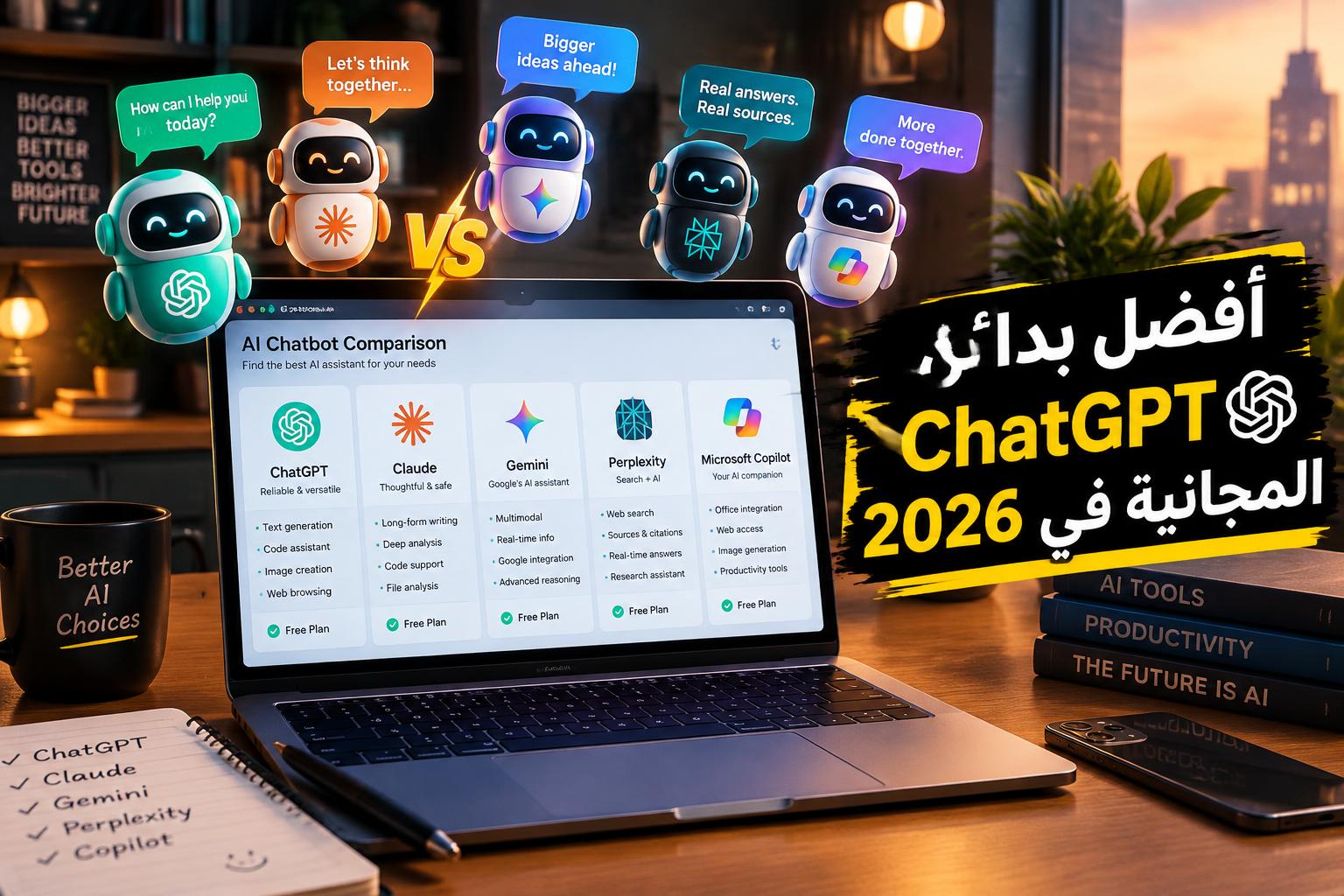
أفضل بدائل ChatGPT المجانية في 2026: مقارنة شاملة بين Claude وGemini وDeepSeek
مقارنة شاملة لأفضل بدائل ChatGPT المجانية في 2026: اكتشف الفروق بين Claude وGemini وDeepSeek لاختيار الأداة الأقوى في الكتابة، التحليل، والبرمجة باحترافية.