Using Generative AI at Work: A Practical Policy for Small Teams
How small teams can use AI tools productively while protecting customer data, accuracy and trust, with a simple policy you can adapt.
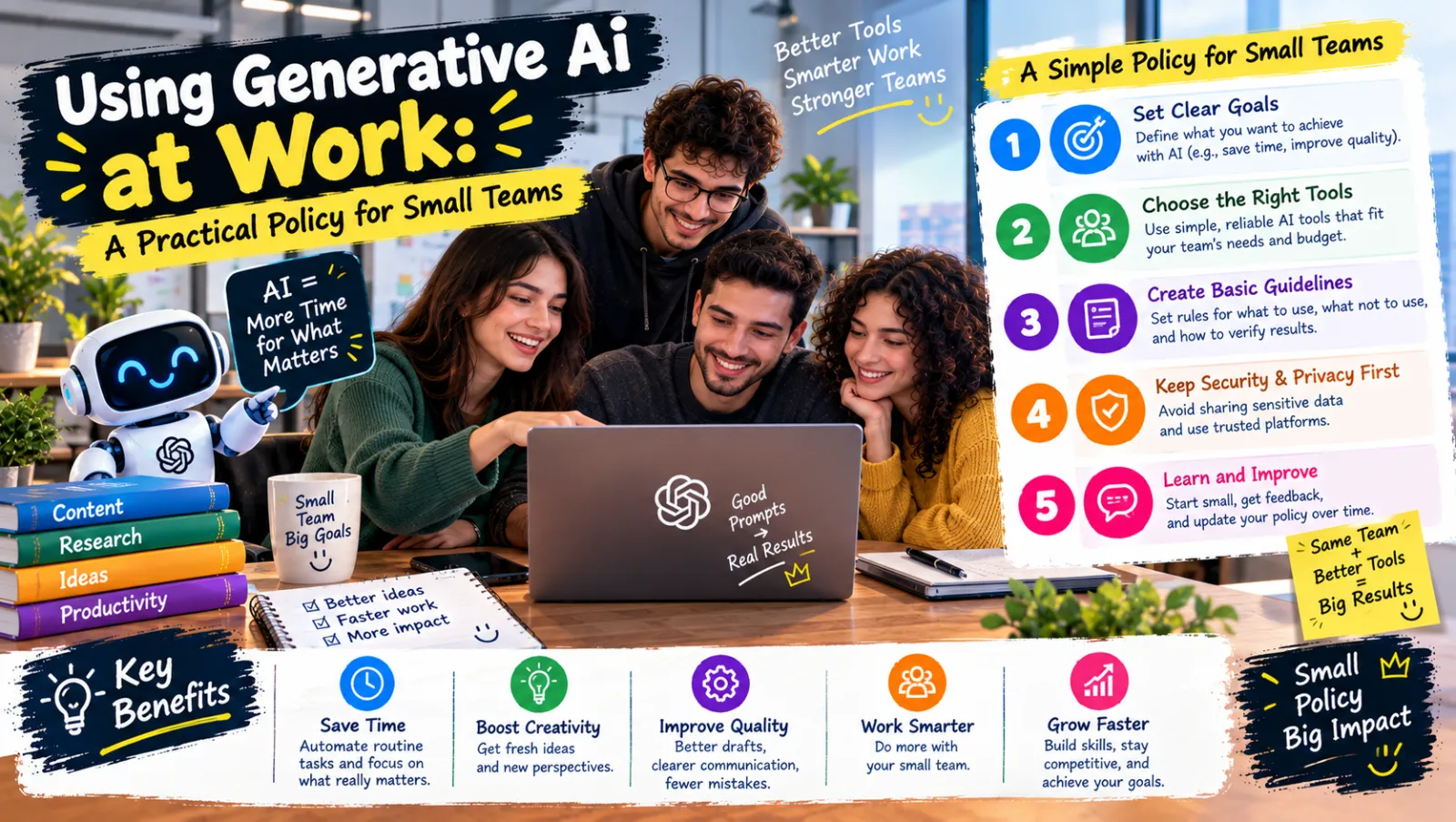
Navigating the Generative AI Landscape: A Practical Policy Framework for Small Teams
The rapid evolution of artificial intelligence, particularly generative AI, has fundamentally shifted how many tasks are performed in the workplace. Employees are increasingly leveraging AI assistants for drafting emails, summarizing lengthy documents, generating code snippets, and conducting preliminary research. While these tools offer significant productivity gains and innovative capabilities, their unsupervised use can introduce substantial risks, such as the accidental exposure of confidential data or the dissemination of unchecked, inaccurate information to clients. A well-articulated, concise policy is crucial for enabling a team to harness the numerous benefits of AI while effectively mitigating potential hazards.
The Imperative of a Clear Policy
Implementing a structured policy for generative AI use is not about stifling innovation; it's about safeguarding your organization and empowering your team to use these powerful tools responsibly. Without clear guidelines, individual interpretations of acceptable use can vary wildly, leading to inconsistent practices and unforeseen vulnerabilities. A policy acts as a foundational document, outlining boundaries and best practices, thereby fostering a culture of informed and secure AI adoption.
Mitigating Data Security Risks
One of the most immediate concerns with generative AI tools is data security. Many public AI models are trained on user input, meaning sensitive company information, if entered, could inadvertently become part of the model's knowledge base or be exposed to others. A policy directly addresses this by defining strict categories of data that are off-limits, preventing such breaches.
Ensuring Accuracy and Accountability
Generative AI excels at producing human-like text, but it's prone to "hallucinations"—generating plausible-sounding but factually incorrect information. An organizational policy mandates human oversight, ensuring that all AI-generated content destined for external consumption or critical internal use is thoroughly reviewed and validated, thus maintaining professional standards and accountability.
Defining Off-Limits Data Categories
To prevent accidental data exposure and maintain regulatory compliance, it is essential to unequivocally define what information must never be entered into unapproved AI tools. This list should be non-exhaustive but cover the most critical types of sensitive data. Employees should be educated on why these restrictions are in place and the potential consequences of non-compliance.
Examples of data that must be withheld from unapproved AI tools include:
- Customer Personal Data: This encompasses any personally identifiable information (PII) about clients, including names, addresses, contact details, financial account numbers, or any data protected by regulations like GDPR or CCPA.
- Authentication Credentials: Passwords, API keys, private encryption keys, or any other credentials that grant access to systems or data.
- Proprietary Financial Records: Detailed company financial statements, unreleased earnings reports, budgeting specifics, or investment strategies.
- Protected Health Information (PHI): Any health-related data pertaining to individuals, particularly critical for organizations in healthcare or wellness sectors.
- Confidential Product Roadmaps: Details of unreleased products, features, design specifications, or strategic development plans.
- Information under Non-Disclosure Agreements (NDAs): Any data or concepts shared under a confidentiality agreement with partners, clients, or third parties.
Approving Specific Tools and Account Types
Not all generative AI tools offer the same level of data privacy and control. It is vital to curate a list of approved applications and specify the required account configurations for their use within the organization. This ensures that the tools align with the company's security posture and data handling policies.
The Importance of Business-Tier Accounts
Many AI service providers offer business or enterprise-level subscriptions that include crucial features for organizational use:
- Data Exclusion from Training: These plans typically guarantee that your input data will not be used to train their public models, thus protecting your proprietary information.
- Administrative Controls: Business accounts often provide centralized management, allowing administrators to monitor usage, enforce policies, and manage user access effectively.
- Enhanced Security Features: Often, these tiers come with advanced security protocols, data encryption, and compliance certifications that are absent in free versions.
Practical Step: As part of your policy, clearly state that personal, free-tier accounts of any generative AI tool are strictly prohibited for company work, regardless of convenience. Employees should be directed to request access to approved, company-provisioned tools.
The Absolute Necessity of Human Review
Generative AI, while powerful, lacks genuine understanding, critical thinking, and the ability to discern nuance or accuracy with 100% certainty. The information it produces can be remarkably persuasive even when fundamentally flawed. Consequently, a mandatory human review process is non-negotiable for any AI-generated output intended for external stakeholders or critical internal applications.
Every piece of content that leaves the company's purview, such as a customer service email, a published article, a clause in a legal contract, or production-ready code, must be meticulously checked. This review must be performed by a person possessing subject matter expertise and who is willing to take full responsibility for the accuracy, appropriateness, and compliance of the content. This step safeguards against misinformation, reputational damage, and potential legal liabilities.
Principles of Transparency and Disclosure
In an era where AI-generated content is becoming ubiquitous, transparency about its use is paramount. Deciding when and how to disclose the involvement of AI is a critical aspect of maintaining trust with customers, partners, and the public.
When to Disclose AI Use
- Published Content: For articles, blog posts, or marketing materials, if significant portions were generated or heavily assisted by AI, a clear disclosure should be made. For example, "This article was drafted with AI assistance and edited by a human."
- Client Deliverables: When presenting reports, analyses, or creative work to clients, openly communicate if AI tools were utilized in their creation, especially if they are core to the deliverable.
- Customer Support Interactions: If an AI chatbot handles initial customer queries, this should be transparently communicated to the user at the outset of the interaction.
Key Principle: Never misrepresent AI-generated content as the original work, insight, or unique experience of a human when that authenticity is material to the reader or recipient. This preserves integrity and avoids deceptive practices.
Encouraged and Discouraged Uses
To guide employees effectively, it's beneficial to provide clear examples of both beneficial applications of generative AI and those that should be strictly avoided.
Good Uses to Encourage:
- Drafting Initial Versions: For routine communications, internal memos, or first-pass outlines of documents where a human will refine and finalize the content.
- Information Synthesis: Summarizing lengthy internal meeting transcripts, research papers, or complex reports to quickly grasp key insights.
- Creative Brainstorming: Generating diverse ideas for headlines, marketing slogans, discussion questions, or comprehensive test cases for software development.
- Clarification and Learning: Explaining unfamiliar code blocks, complex spreadsheet formulas, or specialized technical concepts to aid understanding.
- Language Translation (with review): Translating non-critical internal documents or initial drafts for external communication, always subject to professional human review for accuracy and nuance.
Uses to Avoid:
- Providing Final Legal, Medical, or Financial Advice: These fields demand human judgment, ethical considerations, and professional licensure. AI outputs in these areas must never be presented as authoritative.
- Decisions Regarding Human Resources: This includes critical decisions related to hiring, firing, promotions, or performance evaluations, where bias from AI models could have severe ethical and legal repercussions.
- Situations with Direct Harm Potential: Any application where a mistake, without subsequent thorough human validation, could directly cause harm to a customer, a product, or the company's reputation.
- Generating Deepfakes or Misinformation: Creating deceptive media or knowingly generating false information is unethical and potentially illegal.
Essential Components of a Concise Policy Template
For a small team, a one-page, easily digestible policy is often more effective than a multi-page legalistic document. It serves as a quick reference guide, ensuring consistent adherence.
Here’s a template for the critical elements:
- Approved Tools and Account Settings: A clear list of generative AI tools that employees are permitted to use, specifying whether business-tier accounts are mandated and any specific configuration requirements.
- Data You Must Never Share: An explicit enumeration of sensitive data types that are strictly prohibited from being entered into any AI tool, along with a warning about potential consequences.
- Mandatory Human Review for External Content: A directive emphasizing that all AI-generated content intended for external audiences or critical internal decisions must undergo rigorous human review and approval.
- Disclosure Rules: Guidelines on when and how to disclose the use of AI assistance, ensuring transparency in all relevant communications.
- Reporting and Clarification Protocol: Clear instructions on who to contact within the team or organization if an employee is unsure about a particular use case, or if a potential misuse or error from AI is identified.
Ongoing Review and Adaptation
The generative AI landscape is characterized by rapid innovation and frequent updates. What is true today regarding a tool's capabilities or data privacy policies may change in a matter of months. Therefore, this policy should not be a static document.
It is crucial to revisit and update the policy regularly, ideally every few months. This review process should incorporate:
- Lessons Learned: Gather feedback from employees about their real-world experiences, challenges, and successes with AI tools.
- New Tool Assessment: Evaluate new generative AI tools as they emerge, determining if they meet organizational standards for approval.
- Evolving Best Practices: Adapt the policy to reflect new industry best practices, security recommendations, and ethical guidelines for AI use.
- Regulatory Changes: Monitor any new data privacy laws or regulations that might impact AI usage within the business.
By maintaining a dynamic and adaptable policy, organizations can ensure that their approach to generative AI remains current, secure, and beneficial.
---
Related Articles:

أدوات الذكاء الاصطناعي لصنّاع المحتوى العرب: دليل عملي ومسؤول
كيف يستفيد صانع المحتوى العربي من أدوات الذكاء الاصطناعي في البحث والتنظيم والتدقيق دون أن يفقد أصالته أو ثقة جمهوره.
Passkeys Explained: How to Replace Your Passwords Safely
What passkeys are, why they resist phishing, and a step-by-step plan to switch your email, bank and social accounts without getting locked out.
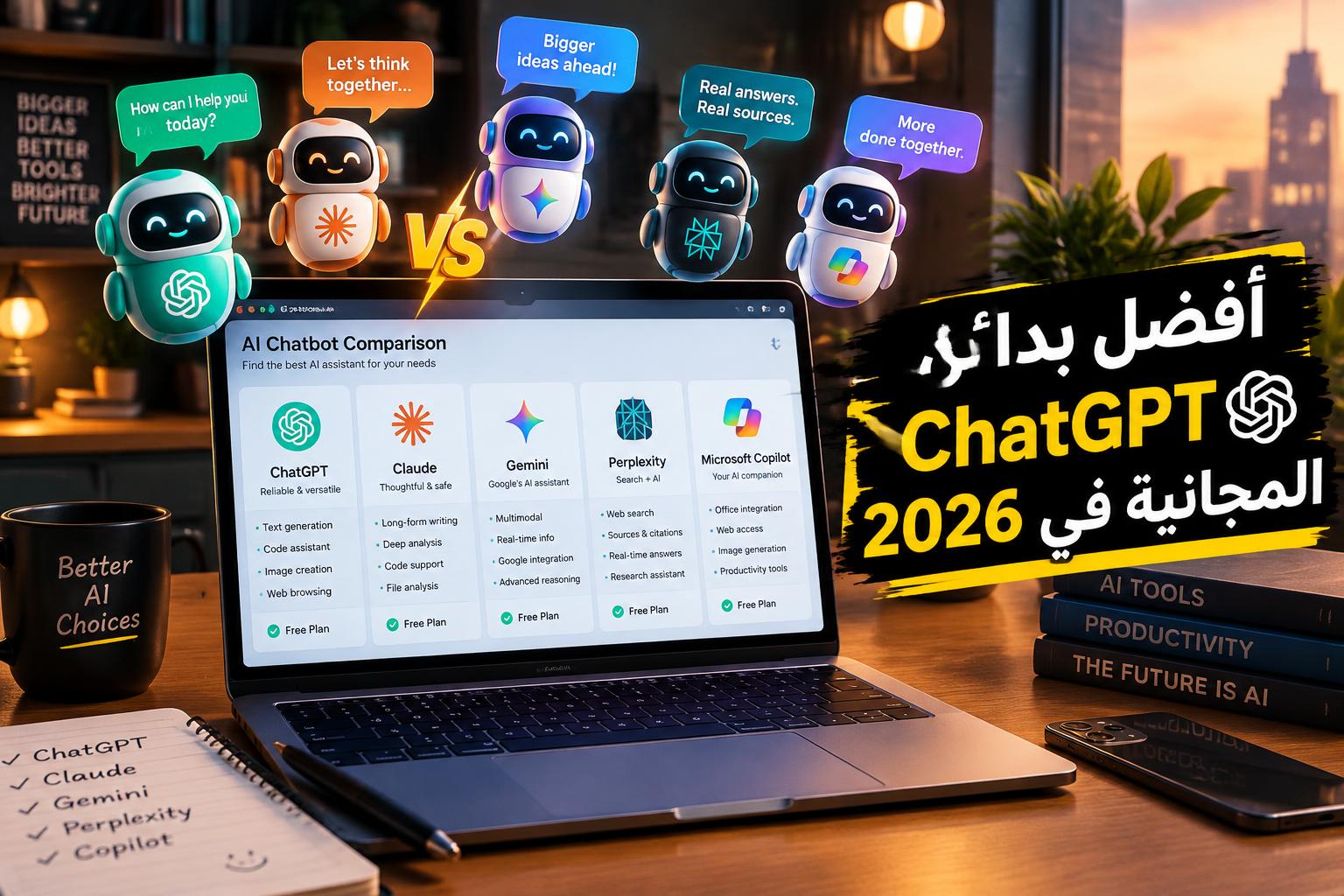
أفضل بدائل ChatGPT المجانية في 2026: مقارنة شاملة بين Claude وGemini وDeepSeek
مقارنة شاملة لأفضل بدائل ChatGPT المجانية في 2026: اكتشف الفروق بين Claude وGemini وDeepSeek لاختيار الأداة الأقوى في الكتابة، التحليل، والبرمجة باحترافية.