Email Marketing for Small Businesses: A Step-by-Step Starter Plan
Build an email list, write messages people open, stay compliant with privacy rules and measure results that matter.
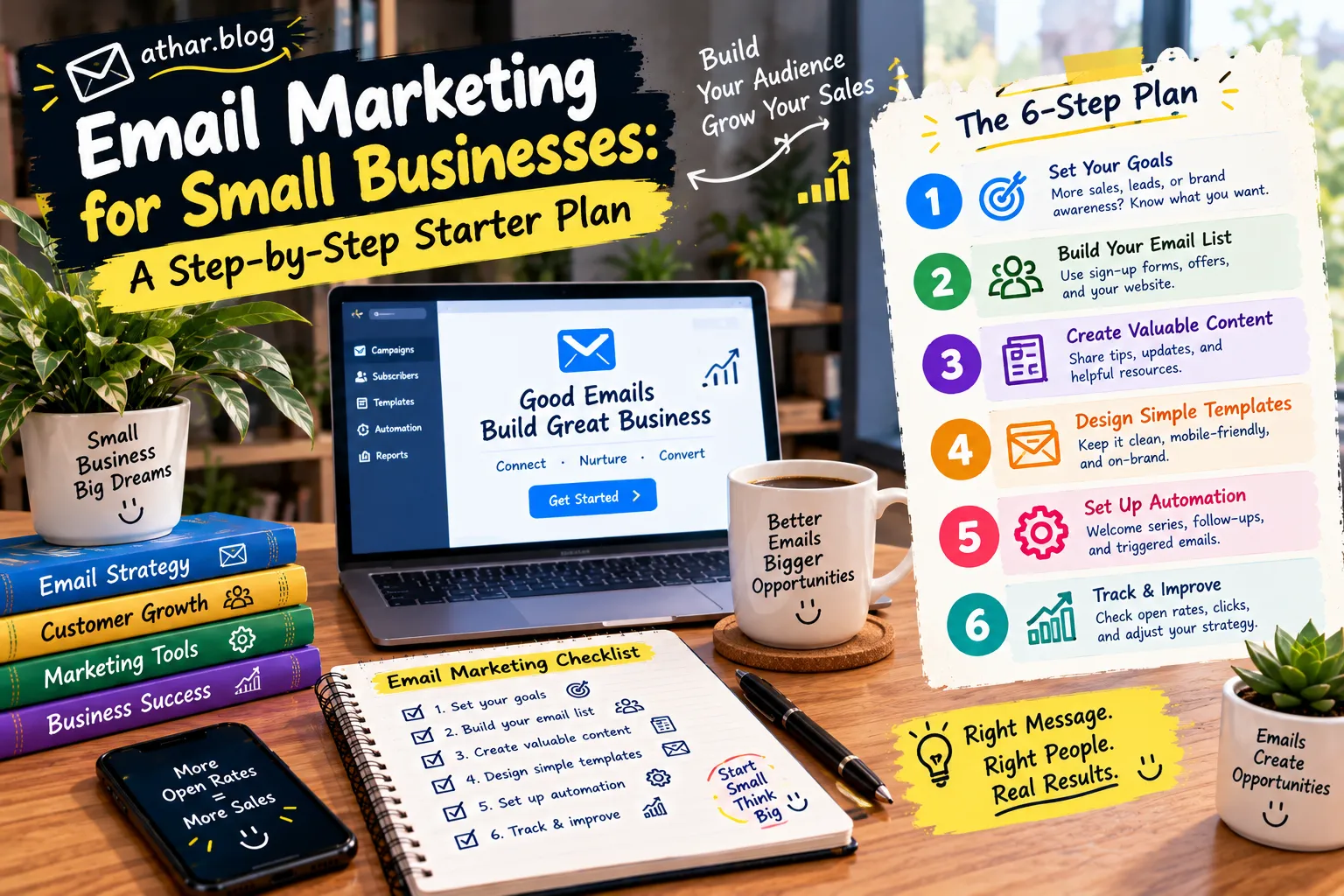
The Enduring Power of Email for Small Businesses
In an era dominated by fluctuating social media algorithms and ever-changing digital trends, email marketing stands as a steadfast, reliable channel for small businesses. Unlike social platforms, which dictate who sees your content and when, an email list represents an audience you directly own and control. This direct line of communication is invaluable, fostering deeper connections and delivering consistently high returns on investment for many small enterprises. When individuals opt in to your list, they are actively expressing interest in your offerings, making them a highly engaged segment of your potential customer base.
Why Email Remains a Core Marketing Asset
The fundamental strength of email lies in its directness and permission-based nature. Subscribers have explicitly given you permission to communicate with them, which translates into higher engagement rates compared to unsolicited advertising. Furthermore, email is largely immune to the whims of third-party platforms. Your ability to reach your audience isn't dependent on an algorithm update or a change in a platform's terms of service. This stability allows for long-term strategic planning and relationship building, positioning email as a foundational component of any robust marketing strategy.
Strategically Building Your Subscriber List with Consent
The cornerstone of effective email marketing is a high-quality, permission-based subscriber list. Never be tempted to purchase email lists; this practice not only damages your sender reputation and deliverability rates but also breaches privacy regulations in many jurisdictions, such as GDPR in Europe and CCPA in California. Instead, focus on organic growth by offering compelling value in exchange for an email address.
Practical Strategies for List Growth
- Valuable Incentives: Offer something genuinely useful to your target audience. This could be an exclusive discount on their first purchase, a practical checklist related to your industry, a helpful guide, early access to new products or services, or registration for a free workshop or webinar. For a local bakery, this might be a "15% off your next online order" pop-up. For a web design agency, it could be a "5 Essential Website Checklist for Small Businesses" downloadable PDF.
- Prominent Signup Forms: Ensure your signup forms are easily discoverable on your website. This includes a clear, concise form on your homepage, within blog posts, in your website footer, and strategically placed pop-ups (used judiciously to avoid annoyance).
- Checkout Integration: For e-commerce businesses, integrate an opt-in checkbox during the checkout process. Ensure it's clearly worded and unchecked by default to maintain consent.
- Physical Sign-ups: If you have a physical location, offer a sign-up sheet at your point of sale or during events. Ensure you clearly state what subscribers will receive and how often.
Selecting the Right Email Service Provider (ESP)
Choosing an appropriate Email Service Provider (ESP) is a critical early decision. An ESP handles the technical heavy lifting of email marketing, including sending bulk emails, managing subscriber lists, processing unsubscribes, and providing vital analytics. Most reputable ESPs offer free tiers for small lists, allowing you to get started without an upfront financial commitment.
Key Features to Look For in an ESP
When evaluating options like Mailchimp, ConvertKit, ActiveCampaign, or Constant Contact, consider these features:
- Ease of Use: An intuitive interface for designing emails, managing lists, and setting up automations.
- Automation Capabilities: The ability to create automated sequences, such as welcome series, abandoned cart reminders, or post-purchase follow-ups.
- Segmentation Options: Tools to divide your list into smaller, targeted groups based on demographics, purchase history, or engagement.
- Analytics and Reporting: Comprehensive dashboards to track open rates, click-through rates, conversions, and unsubscribe rates.
- Deliverability Tools: Features that help ensure your emails land in inboxes, not spam folders, including sender authentication (SPF, DKIM, DMARC).
- Integration: Compatibility with your existing e-commerce platform (e.g., Shopify, WooCommerce) or CRM.
- Customer Support: Responsive and helpful support in case you encounter issues.
Designing Your Core Email Communication Strategy
Every small business should establish a foundational set of email communications. These three types of emails form the backbone of an effective strategy, building relationships and driving action:
- Welcome Series: This is your digital handshake. Sent immediately after someone subscribes, a welcome series introduces your business, reinforces your brand's value proposition, sets expectations for future communications, and shares some of your most helpful or popular content. A typical series might include 2-3 emails over a few days:
- Email 1: Thank you for subscribing, a brief introduction, and a first piece of value (e.g., the promised discount or resource).
- Email 2: A deeper dive into your brand story or a highlight of your unique selling proposition.
- Email 3: A call to action, such as browsing popular products or reading a key blog post.
- Regular Newsletter: This is your ongoing engagement engine. A newsletter, sent on a predictable schedule (e.g., weekly, bi-weekly, monthly), should deliver value beyond just sales pitches. Share useful tips, industry insights, behind-the-scenes stories, customer spotlights, or educational content. Occasional offers and product announcements are certainly appropriate, but they should complement the overall value proposition.
- Automated Reminders and Follow-ups: These transactional or behavioral emails are highly effective because they are timely and relevant to specific actions (or inactions) of the subscriber. Examples include:
- Abandoned cart reminders, prompting customers to complete a purchase.
- Restock alerts for popular out-of-stock items.
- Post-purchase follow-ups, offering product care tips, soliciting reviews, or suggesting complementary items.
- Subscription renewal reminders.
Crafting Engaging Emails That Inspire Action
The best email strategy is only as good as the emails themselves. To ensure your messages are opened, read, and acted upon, focus on clarity, relevance, and authenticity.
Best Practices for Email Content
- Compelling Subject Lines: The subject line is your email's gatekeeper. Make it clear, concise, and benefit-driven. Avoid jargon or generic phrases. Examples: "Your exclusive 15% off is inside!", "New guide: Master social media in 5 steps," "Quick question about your recent order."
- Recognizable Sender Name: Use a friendly and consistent sender name that your subscribers will recognize, such as "Acme Co." or "Jane from Acme Co." Avoid generic "noreply" addresses.
- Single, Clear Message (Mostly): While a newsletter might have multiple sections, each email should generally focus on one primary call to action (CTA). This prevents subscriber overwhelm and directs their attention effectively.
- Concise and Scan-friendly Body: People typically scan emails. Use short paragraphs, bullet points, and bold text to break up content and make it easy to digest.
- Personalized Touch: Write as if you're speaking to a single individual. Use their name where appropriate, and tailor content based on their preferences or past interactions.
- Obvious Call to Action (CTA): Your CTA should be impossible to miss. Use clear, actionable language ("Shop Now," "Read More," "Download Your Guide") and make it visually distinct, often with a button.
Upholding Email Compliance and Ethical Practices
Adherence to email marketing regulations is non-negotiable. Not only does it build trust with your audience, but it also protects your business from legal repercussions and improves your email deliverability.
- Business Address: Always include your physical business address in the footer of every email. This is a legal requirement in many regions.
- Clear Unsubscribe Link: A functional, easy-to-find unsubscribe link is mandatory. Ensure it works instantly and that removal requests are honored promptly, ideally within 48 hours. Do not make subscribers jump through hoops to unsubscribe.
- Permission-Based Marketing: Only send emails to individuals who have explicitly given you permission. This consent should be verifiable. Avoid any practices that could be perceived as spam.
Analyzing Performance: Measuring What Truly Matters
In email marketing, vanity metrics can be misleading. While open rates were once a key indicator, changes in email client privacy features (like Apple Mail Privacy Protection) have made them less reliable. Instead, shift your focus to metrics that directly reflect engagement and business impact.
Key Metrics to Monitor
- Click-Through Rate (CTR): The percentage of recipients who clicked on at least one link in your email. This directly indicates interest in your content.
- Conversion Rate: The percentage of recipients who completed a desired action (e.g., made a purchase, filled out a form) after clicking a link in your email. This is often the ultimate measure of success.
- Reply Rate: For smaller, more personalized lists, replies can indicate genuine engagement and relationship building.
- Unsubscribe Rate: A high unsubscribe rate can signal that your content isn't relevant, you're emailing too frequently, or your list acquisition methods need refinement.
- Bounce Rate: The percentage of emails that couldn't be delivered. A high bounce rate suggests issues with your list quality or sender reputation.
To optimize your campaigns, adopt a testing mindset. Implement one change at a time – whether it's a new subject line, a different call to action, or a varied send day – and track the results to understand its impact.
Maintaining a Healthy and Engaged Email List
A thriving email list isn't just about growth; it's about quality and engagement. A smaller list of highly engaged subscribers will always outperform a large, passive list that rarely opens your emails.
Strategies for List Hygiene
- Regular Cleaning: Periodically remove email addresses that consistently bounce or have shown no engagement over an extended period (e.g., 6-12 months). Many ESPs have tools to help identify these inactive subscribers.
- Re-engagement Campaigns: Before removing inactive subscribers, try a targeted re-engagement campaign. Send a series of emails with compelling offers or exclusive content, explicitly asking if they still wish to receive your communications. If they don't respond, it's usually best to remove them. An example might be an email titled "Are we still friends? Don't miss out!" with a clear button to confirm continued interest.
- Preference Centers: Allow subscribers to update their preferences for email frequency and content types. This empowers them to tailor their experience, reducing unsubscribes.
By systematically implementing these steps, small businesses can harness the immense power of email marketing to build lasting customer relationships, drive sales, and achieve sustainable growth.
Related Articles

العمل الحر من العالم العربي: دليل البداية خطوة بخطوة
دليل عملي للبدء في العمل الحر: اختيار المهارة، بناء معرض أعمال، التسعير، استلام المدفوعات وتجنب الاحتيال.

أفضل بدائل جوجل أدسنس للمواقع والمدونات العربية في 2026: شبكات إعلانية تقبل المواقع الجديدة
دليل أفضل شبكات بدائل جوجل أدسنس للمواقع والمدونات العربية في 2026. شبكات تقبل المواقع الجديدة بدون شروط تعجيزية وتدفع بانتظام عبر بايبال والعملات الرقمية.
Small Business Marketing Without a Big Budget
Proven low-cost strategies for local shops and freelancers to attract customers and build loyalty.