SEO for Beginners in 2026: How Search Rankings Really Work
A plain-language guide to modern SEO: search intent, helpful content, technical basics and how to measure progress without tricks.
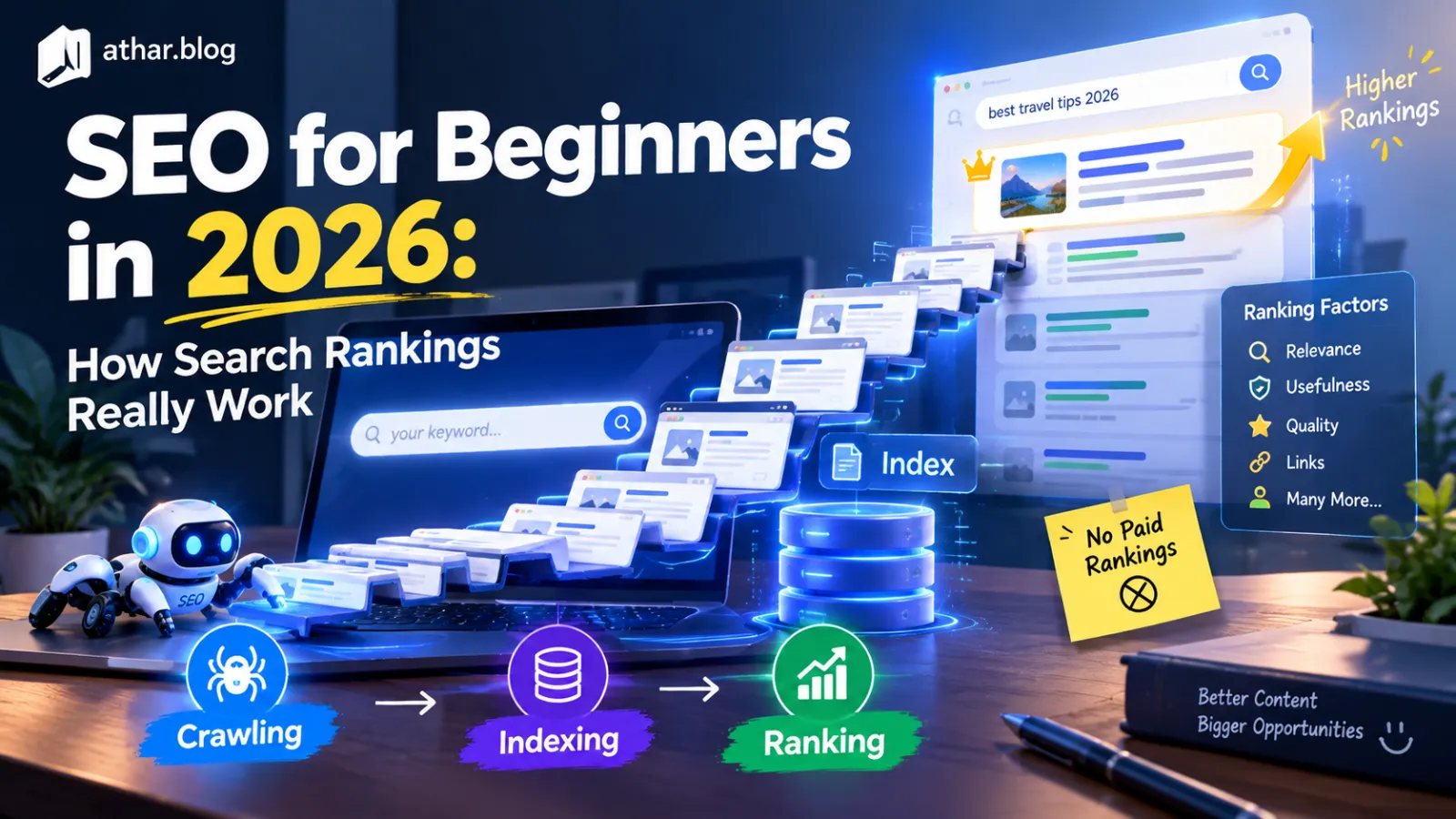
Understanding the Core Mission of Search Engines
At its heart, a search engine's primary objective is to deliver the most pertinent, authoritative, and helpful information in response to every user query. Each individual ranking factor employed by these complex algorithms serves as an attempt to quantify and evaluate these qualities. While various tactics might temporarily manipulate these metrics to feign usefulness, search engine updates are consistently refined to identify and neutralize such deceptive practices, ensuring a reliable, high-quality search experience for users over the long term. Sustainable search engine optimization (SEO) therefore aligns directly with this fundamental mission.
Decoding Search Intent: The Foundation of Effective Content
Before embarking on any content creation, it is crucial to thoroughly understand the underlying search intent behind a particular query. This involves more than just knowing the keywords; it's about discerning why a person is searching for that phrase.
Practical Steps for Identifying Search Intent
- Perform the Search Yourself: Enter your target keyword or phrase into a major search engine (e.g., Google, Bing).
- Analyze Top-Ranking Results: Carefully examine the first 5-10 organic results.
- What type of content appears? Is it predominantly informational articles, product pages, comparison tables, tutorials, or definitions?
- What common themes or subtopics are covered?
- What questions do these pages answer?
- How is the content structured? Do they use bullet points, numbered lists, frequently asked questions (FAQs)?
- Identify Content Gaps: Look for aspects that could be improved upon. Can you offer clearer explanations, more current data, unique examples, or a more comprehensive perspective?
For instance, if someone searches for "best noise-canceling headphones," they likely want product reviews and comparisons, not a historical overview of audio technology. Conversely, a search for "how to fix a leaky faucet" indicates a need for a step-by-step tutorial. Matching your content's format and depth to this discovered intent is paramount; then, strive to exceed the quality of existing solutions.
Crafting Content: Prioritizing the Human Reader
Your content's ultimate audience is people, not algorithms. While technical SEO is important, it serves to help search engines understand and deliver your human-centric content.
Strategies for User-Focused Writing
- Answer Immediately: Provide the core answer to the user's main question near the beginning of your content. This respects their time and directly addresses their intent.
- Structured for Readability: Employ descriptive headings (H2s, H3s) that clearly outline the content flow. Break text into short, digestible paragraphs. Utilize bulleted lists, numbered lists, and tables to present information clearly and concisely.
- Visual Engagement: Incorporate relevant images, diagrams, or videos that you have either created yourself or for which you possess the appropriate usage rights. Visuals enhance understanding and break up text.
- Demonstrate Authority and Experience:
- Share personal insights: "In my experience testing various methods, I found that..."
- Detail your investigative process: "We conducted a small experiment comparing X and Y, and the results were clear..."
- Discuss common pitfalls: "A common mistake I've seen is trying to implement Z without first addressing A."
- Provide actionable recommendations: "Based on this, I would strongly recommend focusing on B for initial growth."
An example might be a recipe blog post. Instead of burying the recipe at the bottom after a lengthy personal anecdote, provide the recipe card near the top, followed by optional sections for ingredient details, cooking tips, and variations.
Essential Technical Foundations for Visibility
While content quality is paramount, certain technical prerequisites must be met for search engines to effectively crawl, index, and rank your pages. Overlooking these can severely hinder even the best content.
- Pages should load swiftly on mobile devices. Page speed is a critical user experience factor.
- Each page requires a unique, descriptive title tag and a meta description that accurately and enticingly summarizes the page's content for search results.
- Use one main `H1` heading per page to clearly indicate its primary topic, supported by logical `H2` and `H3` subheadings to structure the content hierarchy.
- Internally link related articles to each other. This helps both human readers discover more of your valuable content and search engine crawlers understand the relationships between your pages.
- Submit an up-to-date XML sitemap to search engines and regularly check your search console for any crawl errors, indexing issues, or security warnings.
Cultivating Trust and Authority
Search engines, much like people, rely on indicators of trust and credibility to assess the value of information. Building a reputation as a reliable source is an ongoing process.
Components of Trust Building
- Clear Attribution: Ensure content features clear author information, including a bio and links to other works or social profiles. This establishes expertise.
- Transparency: Maintain an easily accessible "About Us" page detailing your mission, team, and values. Provide clear contact information, including an email address, phone number, or contact form.
- Accuracy and Verifiability: Cite credible sources for data, statistics, and claims. Links to authoritative external resources enhance your content's perceived accuracy.
- Regular Maintenance: Keep your content fresh and accurate. Outdated information erodes trust. Schedule regular reviews and updates for your key articles. For instance, a guide about software features from 2020 needs updating when a new version is released in 2024.
These signals collectively reassure both users and search algorithms about the integrity and expertise behind your website.
The Enduring Power of Backlinks
Despite numerous algorithm updates, high-quality backlinks from relevant, reputable websites continue to be a significant ranking factor. These links function as votes of confidence from other established sources, signaling authority and trustworthiness to search engines.
It's crucial to earn these links organically rather than attempting to purchase them, as buying links carries substantial risks of incurring penalties from search engines. Focus on creating genuinely valuable assets that others will naturally want to reference.
Strategies for Earning High-Quality Backlinks
- Original Research and Data: Publish unique studies, surveys, or datasets that others in your industry will find valuable and cite.
- Useful Tools and Resources: Develop free tools, calculators, templates, or resource directories that solve a specific problem for your audience.
- Definitive Guides: Create comprehensive, in-depth guides on complex topics that become the go-to resource in your niche.
- Genuine Relationship Building: Engage with other professionals and content creators in your field. Participate in online communities, offer expert commentary, and collaborate on projects.
An example might be a marketing agency publishing an annual report on industry trends. Other marketing blogs and news outlets would naturally link to this original data.
Iterative Improvement: Measure, Adapt, Optimize
SEO is not a one-time task; it's a continuous cycle of measurement, analysis, and refinement.
The Cycle of Optimization
- Monitor Performance: Regularly track key metrics using tools like Google Search Console and Google Analytics.
- Impressions: How often your pages appear in search results.
- Clicks: How many users clicked on your result.
- Click-Through Rate (CTR): The percentage of impressions that result in a click.
- Queries: The specific search terms users entered that led to your pages.
- Ranking Positions: Where your pages appear in search results for target keywords.
- Identify Opportunities: Pay particular attention to pages that consistently appear on the second page of search results (positions 11-20). These are often prime candidates for optimization as they are "almost there."
- Refine Content: For underperforming pages, consider:
- Adding more current data or examples.
- Expanding on specific sections to provide more depth.
- Improving clarity and readability.
- Adding new subheadings to cover related queries.
- Incorporating relevant images or videos.
- Ensuring the content fully addresses search intent identified earlier.
- Observe and Repeat: After making changes, monitor their impact over the following weeks and months. SEO results are typically gradual; expect significant improvements over several months rather than days. Patience and persistence are key.
[Related articles on SEO best practices: SEO for Startups, Keyword Research, Content Marketing Strategy]

العمل الحر من العالم العربي: دليل البداية خطوة بخطوة
دليل عملي للبدء في العمل الحر: اختيار المهارة، بناء معرض أعمال، التسعير، استلام المدفوعات وتجنب الاحتيال.

أفضل بدائل جوجل أدسنس للمواقع والمدونات العربية في 2026: شبكات إعلانية تقبل المواقع الجديدة
دليل أفضل شبكات بدائل جوجل أدسنس للمواقع والمدونات العربية في 2026. شبكات تقبل المواقع الجديدة بدون شروط تعجيزية وتدفع بانتظام عبر بايبال والعملات الرقمية.
Small Business Marketing Without a Big Budget
Proven low-cost strategies for local shops and freelancers to attract customers and build loyalty.