Higgsfield AI vs Runway Gen-3: The Ultimate AI Video Showdown (2026)
Compare Higgsfield AI and Runway Gen-3 in 2026. Discover video fidelity, camera controls, rendering speeds, pricing plans, and which tool fits your workflow bes
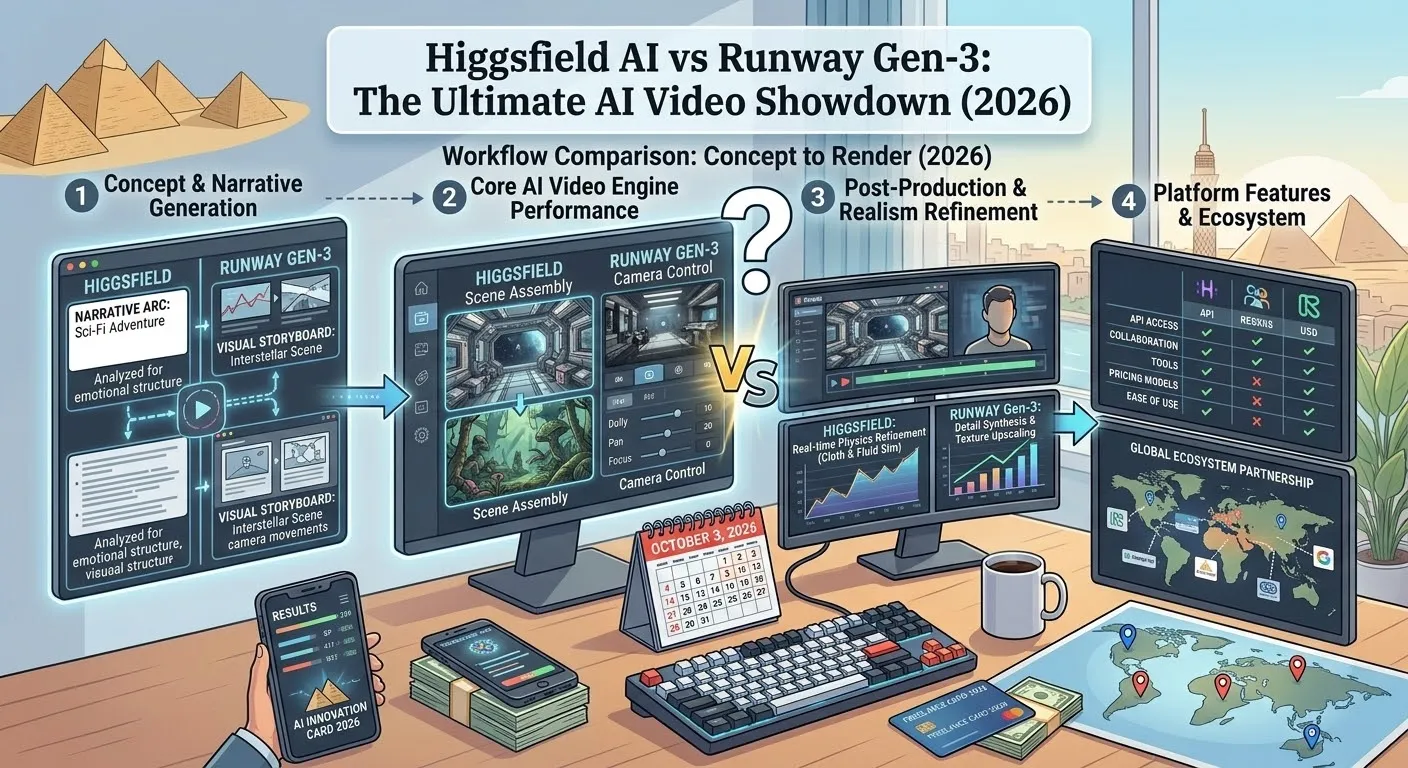
Artificial intelligence video generation has advanced dramatically, moving from shaky experimental clips into studio-grade visual production. Creators, social media agencies, and digital marketers now rely on cutting-edge platforms to produce commercial ads, viral social videos, and storytelling projects without expensive cameras or production crews. Two dominant powerhouses lead the market today: Higgsfield AI and Runway Gen-3. Both promise photorealistic motion, hyper-detailed physics, and versatile styling, yet they cater to noticeably different creative workflows and budget levels.
Selecting the right platform directly determines your content output volume and production expenses. In this extensive comparison, we analyze the core architectural strengths, pricing structures, motion consistency, and practical rendering capabilities of both tools to help you decide which video generation engine deserves your subscription.
Core Architectural Differences and Creative Philosophy
Understanding how each platform approaches synthetic video generation reveals why they feel so distinct during day-to-day production. Runway Gen-3 was developed as a versatile general-purpose generative ecosystem designed for cinematic artists, commercial filmmakers, and experimental visual directors. Its underlying diffusion architecture emphasizes dramatic lighting controls, atmospheric depth, camera director modes, and precise physics simulation.
In contrast, Higgsfield AI concentrates heavily on cinematic realism, expressive human anatomy, dynamic camera pans, and commercial creator workflows. Built to streamline mobile video production and narrative sequencing, Higgsfield AI prioritizes high-framerate movement without collapsing facial consistency. While Runway aims to function as an all-encompassing virtual movie studio, Higgsfield AI positions itself as an intuitive, high-velocity engine engineered for modern digital storytellers and content agencies. For an in-depth breakdown of Higgsfield's unique interface, review our comprehensive Higgsfield AI Review 2026.
Visual Fidelity, Motion Consistency, and Physics Simulation
When evaluating synthetic video engines, visual fidelity across dynamic movement represents the ultimate benchmark. Generating a static face with lighting is relatively straightforward for modern neural networks, but maintaining bone structure during rapid head turns and action sequences separates amateur tools from enterprise software.
Character Facial Stability Under High Velocity
Higgsfield AI exhibits exceptional stability when rendering human subjects engaged in expressive speech, running, or complex facial micro-expressions. Its generative pipeline prevents the common warping and melting effects that frequently plague synthetic videos during quick movements. Subjects retain distinct facial geometry across multi-shot sequences, making it an outstanding platform for character-driven short films and advertising teasers.
Physics and Environmental Dynamics
Runway Gen-3 shines brightly when rendering complex environmental elements such as turbulent ocean water, explosion debris, flowing fabric, and interacting weather conditions. Its physics engine understands weight, inertia, and light bouncing through translucent materials with remarkable fidelity. If your project demands high-concept science fiction worlds or abstract commercial product renders, Runway's environmental physics remain among the most sophisticated in the entire generative industry.
Generation Speed and Cloud Rendering Performance
Production speed is vital for creators maintaining daily publishing schedules across YouTube, Instagram, and TikTok. A tool that produces breathtaking visuals is of limited value if queued renders take hours during peak platform demand.
Higgsfield AI delivers rapid render speeds, typically completing standard five-to-ten second clips within 45 to 90 seconds. Its lightweight queue infrastructure ensures smooth previewing and rapid iteration when testing new prompt variations. Runway Gen-3, owing to its immense model parameter depth and heavy simulation layers, frequently requires two to four minutes per high-definition render, especially when enabling director-level camera paths. For fast-paced social workflows, Higgsfield provides a noticeable agility advantage.
Camera Controls, Prompt Responsiveness, and Director Modes
Controlling the virtual camera is where professional creators separate their projects from generic AI clips. Both platforms support standard text-to-video and image-to-video pipelines, but their granular adjustment tools vary significantly.
Runway Gen-3 features an advanced Director Mode that allows users to manipulate pan, tilt, zoom, and roll speed through numerical sliders and interactive 3D gizmos. It also features motion brush capabilities, enabling creators to paint specific sections of a still photo and dictate movement direction exclusively for those designated areas.
Higgsfield AI takes a more streamlined yet highly responsive approach. Rather than forcing creators through complex technical coordinate inputs, Higgsfield recognizes natural-language cinematic camera instructions with remarkable accuracy. Terms like "low-angle tracking dolly," "whip pan to reveal," or "cinematic shallow depth of field" are translated into fluid motion without unexpected artifacts. If you want to build sustainable income around these tools, explore our guide on How to Make Money with Higgsfield AI in 2026.
Pricing Models, Token Consumption, and Cost Efficiency
Software subscriptions accumulate rapidly for digital creators, making transparent pricing and generous token quotas essential for sustainable operations.
Higgsfield AI offers attractive tier structures designed with freelance creators and growing studios in mind. Its subscription tiers provide abundant monthly credits, reasonable burst capacity, and straightforward commercial usage licensing across all paid plans. Furthermore, failed or visibly corrupted renders rarely drain valuable user tokens, keeping experimentation costs manageable.
Runway Gen-3 operates on an enterprise-style credit system where high-resolution generations and specialized camera features consume credits quickly. While the entry-tier plan is affordable for occasional hobbyists, active commercial creators frequently find themselves purchasing supplementary credit packages to satisfy heavy monthly rendering volume. For budget-conscious independent operators, Higgsfield AI delivers superior cost-per-second output.
Final Verdict: Which Generative Engine Should You Choose?
Both platforms represent extraordinary technical achievements that redefine what independent digital creators can accomplish from a single computer browser.
Choose Runway Gen-3 if you are a professional visual effects artist, commercial filmmaker, or creative director requiring surgical control over multi-layered camera physics, environmental particle simulations, and complex matte brush movements.
Choose Higgsfield AI if your priority is creating photorealistic character narratives, viral social media clips, monetized faceless channels, or engaging digital advertising campaigns where speed, facial consistency, and predictable costs matter most. Many elite creators leverage both platforms simultaneously, utilizing Runway for environmental establishing shots and Higgsfield for captivating character-focused scenes.

Passkeys Explained: How to Replace Your Passwords Safely
What passkeys are, why they resist phishing, and a step-by-step plan to switch your email, bank and social accounts without getting locked out.
Understanding the Basics of Cybersecurity at Home
Simple, jargon-free steps every household can take to protect accounts, devices and personal data.

15 Best AI Tools for Bloggers in 2026
A practical, honest guide to AI tools for bloggers, with realistic options, safety checks, common mistakes, and a clear starting plan.