How to build an emergency fund on an irregular income
Start with the next small emergency rather than an intimidating target. Calculate essential monthly costs and identify the lowest recent monthly income
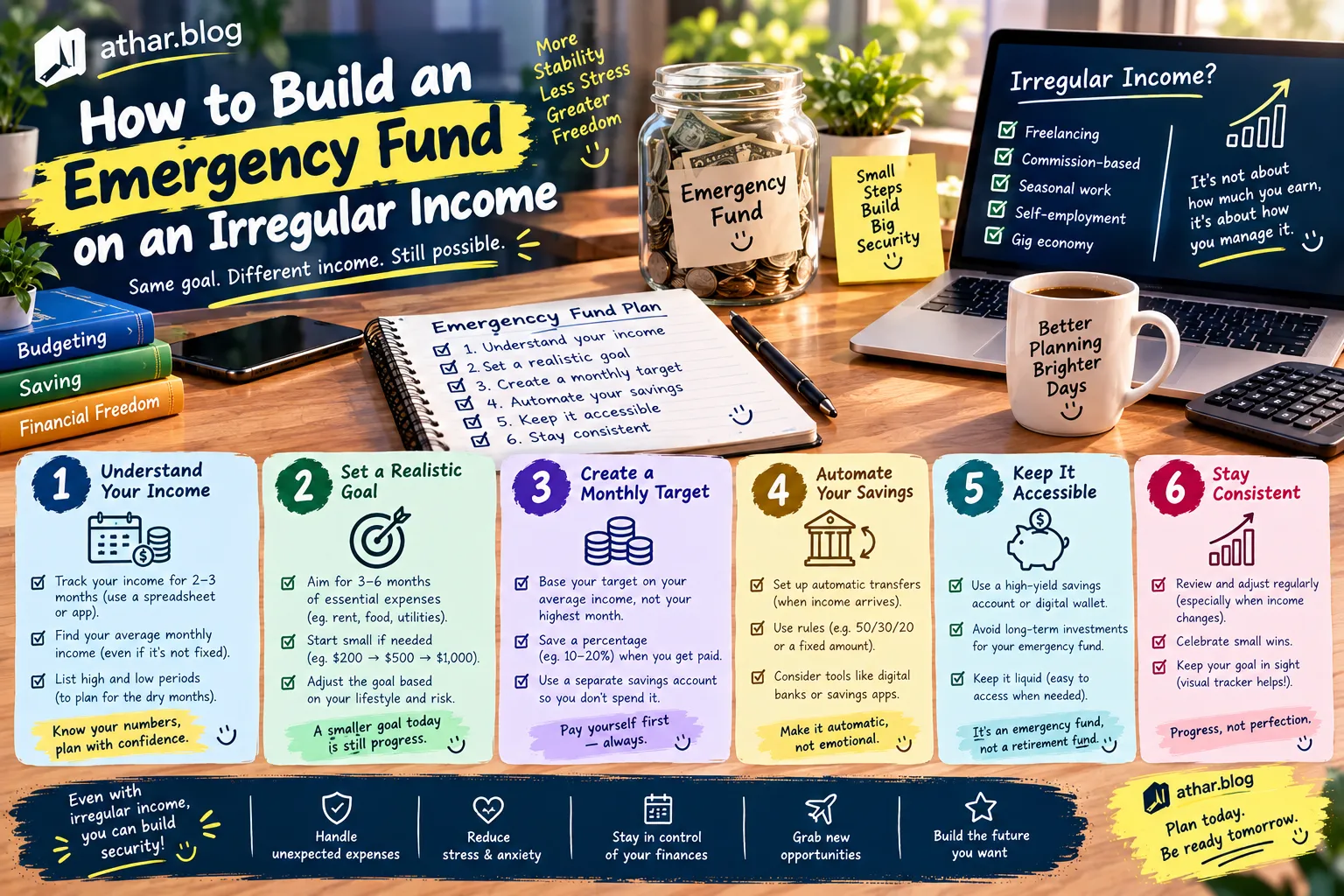
A meaningful financial strategy begins with a precise decision rather than a collection of impressive financial jargon. Building an emergency fund, especially when navigating an irregular income, becomes considerably more manageable when you clearly identify what aspects of your current financial habits need adjustment, what existing resources you possess, and how you will objectively measure your progress and ultimate success. Instead of aiming for an intimidating, long-term savings target from the outset, it's often more effective to start by addressing the next small, predictable emergency. The objective here is not to blindly replicate someone else’s financial routine or a generic advice column. Rather, it is to make a thoughtful, personalized choice that genuinely aligns with your unique financial constraints and lifestyle.
Defining Your Specific Financial Objective
Begin by articulating the precise financial outcome you wish to achieve in a single, clear sentence. This step helps differentiate a measurable result from a vague aspiration. For instance, "saving time," "avoiding an error," "answering a customer question," or "building a consistent habit" each represent distinct jobs to be done. For an emergency fund, a measurable outcome might be: "To accumulate three months' worth of essential living expenses within the next 18 months, with an initial target of covering one week's groceries by the end of next month."
Before implementing any changes, take time to observe and document your current financial habits. Identify what aspects are already working effectively so you don't inadvertently discard beneficial practices. Note your current process for managing income, expenses, and savings, along with the time, monetary cost, or emotional friction involved. This detailed baseline provides a fair and objective point of comparison against which you can evaluate the effectiveness of your new strategy later on. Understanding your starting point is crucial for appreciating your progress.
Identifying Your "Why"
Your motivation is a powerful driver for sustained financial discipline. Consider what specific events or anxieties an emergency fund would mitigate.
- Protection against unexpected job loss: Having a financial cushion reduces stress during unemployment.
- Covering medical emergencies: Unforeseen health issues can lead to significant out-of-pocket expenses.
- Managing vehicle repairs: Car breakdowns can disrupt work and daily life.
- Addressing home maintenance issues: burst pipes, appliance failures, or roof leaks require immediate funds.
These concrete reasons will reinforce your commitment, especially during months when income is scarce.
Constructing a Practical and Adaptable Approach
The core of building an emergency fund on an irregular income lies in adopting a flexible yet disciplined savings mechanism. First, meticulously calculate your essential monthly costs – these are the non-negotiable expenses required for survival (rent, basic utilities, food, transport to work). Next, identify your lowest recent monthly income over the past 6-12 months. This gives you a realistic floor for your income variability.
A robust strategy involves two primary saving actions:
- Fixed, Modest Contributions: Commit to saving a modest, fixed amount on every payment day, regardless of the income received. This builds consistency and habit. For example, if you get paid weekly, automatically transfer $25 to your emergency fund.
- Percentage-Based Augmentation: During months or periods when your income is higher than your identified low point, commit to saving an additional percentage of that surplus income. This allows you to accelerate your savings when conditions are favorable without over-committing during lean times. For instance, if your baseline low income is $2,000, and you earn $3,000, you might save an additional 20% of the $1,000 surplus, adding $200 to your fund.
When faced with multiple attractive savings or budgeting options (e.g., different banking apps, high-yield savings accounts), compare them using a consistent set of criteria. These might include: initial cost, effort required for setup, reliability of the platform, reversibility of funds (ease of access), and the impact on any other people involved in your finances. A simple, written comparison of pros and cons often prevents the most expensive kind of mistake: committing to a solution before fully understanding its trade-offs and implications.
Real-World Application: A Freelancer's Strategy
Consider the example of a freelance graphic designer whose invoices arrive unevenly throughout the month. This designer can set up a completely separate, dedicated savings account specifically for their emergency fund. Each time a client payment is received into their primary checking account, they immediately initiate an automatic transfer of a small, predefined share of that payment into their emergency fund.
For example:
- Client A pays $1,500: Designer transfers $75 (5%) to emergency fund.
- Client B pays $500: Designer transfers $25 (5%) to emergency fund.
- Client C pays $2,000 (a larger project): Designer transfers $100 (5%) + an additional $50 (bonus for a larger payment) to emergency fund.
This example directly addresses a real constraint (uneven income) with an observable, consistent outcome (regular contributions). The strategy is adaptable; the percentage and bonus amounts can be adjusted based on the designer's financial situation and the size of their emergency fund goal. If a partner or family member depends on these financial decisions, actively involve them by asking what changes would make the financial plan genuinely useful and sustainable for them, rather than assuming you already know their preferences or concerns.
Critical Considerations and Potential Pitfalls
It is crucial to differentiate between an emergency fund and investment capital. Never invest money you anticipate needing in the near future (e.g., within the next 12-24 months) in volatile assets. An emergency fund's primary purpose is liquidity and safety, not high returns. Therefore, it should reside in a highly accessible, low-risk account such as a high-yield savings account or a money market account.
Setting an overly ambitious or unrealistic savings target prematurely can be counterproductive if it leads to frustration and the abandonment of the entire habit. Be particularly skeptical of financial advice that omits critical details such as inherent costs, specific context (e.g., "this worked for me, therefore it will work for you"), or the inherent uncertainty involved in financial planning.
Maintain a disciplined record of both your successes and your setbacks. If you miss a savings target or encounter an unexpected expense that depletes part of your fund, view it as valuable information for refining your strategy, not as a reason to give up entirely. A missed target provides data points that can inform adjustments to your budget, your savings rate, or your income-generating efforts.
Practical Steps for Review:
- Identify the specific reason for the shortfall: Was it an unexpected expense, lower-than-anticipated income, or overspending?
- Adjust your budget: Can you cut discretionary spending in other areas temporarily?
- Re-evaluate your savings rate: Is your current percentage realistic for your income variability?
- Explore additional income streams: Can you pick up extra shifts or a small side gig?
When dealing with matters involving money, health, legal obligations, or sensitive personal information, always verify relevant rules and regulations applicable to your local jurisdiction. Furthermore, seek qualified professional guidance (e.g., from a certified financial planner, accountant, or legal counsel) whenever your situation warrants specialized expertise. This ensures you make informed decisions that comply with legal requirements and best practices.
Your Strategic Next Steps
Your journey towards a robust emergency fund should begin with a manageable, 'starter' target. This might involve saving enough to cover just one predictable bill, such as your internet bill or a week's worth of groceries.
- Define your starter target: "Save $100 for unexpected grocery costs."
- Automate small transfers: Set up an automatic transfer of $10-$20 every time you receive income.
- Track your progress: Use a simple spreadsheet or app to see your fund grow.
Once this initial goal is achieved, you can gradually build towards more substantial targets, such as covering a full month of essential living expenses, and eventually, several months' worth.
Crucially, establish a realistic review date for your progress. This isn't about judgment, but about evaluation. For example, "I will review my emergency fund progress on the first Saturday of every month." At this scheduled review point, compare your current fund balance and savings rate against the baseline you established earlier. Ask yourself:
- Did the changes I implemented solve the original problem of financial vulnerability?
- Is my current strategy sustainable and effective?
Based on your findings, decide whether to continue with your current approach, revise it based on new insights, or, if it genuinely isn't working, stop and devise a completely new plan. Consistent progress often stems from modest actions meticulously repeated, rather than from a single, dramatic, and potentially unsustainable decision. Maintain detailed notes throughout this process. Documenting your experiences – both successes and setbacks – ensures that your subsequent financial choices are informed by your own unique evidence and learning, rather than relying solely on generic success stories that may not apply to your specific circumstances.
Related Articles

إنشاء وبيع الكتب الإلكترونية بالذكاء الاصطناعي: دليلك العملي لعام 2026
`تعلم كيفية إنشاء وبيع الكتب الإلكترونية بالذكاء الاصطناعي في 2026 من اختيار الفكرة وكتابة المحتوى حتى التصميم والتسويق لتحقيق دخل سلبي مستدام عبر الإنترنت.

The 50/30/20 Budget Rule: A Simple Guide With Real Examples
Learn how the 50/30/20 budget works, how to adapt it to high rent or irregular income, and the tools that make it stick.

كيف تستلم أرباحك من التدوين والإنترنت في الدول العربية: أفضل البنوك الإلكترونية والحسابات 2026
دليل شامل لسحب واستلام أرباح التدوين والعمل عبر الإنترنت في مصر والدول العربية في 2026. مقارنة بايونير، وايز، بايبال، والحسابات البنكية بالدولار.