Screen Time and Mental Health: Evidence-Based Habits for a Healthier Digital Life
What research suggests about screens, sleep and mood, plus practical habits to reduce digital overload without quitting technology.
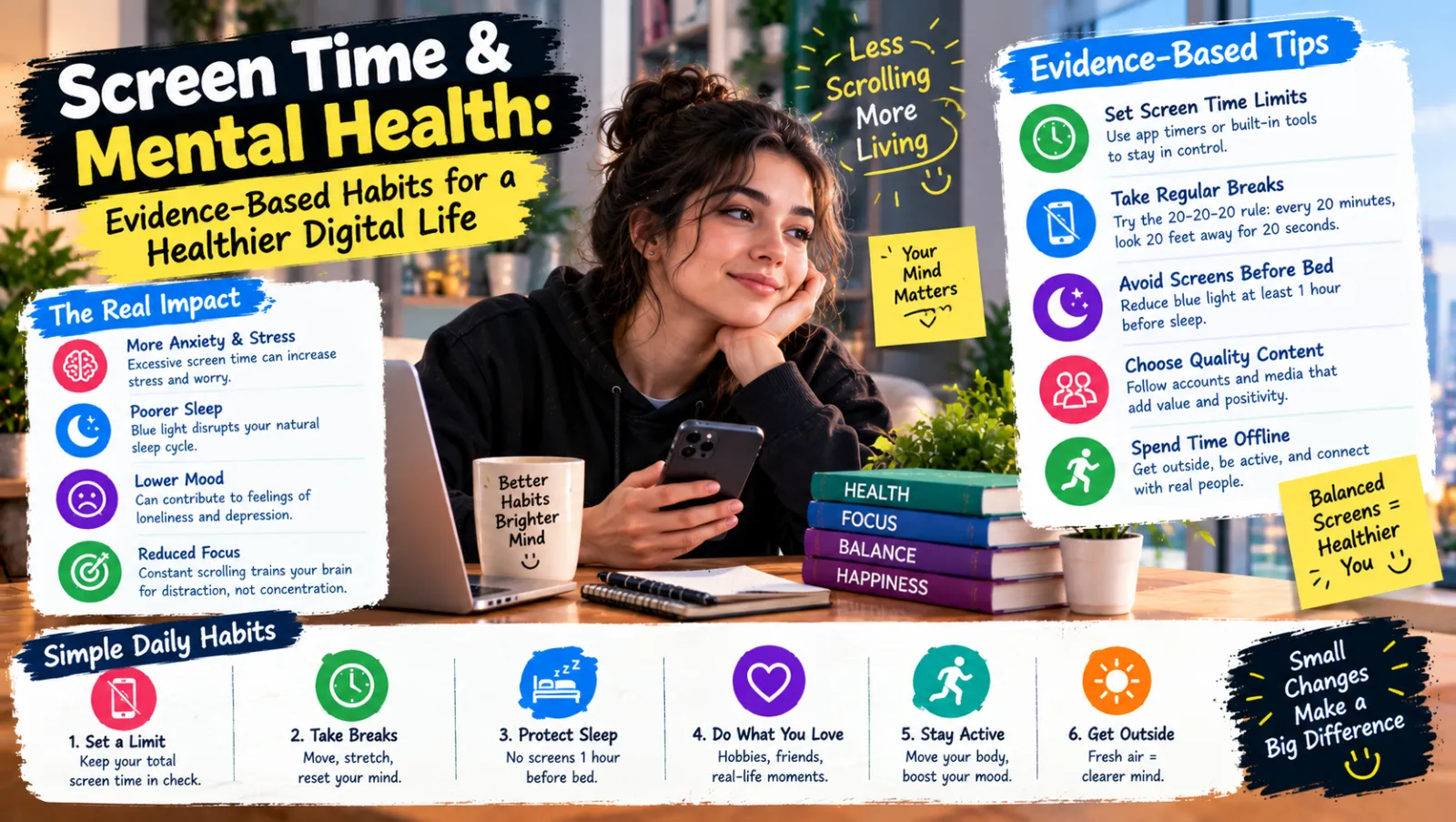
This article explores how screen time impacts mental well-being and outlines practical, evidence-based strategies for fostering a healthier relationship with digital devices. Moving beyond simply counting minutes, we delve into the nuances of digital engagement and its profound effects on our mental landscape.
Beyond the Clock: Understanding Quality of Screen Time
While concerns often center on the sheer volume of screen time, current research increasingly indicates that the nature of our digital interactions holds greater significance than the total duration. Engaging in passive consumption, particularly endless social media scrolling, late-night device usage, and frequent comparison with others, is more consistently correlated with diminished mood and increased anxiety. Conversely, using screens for constructive purposes—such as educational pursuits, creative projects, or fostering meaningful connections with friends and family—tends to have a neutral or even positive influence on mental health. This distinction emphasizes the importance of intentionality in our digital habits.
Differentiating Active vs. Passive Engagement
Understanding the difference between active and passive screen use is fundamental to cultivating healthier digital routines.
- Active Engagement: This involves purposeful interaction that often requires cognitive effort and leads to tangible outcomes or deeper connections. Examples include participating in online courses, video conferencing with distant relatives, learning a new skill via tutorials, or contributing to online communities focused on shared interests. These activities can be mentally stimulating and socially enriching.
- Passive Consumption: This typically involves mindlessly absorbing content without significant interaction or mental processing. Activities like endless scrolling through social media feeds, habitually watching short-form videos without a specific goal, or consuming news without critical reflection often fall into this category. This mode of engagement can sometimes foster feelings of social comparison, inadequacy, or information overload without providing genuine satisfaction.
Prioritizing Rest: Safeguarding Your Sleep Cycle
The omnipresence of digital screens, especially in the evening, poses a significant threat to healthy sleep patterns. The blue light emitted by smartphones, tablets, and computers can suppress melatonin production, a hormone essential for regulating sleep-wake cycles, thereby delaying the onset of sleep. Furthermore, engaging with stimulating content—such as intense games, emotionally charged news, or captivating social media discussions—just before bed can heighten arousal and make it difficult for the mind to unwind.
Implementing a Digital Sunset Strategy
To mitigate these adverse effects, consider establishing a "digital sunset" routine:
- Power Down Early: Aim to conclude all screen use at least 30 to 60 minutes before your intended bedtime. This allows your brain ample time to transition from an active, stimulated state to a more relaxed one.
- Bedroom Boundary: Establish a strict rule: no phones, tablets, or laptops in the bedroom. This transforms your sleeping space into a sanctuary dedicated solely to rest and intimacy, free from the distractions and temptations of digital devices.
- Traditional Alarms: Revert to using a basic, non-smart alarm clock. This simple change removes the primary justification for keeping a phone by your bedside, reducing the likelihood of late-night checking or morning distractions.
Minimizing Digital Distractions and Triggers
Our devices are often designed to capture and retain our attention through various notification systems and interface layouts. These constant interruptions can fragment our focus, increase stress levels, and perpetuate automatic, often unconscious, checking behaviors. By strategically reducing these triggers, we can reclaim control over our attention.
Practical Steps to Reduce Interruption
Here are actionable steps to create a less interruptive digital environment:
- Customize Notifications: Review and disable non-essential notifications for most applications. Prioritize only critical alerts, such as those from work communication tools or family messages. Most operating systems allow granular control over which apps can send notifications and how they appear (e.g., sound, vibration, banner).
- Reorganize Your Home Screen: Move social media applications and other frequently checked but non-essential apps off your primary home screen. Placing them within folders or on secondary screens creates a minor barrier that requires conscious effort to access, disrupting automatic opening habits.
- Embrace Grayscale Mode: Experiment with enabling grayscale mode on your smartphone, especially during evening hours. The lack of vibrant colors can make the screen less appealing and stimulating, reducing its addictive qualities and encouraging less passive consumption. On iOS, you can usually find this under Accessibility > Display & Text Size > Color Filters. On Android, it's often under Digital Wellbeing or Accessibility settings.
Cultivating Productive Alternatives: The "Replace" Strategy
Simply removing screen time without replacing it with other activities can leave a void that often leads back to old habits. A more effective approach involves proactively identifying and scheduling alternative, fulfilling activities that can fill the time previously dedicated to passive digital engagement.
- Mindful Movement: Instead of scrolling, take a short walk outdoors. Even 15-20 minutes of fresh air and light exercise can significantly boost mood and reduce stress.
- Engage with Hobbies: Rediscover or start a hobby that uses your hands or mind. This could be knitting, painting, playing a musical instrument, gardening, or solving puzzles.
- Personal Connections: Make a phone call to a friend or family member you haven't spoken to recently. Genuine human connection is a powerful antidote to feelings of isolation that can sometimes accompany excessive passive screen use.
- Immersive Reading: Pick up a physical book, magazine, or e-reader (with an e-ink screen). Reading for pleasure offers mental escape and stimulates cognitive functions differently than screen-based content.
Curating Your Digital Environment: Designing Your Feeds
Your social media feeds, news aggregators, and online communities are digital environments that profoundly influence your mental state. Just as you curate your physical living space, you have the power to design your digital surroundings to be more uplifting and less toxic.
- Unfollow and Mute Liberally: Remove accounts that consistently trigger feelings of anxiety, inadequacy, jealousy, or anger. This includes individuals whose posts create unrealistic comparisons, news sources that are overly sensational, or influencers whose content leaves you feeling less than.
- Seek Out Inspiration and Knowledge: Actively follow accounts that teach you something new, inspire creativity, share uplifting stories, or simply make you laugh. This could involve following experts in a field of interest, artists, nature photographers, or comedians.
- Engage Thoughtfully: Instead of passively observing, try to engage with content that genuinely interests or challenges you in a positive way. Comment thoughtfully, share valuable insights, or participate in constructive discussions.
- Utilize "Favorites" or "Close Friends" Features: Many platforms allow you to prioritize content from specific individuals or groups. Use these features to ensure you see more from those who genuinely enrich your digital experience.
Experimentation and Self-Observation: Finding What Works for You
There is no one-size-fits-all solution for managing screen time. The most effective strategies are often discovered through personal experimentation and careful self-observation. Instead of attempting radical overhauls, try implementing small, manageable changes and consciously notice their impact.
Consider the following experimental approaches:
- Mealtime Device Ban: For one week, commit to having no phones or other digital devices at the table during meals, whether you're alone or with others. Observe whether this changes the quality of your eating experience, your presence, or your interactions.
- "Digital Sabbath" Hour: Designate a specific hour each day or a longer block on weekends where you intentionally disconnect from all digital devices. Use this time for reflection, a hobby, or spending time outdoors.
- Notification Audit: Spend a day with all non-essential notifications turned off. Note how many times you instinctively reach for your phone even without an alert. This can reveal the ingrained nature of checking habits.
- Pre-Sleep Reading Challenge: Replace your usual late-night screen activity with 30 minutes of reading a physical book for an entire week. Track how this impacts your ease of falling asleep and the quality of your rest.
After each experiment, reflect on your experience: Did this change make you feel better or worse? Was it sustainable? What did you learn about your habits and preferences? Keep the changes that genuinely improve your well-being and discard those that don't. This iterative process allows you to build a personalized, sustainable approach to digital wellness.
Recognizing When Professional Help is Needed
While these strategies can significantly improve digital habits and mental well-being for many, it is crucial to recognize the limits of self-help. If you experience persistent low mood, anxiety, chronic sleep disturbances, or other mental health challenges that last for more than two weeks, or if these issues significantly interfere with your daily life, work, or relationships, it is important to seek professional guidance. Speaking with a doctor or a licensed mental health professional can provide you with an accurate diagnosis, personalized advice, and appropriate treatment options.
This article provides general information intended to support a healthier relationship with digital technology and does not constitute medical advice.

Building a Home Workout Routine With No Equipment
A balanced, progressive bodyweight plan you can follow in your living room, whatever your current fitness level.
How Sleep Shapes Memory, Mood and Focus
What happens in your brain every night, and simple evidence-based habits to sleep better starting this week.
الصحة الرقمية: كيف تقلل إجهاد الشاشات وتحمي عينيك وتركيزك
نصائح عملية لتقليل إجهاد العين وآلام الرقبة وتشتت الانتباه الناتج عن الاستخدام الطويل للشاشات في العمل والدراسة.