Digital Wallets and Fintech Apps: How to Choose and Use Them Safely
Compare digital wallets, neobanks and payment apps, understand fees and protections, and learn how to keep your money secure.
The Evolving Landscape of Financial Transactions
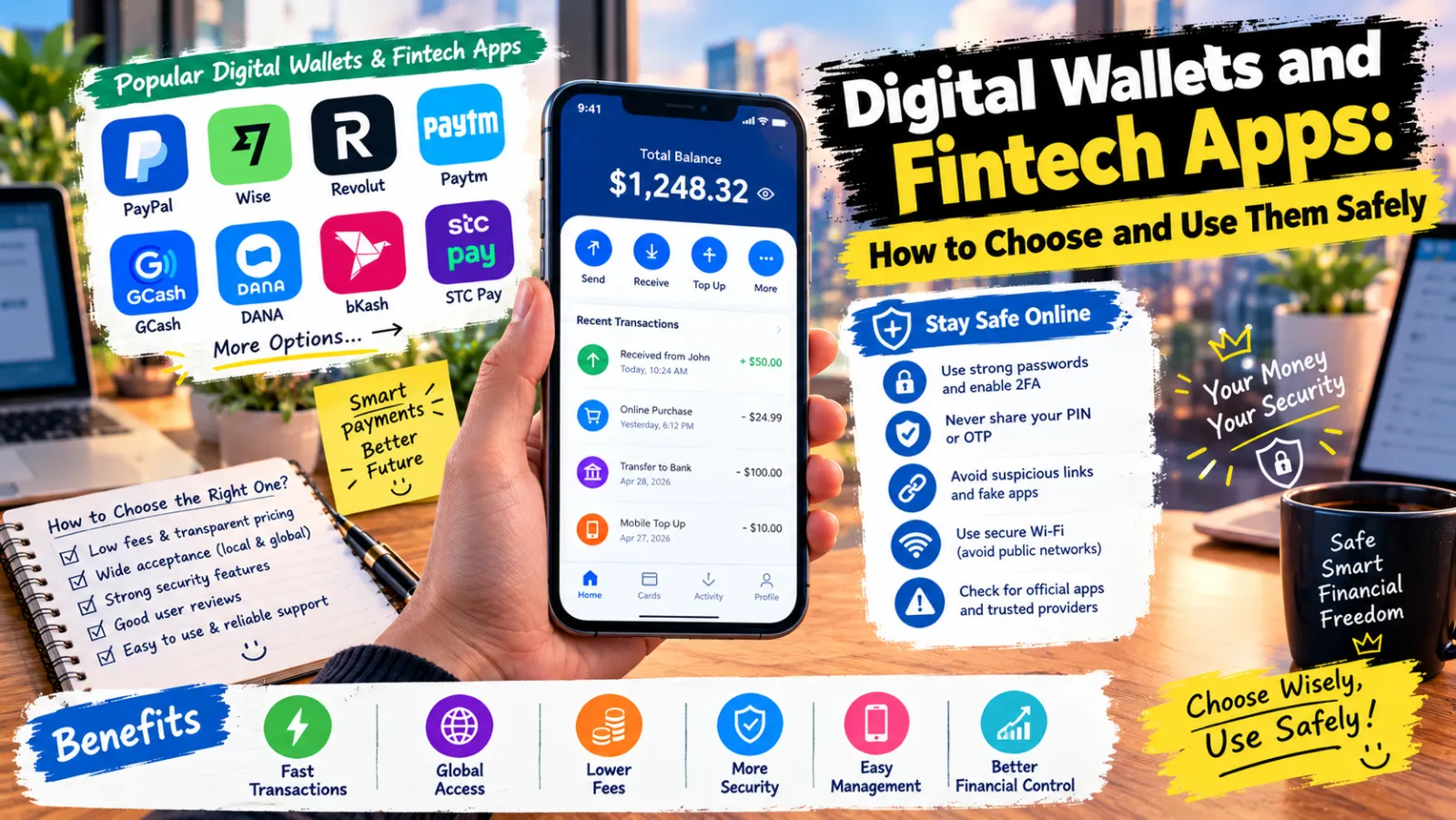
The advent of digital wallets, app-only banks (often called neobanks), and specialized payment applications has fundamentally reshaped how individuals and businesses manage their finances. These innovations offer unprecedented speed and convenience for sending money, facilitating online purchases, and receiving income, particularly for freelancers and remote workers. However, the diverse nature of these services means they exhibit significant variations in terms of associated fees, consumer protection mechanisms, and regulatory oversight. Understanding these distinctions is crucial for making informed choices in a rapidly digitizing financial world.
A Taxonomy of Modern Financial Tools
The fintech sector encompasses a broad array of services, each designed to address specific financial needs. Categorizing them helps in understanding their core functionalities and benefits.
Mobile Wallets: Contactless Convenience
Mobile wallets, such as Apple Pay, Google Pay, and Samsung Pay, function as digital repositories for your payment cards (credit, debit, loyalty cards). Instead of physically swiping or inserting a card, you can make secure, contactless payments using your smartphone or smartwatch at compatible terminals. Beyond in-store purchases, many mobile wallets also integrate seamlessly with online shopping platforms, streamlining the checkout process. Some even allow for peer-to-peer (P2P) money transfers between users.
Neobanks: The Digital-First Banking Experience
Neobanks, or challenger banks, operate exclusively online without traditional physical branches. They offer a comprehensive suite of banking services, including checking accounts, savings accounts, and debit cards, all managed through intuitive mobile applications. A key advantage of neobanks often lies in their lower operating costs, which can translate into fewer or no monthly fees, better interest rates on savings, and more competitive foreign exchange rates compared to conventional banks. Examples include Chime, Revolut, and Monzo. Their agility often allows for quicker feature development and integration of advanced budgeting tools.
Money Transfer Services: Bridging Borders
These specialized platforms are designed primarily for facilitating international money transfers. Companies like Wise (formerly TransferWise), Remitly, and Xoom enable users to send funds across borders, often at more favorable exchange rates and lower fees than traditional banks. They prioritize speed and transparency, allowing senders and recipients to track the transfer progress in real-time. These services are particularly beneficial for individuals supporting family abroad, or businesses engaging in international trade.
Local Mobile Money Services: Financial Inclusion at Your Fingertips
Predominantly popular in regions across Africa, the Middle East, and parts of Asia, local mobile money services allow users to store, send, and receive money using only a basic mobile phone and a phone number. Services like M-Pesa in Kenya have revolutionized financial inclusion by providing access to banking-like services for millions who might not have traditional bank accounts. Users can cash in and cash out money at authorized agent locations, pay bills, and even access micro-loans, all via SMS or simple app interfaces.
Key Considerations for Selection
When evaluating which digital financial tool best suits your requirements, a thorough comparison across several critical factors is essential.
Assessing Costs and Exchange Rates
One of the most significant differentiators among fintech apps is their fee structure. Always scrutinize:
- Exchange Rates: For international transactions, compare the offered rate against the interbank "mid-market rate" (the true exchange rate). Some providers may offer seemingly low fees but embed a margin into the exchange rate, making the transfer more expensive overall. Tools like Google's currency converter or XE.com can help verify the mid-market rate.
- Transfer Fees: These can be fixed or a percentage of the transferred amount. Be mindful of hidden charges, such as fees for specific payment methods (e.g., credit card vs. bank transfer) or expedited delivery.
- Withdrawal Limits: Understand any daily, weekly, or monthly limits on cash withdrawals or outgoing transfers.
Speed, Supported Currencies, and Accessibility
- Transfer Speed: How quickly will the money reach its destination? This can range from instant transfers to several business days, depending on the service, recipient's bank, and destination country.
- Supported Currencies: Ensure the service supports the specific currencies you need for sending and receiving.
- Client Compatibility (for freelancers): If you're a freelancer, it's vital to confirm that your international clients can easily and cost-effectively pay into your chosen account. Some platforms are more universally accepted or have better integration with business payment systems.
Understanding Regulatory Protections
The level of protection offered by fintech apps can vary significantly from traditional regulated banks. It is imperative to understand the safety nets in place.
Licensing and Account Security
Always verify whether the provider is licensed and regulated by the relevant financial authorities in your jurisdiction. For instance, in the U.S., look for state money transmitter licenses or FDIC insurance for banking services. In the UK, look for FCA (Financial Conduct Authority) regulation. Find out:
- Segregated Accounts: Is your balance held in a protected, segregated account separate from the company's operating funds? This ensures that your money is safe even if the company faces financial difficulties.
- Deposit Insurance: For neobanks, check if deposits are insured by a government scheme (e.g., FDIC in the US, FSCS in the UK) up to a certain limit. This is a critical safeguard.
Dispute Resolution Mechanisms
In the event of an unauthorized transaction or a payment dispute, understand the provider's process for investigation and resolution. Traditional banks have well-established procedures for disputing charges, often mandated by consumer protection laws. Fintech apps should also offer clear channels for reporting issues and have policies outlining liability for fraudulent activity.
Fortifying Your Digital Security
The convenience of fintech apps comes with a responsibility to maintain robust security practices.
Essential Security Protocols
- Enable Biometric Login: Utilize fingerprint or facial recognition for swift and secure access to your apps.
- Two-Factor Authentication (2FA): Always activate 2FA, which adds an extra layer of security by requiring a second verification method (e.g., a code sent to your phone) in addition to your password.
- Never Share One-Time Codes (OTCs): OTCs are crucial for verifying your identity or approving transactions. Sharing them, even with someone claiming to be from the service provider, can compromise your account.
- Confirm Recipient Details: Before initiating any transfer, double-check the recipient's name, account number, or phone number. Many digital transfers are irreversible once processed.
- Be Wary of Phishing Attempts: Exercise extreme caution with unsolicited messages, emails, or calls claiming your wallet or account is locked, suspended, or requires urgent action. Always go directly to the official app or website to verify.
Diligent Record Keeping
Maintaining accurate financial records is not just good practice; it's often a legal requirement for tax purposes and can be invaluable for dispute resolution.
Practical Steps for Record Keeping
- Download Monthly Statements: Regularly download and store monthly statements or transaction histories from your fintech apps. This provides a comprehensive overview of your spending and income.
- Retain Receipts for Large Transfers: For significant transactions, keep digital or physical receipts. This includes proof of payment for services rendered or goods purchased, and documentation for international remittances.
- Categorize Transactions: Many apps offer budgeting features that allow you to categorize expenses. Utilize these to track where your money is going, which is beneficial for personal finance management and tax preparation.
Crafting a Balanced Financial Strategy
Rather than relying solely on one type of financial institution, many individuals adopt a hybrid approach, leveraging the strengths of both traditional banks and innovative fintech solutions. This strategy involves:
- Primary Banking for Core Needs: Maintaining a traditional bank account for long-term savings, mortgage payments, or large-scale transactions that benefit from physical branch support and established regulatory frameworks.
- Fintech for Specific Use Cases: Utilizing one or two carefully chosen fintech apps for:
- Everyday Spending: A neobank debit card for daily purchases, often with better budgeting tools.
- International Payments: A money transfer service for sending funds abroad with competitive rates.
- Freelance Income: A digital wallet or specialized account to receive payments from international clients.
This balanced setup allows users to mitigate risk by diversifying where their funds are held, while simultaneously taking advantage of the efficiency, lower costs, and advanced features offered by the burgeoning fintech ecosystem. It ensures that consumers can access the best tools for each specific financial task, optimizing convenience and security.
[Related articles from Bankrate for further reading: How digital wallets work, Neobanks vs. Traditional Banks]

إنشاء وبيع الكتب الإلكترونية بالذكاء الاصطناعي: دليلك العملي لعام 2026
`تعلم كيفية إنشاء وبيع الكتب الإلكترونية بالذكاء الاصطناعي في 2026 من اختيار الفكرة وكتابة المحتوى حتى التصميم والتسويق لتحقيق دخل سلبي مستدام عبر الإنترنت.
كيف تستلم أرباحك من التدوين والإنترنت في الدول العربية: أفضل البنوك الإلكترونية والحسابات 2026
دليل شامل لسحب واستلام أرباح التدوين والعمل عبر الإنترنت في مصر والدول العربية في 2026. مقارنة بايونير، وايز، بايبال، والحسابات البنكية بالدولار.

A Beginner's Guide to Personal Budgeting That Actually Sticks
A practical, low-stress approach to building a monthly budget you will not abandon after two weeks.