Should You Still Learn to Code in the Age of AI? A Practical Answer
How AI coding assistants change programming careers, which skills remain valuable, and a learning path for beginners.
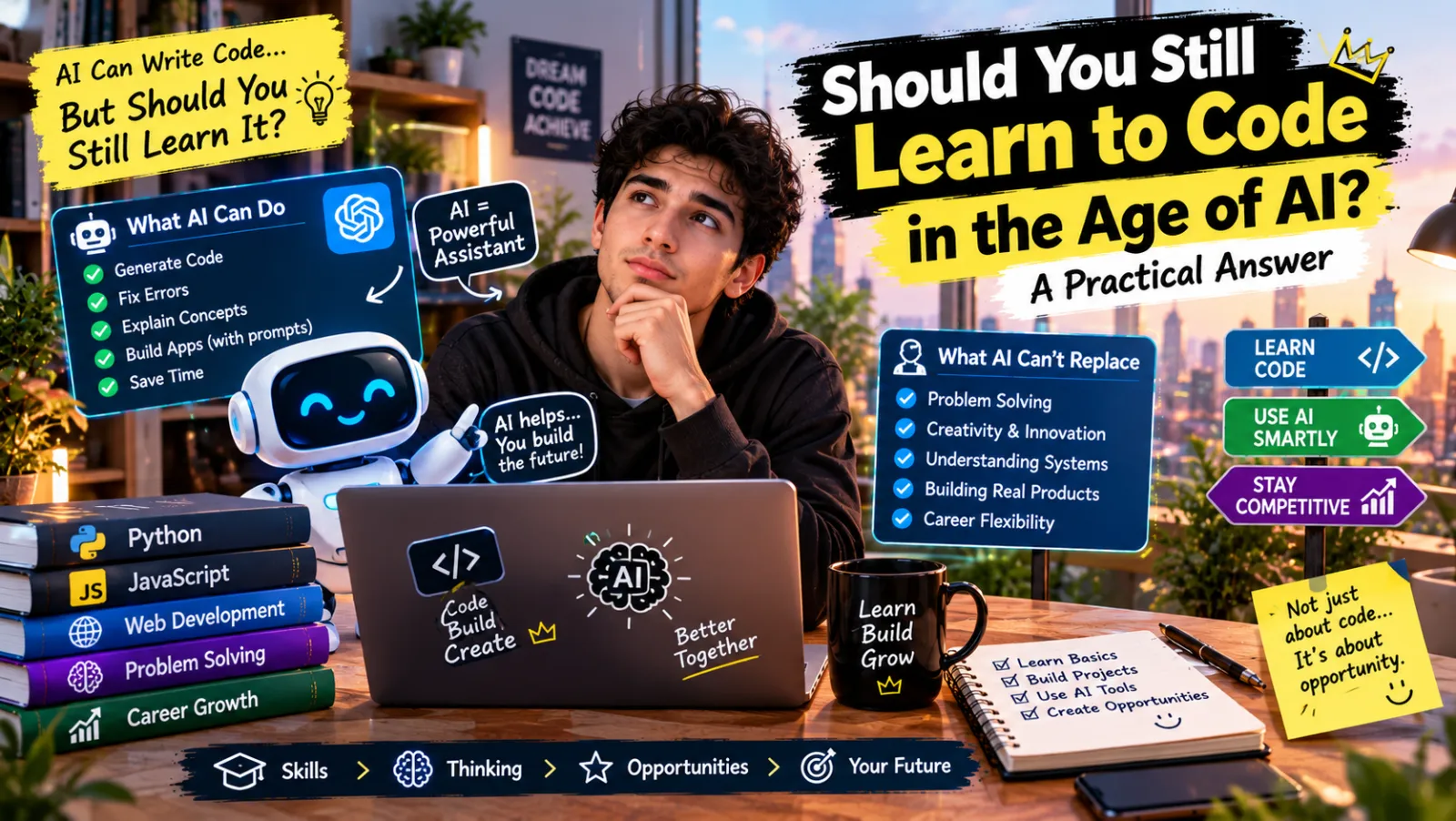
The advent of artificial intelligence (AI) has undeniably reshaped many professional landscapes, and software development is no exception. While some perceive AI tools as a threat to traditional coding roles, a more nuanced understanding reveals that AI fundamentally changes how we code, rather than rendering the skill obsolete. AI assistants are increasingly capable of generating code snippets, identifying errors, and proposing solutions, thereby augmenting the productivity of experienced developers. However, the core intellectual work remains firmly in human hands. Someone must still meticulously define the problem, critically evaluate the AI-generated code for accuracy and efficiency, implement robust security measures, and ensure long-term maintainability. These higher-order skills are becoming more, not less, valuable in a world awash with automated code.
The Evolving Role of Human Expertise in Software Development
The integration of AI into development workflows elevates the importance of human oversight and strategic thinking. While an AI can draft boilerplate code or optimize a function, it lacks the contextual understanding, ethical reasoning, and holistic problem-solving capabilities inherent in human intelligence. Developers are shifting from rote memorization of syntax to becoming architects, critical evaluators, and system integrators.
From Coder to Architect
Today's developer increasingly acts as an architect, designing the overall structure and flow of applications. This involves envisioning how different components interact, selecting appropriate technologies, and ensuring scalability and resilience. AI tools can help with individual building blocks, but the grand design still requires human ingenuity.
Strategic Oversight and Validation
With AI's assistance, developers spend less time on tedious tasks and more time on strategic validation. This means ensuring that AI-generated code aligns with project requirements, adheres to coding standards, and is free from subtle bugs or security vulnerabilities that AI might overlook. It requires a deep understanding of the problem domain and the nuances of the programming language.
Indispensable Skills for the Modern Developer
Certain core competencies retain, and even gain, prominence in an AI-augmented development environment. These are the abilities that differentiate a proficient developer, regardless of the tools at their disposal.
- Problem Decomposition: The capacity to break down complex challenges into smaller, manageable, and clearly defined steps. This involves analytical thinking and understanding the root cause of issues, rather than just treating symptoms.
- Code Review and Evaluation: The ability to critically read and assess code written by others, including AI. This encompasses identifying potential issues, evaluating efficiency, and ensuring adherence to design principles.
- Data and System Understanding: A comprehensive grasp of data structures, database principles, and how various software components and systems interoperate. This foundational knowledge is crucial for building robust and scalable applications.
- Testing, Debugging, and Security Fundamentals: Proficiency in developing test cases, efficiently tracing and rectifying bugs, and implementing basic security practices to protect applications from common vulnerabilities.
- Cross-Functional Communication: The skill to articulate technical concepts and discuss trade-offs effectively with non-technical stakeholders, translating complex ideas into understandable terms.
A Structured Learning Path for Aspiring Developers
For those considering a coding journey, the path is more accessible than ever, especially with AI as a learning companion. Here’s a practical approach:
- Select a Beginner-Friendly Language: Begin with a language widely adopted by newcomers due to its clear syntax and extensive learning resources, such as Python or JavaScript. Python is excellent for data science and backend development, while JavaScript is fundamental for web development.
- Master Core Programming Constructs: Dedicate time to understanding the fundamentals: variables for storing data, conditional statements (e.g., `if/else`) for decision-making, loops (e.g., `for`, `while`) for repetitive tasks, functions for organizing code, and basic data structures like lists, dictionaries, or arrays.
- Undertake Small, Engaging Projects: Apply your knowledge by building mini-projects that genuinely interest you. This could be a simple command-line budget tracker, a quiz application, a personal diary tool, or a basic calculator. The key is to build things you care about, fostering motivation.
- Embrace Version Control: Learn a version control system like Git. This is crucial for tracking changes to your code, collaborating with others, and safely experimenting with new features. Tools like GitHub or GitLab provide platforms for hosting your repositories.
- Leverage AI as an Educational Aid: Use AI assistants like ChatGPT or Bard not just for answers, but for explanation. Ask "Why does this code work?" or "Explain this error message in simple terms." Attempt to solve problems independently first, then compare your solution with the AI's version to learn alternative approaches. Always type out and modify the code yourself to build muscle memory and deeper understanding.
- Curate a Public Portfolio: Develop and publish two or three complete projects that demonstrate your skills. Each project should have a clear description, explain the technologies used, and ideally include a live demo or screenshots. A portfolio of practical projects is a powerful testament to your abilities.
Maximizing Learning with AI Assistance
The strategic use of AI can significantly enhance the learning process. It's about interaction and critical engagement, not passive consumption.
Asking Insightful Questions
Instead of simply requesting code, challenge AI to explain its logic. For instance, if you encounter an error, ask: "Can you explain what `TypeError: 'int' object is not iterable` means and provide an example of how it might occur in Python?" This encourages a deeper understanding of underlying concepts.
Iterative Problem Solving
When facing a coding challenge, try to solve it on your own first. Write down your thought process, even if you get stuck. Then, consult the AI for suggestions. Compare its approach to yours. This comparison highlights areas for improvement and exposes you to different problem-solving paradigms.
The Importance of Verification
Always treat AI suggestions with a critical eye. AI models can sometimes generate outdated syntax, inefficient algorithms, or even insecure code, especially with less common libraries or highly specific use cases. Cross-reference information with official documentation, reputable tutorials, and your own understanding. Practical steps for verification include:
- Running the code in your development environment to check for errors.
- Consulting the official documentation for the programming language or library in question.
- Searching for alternative solutions from trusted sources like Stack Overflow or established blogs.
- Testing edge cases to ensure the AI-generated solution is robust.
Career Trajectories in an AI-Integrated World
The career landscape for coders is evolving. While entry-level development roles may see increased competition due to AI's ability to automate basic tasks, the demand for skilled developers with strong foundational knowledge and critical thinking remains robust. A compelling portfolio of real-world projects is now more critical than ever for new entrants.
Moreover, coding skills are no longer confined to traditional developer positions. Professionals in diverse fields—such as data analysts, marketing specialists, researchers, and even finance professionals—who possess the ability to write scripts, automate repetitive tasks, or manipulate data programmatically stand out significantly. This "coding literacy" empowers them to extract insights, streamline operations, and drive innovation within their respective domains. For example, a marketing analyst who can write Python scripts to automate data collection from various APIs gains a significant advantage over one who relies solely on manual data extraction.
The Definitive Answer
Should you still learn to code? Absolutely, if you possess a natural curiosity, enjoy dissecting complex problems, and find satisfaction in building solutions. The core allure of coding—the ability to transform abstract ideas into functional tools—remains undiminished. With the assistance of AI, the barriers to entry are significantly lowered, making the learning process more interactive and accessible than at any point in history. AI acts as a powerful tutor, pair programmer, and knowledge base, accelerating learning and enabling individuals to tackle more ambitious projects earlier in their journey. It amplifies human potential, rather than replacing it. Learning to code in this era means learning to collaborate with intelligent systems, a skill that will define success across many industries for decades to come.
--- Related articles:

Passkeys Explained: How to Replace Your Passwords Safely
What passkeys are, why they resist phishing, and a step-by-step plan to switch your email, bank and social accounts without getting locked out.
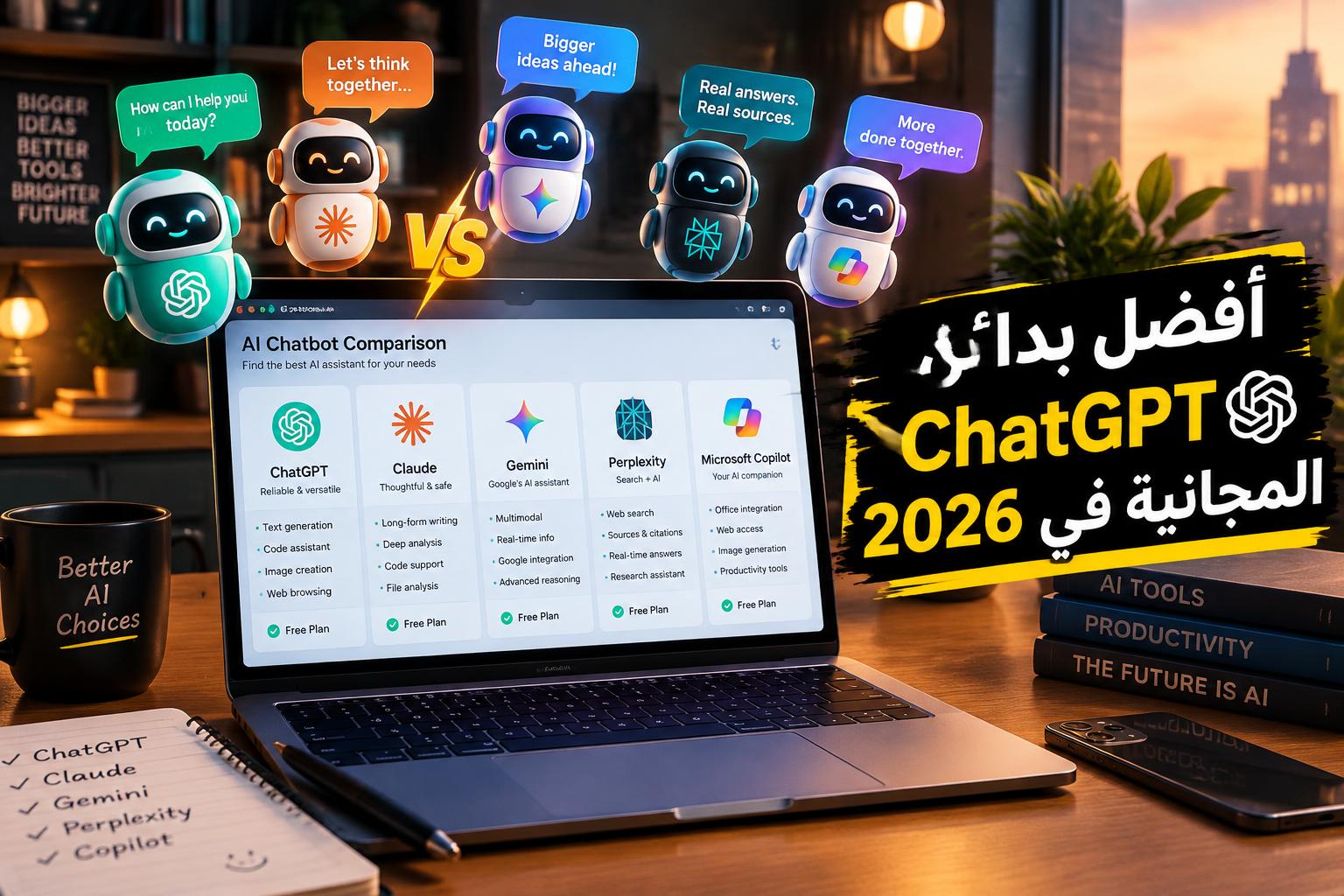
أفضل بدائل ChatGPT المجانية في 2026: مقارنة شاملة بين Claude وGemini وDeepSeek
مقارنة شاملة لأفضل بدائل ChatGPT المجانية في 2026: اكتشف الفروق بين Claude وGemini وDeepSeek لاختيار الأداة الأقوى في الكتابة، التحليل، والبرمجة باحترافية.
أدوات الذكاء الاصطناعي لصنّاع المحتوى العرب: دليل عملي ومسؤول
كيف يستفيد صانع المحتوى العربي من أدوات الذكاء الاصطناعي في البحث والتنظيم والتدقيق دون أن يفقد أصالته أو ثقة جمهوره.