Better Sleep: An Evidence-Based Guide to Falling Asleep Faster
Practical sleep hygiene steps supported by research: light, timing, caffeine, bedroom setup and when poor sleep needs a doctor.
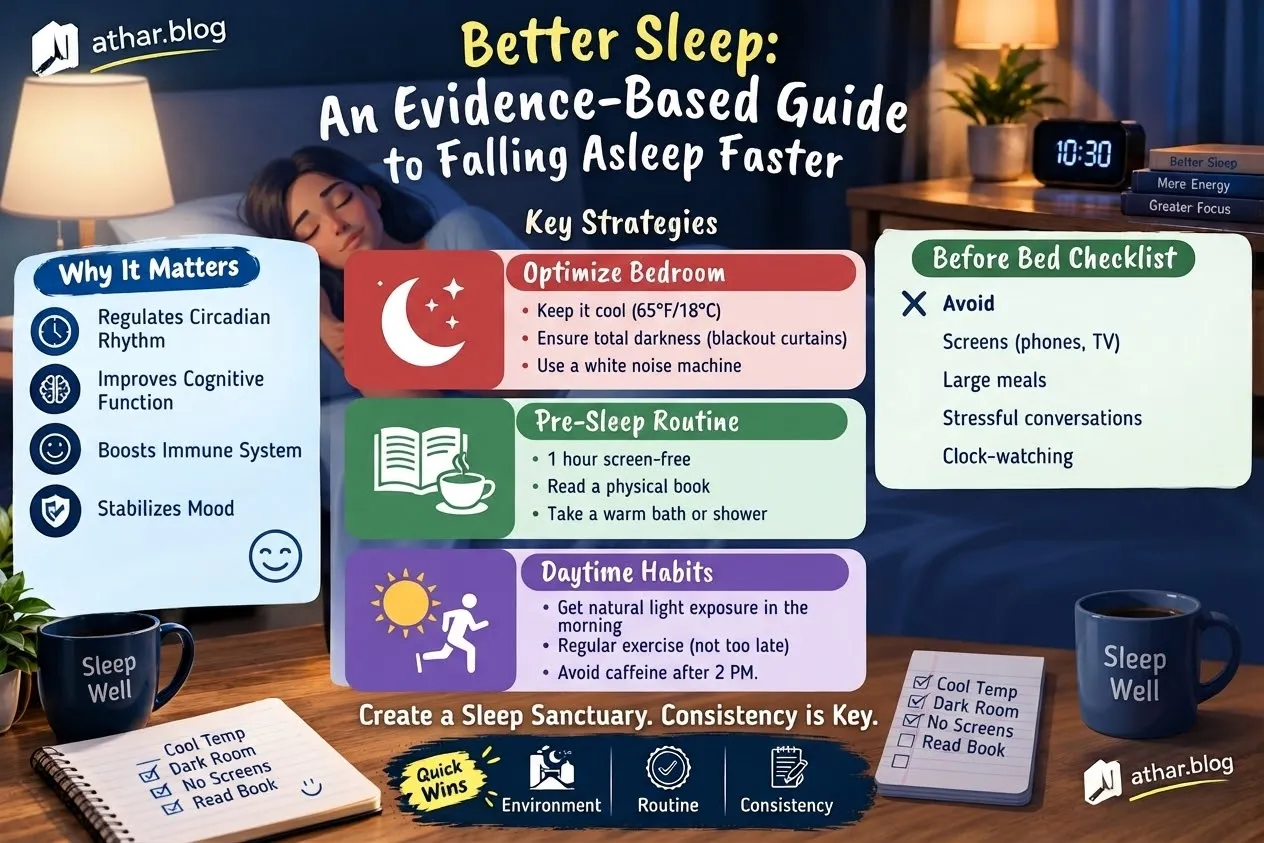
The Fundamental Importance of Quality Sleep
Achieving sufficient, high-quality sleep is not merely a luxury; it is a fundamental pillar of human health and performance. For most adults, this translates to consistently obtaining seven to nine hours of sleep each night. Chronic sleep deprivation, even for a relatively short duration, has profound and widespread consequences. These can manifest as impaired cognitive function, leading to difficulty concentrating and reduced problem-solving abilities. Furthermore, inadequate sleep significantly impacts emotional regulation, often resulting in increased irritability, mood swings, and a heightened risk of developing mood disorders. Physiologically, a compromised immune system becomes less effective at fending off illnesses, and over the long term, persistent sleep deficiency contributes to an elevated risk of chronic health conditions such as cardiovascular disease, diabetes, and obesity. While various technological solutions are marketed, often the most effective improvements stem from minor, consistent adjustments to daily habits and environment.
Cultivating a Consistent Sleep-Wake Cycle
Establishing and maintaining a regular sleep schedule is arguably one of the most powerful strategies for optimizing sleep quality. Our bodies operate on a sophisticated internal biological clock, known as the circadian rhythm, which dictates our natural sleep and wake patterns. When we adhere to a consistent bedtime and wake-up time, even on weekends, we reinforce this rhythm, allowing our body to anticipate and prepare for sleep more effectively.
The Power of Routine Timing
Think of your circadian rhythm as a precise orchestra conductor. When you provide it with a consistent schedule, it can orchestrate the release of hormones like melatonin (which induces sleepiness) and cortisol (which promotes alertness) at appropriate times. Erratic sleep patterns, such as staying up very late on weekends and trying to catch up on sleep later, disrupt this delicate balance, leading to what is often termed "social jet lag." This internal misalignment can make it harder to fall asleep and wake up naturally throughout the week.
Gradually Adjusting Your Schedule
Should you need to shift your sleep schedule, perhaps to accommodate a new job or personal commitment, implement the change incrementally. Abruptly altering your bedtime by several hours can be jarring to your system. Instead, aim to adjust your bedtime and wake-up time by a modest 15 to 30 minutes every two to three days. This allows your body to adapt gradually to the new rhythm without significant disruption, promoting a smoother transition and preserving sleep quality.
Harnessing the Influence of Light Exposure
Light is the single most potent environmental cue influencing our circadian rhythm. Strategic exposure to light, especially natural daylight, can significantly enhance sleep quality.
Morning Light for Optimal Alertness
Within the first hour of waking, expose yourself to natural light. This signals to your brain that the day has begun, helping to suppress melatonin production and promote alertness. Even on overcast days, the ambient light levels outdoors are typically far brighter than indoor lighting and are sufficient to exert this beneficial effect.
- Practical Steps for Morning Light Exposure:
- Open curtains immediately upon waking.
- Step outside for 10-15 minutes to drink your morning coffee or tea.
- Consider a short walk around the block.
- If natural light is scarce (e.g., during winter months or for those with early starts), a light therapy lamp (10,000 lux) used for 20-30 minutes can be a suitable alternative.
Evening Light for Restful Sleep
Conversely, as evening approaches, minimizing exposure to bright artificial light becomes crucial. Bright lights, particularly those with a strong blue light component emitted by electronic screens, can interfere with melatonin production, delaying the onset of sleepiness.
- Strategies for Dimming Evening Light:
- Install dimmer switches on overhead lights.
- Use lamps with warmer, lower-wattage bulbs.
- Activate "night mode" or "blue light filter" settings on all electronic devices (smartphones, tablets, computers) starting two to three hours before bedtime.
- Avoid using electronic screens in the bedroom if possible.
Mindful Consumption: Caffeine, Alcohol, and Meals
What and when you consume certain substances can have a profound impact on your ability to initiate and maintain sleep. Careful consideration of these factors is essential.
Navigating Caffeine Intake
Caffeine is a stimulant with a half-life of several hours, meaning it takes a long time for your body to eliminate it. Even if you don't feel "wired," residual caffeine can fragment sleep and reduce its restorative quality.
- Recommendation: Cease consumption of caffeinated beverages (coffee, strong tea, energy drinks, certain sodas) by early to mid-afternoon. For some individuals, even caffeine consumption after noon can be disruptive.
Understanding Alcohol's Effects
While alcohol might initially induce drowsiness, it acts as a sedative rather than promoting natural, restorative sleep. As the body metabolizes alcohol, it often leads to disturbed sleep later in the night, characterized by increased awakenings and reduced time spent in critical deep and REM sleep stages.
- Recommendation: Limit alcohol intake, especially in the hours leading up to bedtime. If you choose to drink, do so in moderation and allow several hours for your body to begin processing it before attempting to sleep.
Timing Your Meals
Consuming large, heavy meals close to bedtime can trigger digestive distress, heartburn, or indigestion, making it challenging to fall asleep comfortably. Your body will also be expending energy on digestion when it should be preparing for rest.
- Recommendation: Aim to finish your dinner two to three hours before your intended bedtime. If you must have a late-night snack, opt for something small and easily digestible, such as a banana or a handful of almonds. Avoid spicy, fatty, or very sugary foods before bed.
Optimizing Your Sleep Environment
Your bedroom should be a sanctuary dedicated to rest. Creating an ideal environment signals to your brain that it's time to unwind and prepare for sleep.
The Ideal Sleep Sanctuary: Cool, Dark, and Quiet
- Temperature: Most sleep experts recommend a room temperature between 18-20°C (65-68°F). A slightly cooler room promotes melatonin production and helps lower your core body temperature, which is essential for falling asleep.
- Darkness: Any light, even faint glows from electronics, can interfere with melatonin production. Blackout curtains are highly effective at blocking external light sources. Alternatively, a comfortable eye mask can achieve similar results.
- Quiet: Unwanted noise can disrupt sleep, even if you don't fully awaken. Earplugs can be helpful, or consider a white noise machine or fan to mask sudden sounds with a consistent, soothing hum.
The Bed as a Sleep-Only Zone
It's vital to create a strong mental association between your bed and sleep. When you use your bed for activities like working, studying, eating, or endlessly scrolling on your phone, your brain starts to associate the space with alertness and activity, making it harder to switch off when you're ready for sleep. Reserve your bed primarily for sleeping and intimacy.
Implementing a Consistent Wind-Down Routine
Just as athletes prepare for a game, your body and mind benefit from a structured transition from the demands of the day to the calm of night. A consistent wind-down routine signals to your system that it's time to slow down.
Dedicate the last 30 to 60 minutes before your desired bedtime to tranquil activities that promote relaxation. This period should be free from work-related tasks, stimulating conversations, or engaging with bright screens.
- Effective Wind-Down Activities:
- Reading: Engage with a physical book or an e-reader that doesn't emit blue light. This helps shift your focus away from daily stressors.
- Gentle Stretching or Yoga: Light stretches can release physical tension. Avoid vigorous exercise close to bedtime.
- Warm Bath or Shower: The drop in body temperature after leaving the warm water can promote feelings of sleepiness.
- Journaling: If your mind is racing with thoughts or worries, writing them down can be an effective way to "offload" them before bed. Create tomorrow's to-do list to prevent these concerns from occupying your mind during the night.
- Mindfulness or Meditation: Short meditation practices or deep breathing exercises can calm the nervous system and quiet a busy mind.
- Listening to Calming Music or a Podcast: Choose instrumental music, nature sounds, or a gentle, spoken-word podcast specifically designed for relaxation.
Addressing Sleeplessness Proactively
It's common to experience occasional difficulty falling asleep. However, spending prolonged periods lying awake in bed can inadvertently create anxiety around the act of sleeping itself, leading to a vicious cycle.
If you find yourself still awake after approximately 20 minutes of trying to fall asleep, it's often more beneficial to get out of bed. Remaining in bed while feeling frustrated or anxious can reinforce negative associations with your sleep space.
Practical Steps When You Can't Sleep:
- Leave the Bedroom: Go to another room in your home.
- Dim the Lights: Keep the lighting very low to avoid signaling to your brain that it's daytime.
- Engage in a Quiet, Non-Stimulating Activity:
- Read a physical book under a soft light.
- Listen to calming music or a sleep podcast.
- Practice gentle breathing exercises or meditation.
- Avoid screens, eating, or anything mentally demanding.
- Return to Bed When Sleepy: Only go back to bed when you genuinely feel drowsy. This helps to re-establish the bed as a place solely for sleep. Repeat this process as needed.
Recognizing When Professional Help Is Needed
While many sleep challenges can be improved through lifestyle adjustments, certain persistent symptoms warrant medical evaluation. Sleep disorders are common and often treatable, but they require proper diagnosis.
Indicators for Seeking Medical Advice:
- Loud Snoring with Gasping/Choking: This can be a significant sign of obstructive sleep apnoea, a condition where breathing repeatedly stops and starts during sleep.
- Excessive Daytime Sleepiness: If you feel profoundly sleepy during the day despite spending what you believe is sufficient time in bed at night, it could indicate an underlying sleep disorder or insufficient sleep quality.
- Chronic Insomnia: If you consistently struggle to fall asleep, stay asleep, or experience non-restorative sleep most nights for a period of three months or longer, it's advisable to consult a healthcare professional. Chronic insomnia can significantly impact quality of life and general health.
Conditions like sleep apnoea and chronic insomnia are not merely inconvenient; they can have serious long-term health implications if left unaddressed. A doctor can conduct an assessment, which may include a sleep study (polysomnography), to accurately diagnose the problem and recommend appropriate treatment options.
- Related Article: The Sleep Foundation
- Related Article: National Institute of Neurological Disorders and Stroke - Brain Basics: Understanding Sleep
- Related Article: Harvard Medical School - Sleep & Health
This guide provides general information and should not replace personalized medical advice from a qualified healthcare professional.

الصحة الرقمية: كيف تقلل إجهاد الشاشات وتحمي عينيك وتركيزك
نصائح عملية لتقليل إجهاد العين وآلام الرقبة وتشتت الانتباه الناتج عن الاستخدام الطويل للشاشات في العمل والدراسة.
Screen Time and Mental Health: Evidence-Based Habits for a Healthier Digital Life
What research suggests about screens, sleep and mood, plus practical habits to reduce digital overload without quitting technology.
Building a Home Workout Routine With No Equipment
A balanced, progressive bodyweight plan you can follow in your living room, whatever your current fitness level.